Activated Carbon for Chlorine Removal: Specs, Design & Selection
Activated carbon is the most widely used method for removing residual chlorine from process water, drinking water, and RO feed streams. But choosing the right carbon — and designing the system correctly — is the difference between a bed that lasts 5 years and one that fails in 6 months. This guide covers the dechlorination mechanism, GAC specifications, system sizing with worked examples, and how to avoid the most common design mistakes.
How Activated Carbon Removes Chlorine (and Why It's Not Just "Filtering")
Most people call it a "carbon filter," but activated carbon doesn't filter chlorine the way a screen catches dirt. It removes free chlorine through a catalytic reduction reaction on the carbon surface, not physical trapping.
Here's what actually happens: free chlorine (HOCl or OCl⁻) contacts the carbon surface and reacts with carbon sites to form chloride ions (Cl⁻) and carbon oxide. The simplified reaction:
C* + HOCl → C*O + H⁺ + Cl⁻
Where C* = active carbon surface site, C*O = oxidized carbon site.
This is a surface chemical reaction, not adsorption. That distinction matters because:
- The carbon doesn't "fill up" with chlorine the way it fills up with organics
- Dechlorination capacity depends on contact time and flow rate, not just pore volume
- A carbon bed can dechlorinate far longer than it can remove organics — eventually organic fouling is what kills dechlorination performance, not chlorine itself
| Parámetro | Chlorine Removal | Organic Removal (NOM/TOC) |
|---|---|---|
| Mechanism | Catalytic reduction | Physical adsorption |
| Controlling Factor | Contact time (EBCT) | Pore volume + surface area |
| Exhaustion Signal | Chlorine breakthrough in effluent | Rising TOC in effluent |
| Typical Bed Life | 2–5 years (if organics are low) | 6–18 months |
| Regeneration Needed? | Less frequently | More frequently |
Key takeaway: if your primary goal is dechlorination (not organics removal), your carbon bed will last significantly longer — but you still need to design for the right EBCT.
Free Chlorine vs. Chloramine: Why It Changes Everything
Municipal water plants use two types of disinfectant residuals: free chlorine (hypochlorous acid / hypochlorite) and chloramines (monochloramine, NH₂Cl). The carbon you need depends on which one you're dealing with.
| Property | Free Chlorine (HOCl/OCl⁻) | Chloramine (NH₂Cl) |
|---|---|---|
| Carbon reaction | Fast catalytic reduction | Slow catalytic decomposition |
| Required EBCT | 2–5 minutes | 10–20 minutes |
| Carbon type | Standard GAC (coconut or coal) | Catalytic carbon recommended |
| Bed life | 2–5 years | 1–3 years |
| Effluent target | <0.1 mg/L | <0.1 mg/L |
This is the most common mistake we see in RFQs: buyers spec standard GAC for chloramine removal and wonder why the carbon exhausts in months instead of years. If your feed water contains chloramines (check with your water utility), you need catalytic carbon with higher surface reactivity, and you need to double or triple your EBCT.
Not sure which disinfectant your water plant uses? Most US and Australian utilities publish annual water quality reports. In the Middle East and Southeast Asia, free chlorine is far more common. If you're designing for an industrial process downstream of a municipal supply, ask the utility — don't guess.
GAC Specifications for Chlorine Removal: What Actually Matters
Carbon spec sheets throw 15+ parameters at you. For dechlorination, here's what actually drives performance — and what's just noise.
Critical Parameters
| Parámetro | Why It Matters for Dechlorination | Recommended Range | Test Method |
|---|---|---|---|
| Número de yodo | Indicates total surface area — higher
= more reactive sites |
≥900 mg/g (coal), ≥1000 mg/g (coconut) | ASTM D4607 |
| Mesh Size | Smaller particles = more surface
contact per bed volume |
8×30 or 12×40 | ASTM D2862 |
| Dureza | Prevents fines generation
that causes pressure drop |
≥95% (coal), ≥97% (coconut) | ASTM D3802 |
| Humedad | You're paying for water
weight if too high |
≤5% | ASTM D2867 |
| Contenido de ceniza | High ash can leach minerals
and reduce active surface |
≤8% (coal), ≤3% (coconut) | ASTM D2866 |
Secondary Parameters (Nice to Know)
| Parámetro | Relevance | Typical Range |
|---|---|---|
| Densidad aparente | Affects bed weight and vessel sizing | 0.45–0.55 g/cm³ |
| pH | Alkaline carbon may affect process water pH initially | 9–11 (coal), 9–10 (coconut) |
| Abrasion Number | Important for backwash durability | ≥75 |
| CTC (Carbon Tetrachloride) | Gas-phase indicator, less relevant for water | ≥50% |
What you can safely ignore for dechlorination: Methylene Blue number (relevant for decolorization, not dechlorination), Ball-Pan Hardness vs. Stirring Hardness (just make sure the method is stated), and most proprietary "activity" indices.
Coconut Shell vs. Coal-Based GAC for Chlorine Removal
Both work. The choice comes down to your system design, water chemistry, and budget.
| Factor | Coconut Shell GAC | Coal-Based GAC |
|---|---|---|
| Pore structure | Predominantly microporous | Micro + mesoporous |
| Best for | Pure dechlorination,
low-organics water |
Dechlorination + some organics removal |
| Iodine number (typical) | 1000–1300 mg/g | 900–1100 mg/g |
| Dureza | ≥97% (very durable) | ≥90–95% |
| Dust / fines | Less fines during backwash | More fines, higher attrition |
| Price range (FOB China) | $1,200–1,800/ton | $700–1,100/ton |
| Typical applications | RO pretreatment,
boiler feed, pharma, F&B |
Municipal WTP, industrial
wastewater, cooling towers |
| Acid-washed option | Available — removes
soluble ash, lowers pH spike |
Available but less common |
Rule of thumb:
- If your water is clean (low NOM, low turbidity) and you just need chlorine out → cascara de coco. It lasts longer per volume because of higher hardness and fewer fines.
- If your water carries organics, color, or taste/odor compounds alongside chlorine → a base de carbón. The mesopores handle larger organic molecules that coconut shell misses.
- If budget is the deciding factor → coal-based is 30–40% cheaper per ton.

System Design: EBCT, Flow Rate, and Bed Depth
Getting the carbon spec right is half the job. The other half is designing the contact system so the carbon actually works.
Empty Bed Contact Time (EBCT)
EBCT is the single most important design parameter for dechlorination. It's calculated as:
EBCT (min) = Bed Volume (m³) ÷ Flow Rate (m³/min)
| Aplicación | Disinfectant | Recommended EBCT | Notes |
|---|---|---|---|
| RO pretreatment | Free chlorine | 3–5 min | Target <0.05 mg/L to protect membranes |
| Municipal drinking water | Free chlorine | 5–10 min | Also removing some THMs/organics |
| Boiler feed water | Free chlorine | 3–5 min | Target <0.1 mg/L |
| Pharmaceutical / ultrapure | Free chlorine | 5–10 min | Very low target (<0.02 mg/L) |
| Any application | Chloramine | 10–20 min | Catalytic carbon preferred |
Linear Velocity and Bed Depth
| Parámetro | Typical Range | Design Note |
|---|---|---|
| Service flow rate | 5–15 m/h (2–6 gpm/ft²) | Lower = better removal, but bigger vessel |
| Minimum bed depth | 0.6 m (2 ft) | Below this, channeling risk increases |
| Typical bed depth | 1.0–2.5 m (3–8 ft) | Deeper beds = longer EBCT at same flow |
| Backwash rate | 25–40 m/h (10–16 gpm/ft²) | Expand bed 20–30% to release fines |
| Freeboard | ≥50% of bed depth | For backwash expansion |
Sizing Example
Let's say you need to dechlorinate 50 m³/h of municipal water (free chlorine, 1.5 mg/L) for an RO pretreatment system:
- Target EBCT: 5 minutes (0.083 hours)
- Required bed volume: 50 × 0.083 = 4.17 m³
- Choose vessel diameter: 1.8 m → cross-section area = 2.54 m²
- Linear velocity check: 50 ÷ 2.54 = 19.7 m/h — too fast. Increase diameter to 2.2 m → area = 3.80 m² → velocity = 13.2 m/h ✓
- Bed depth: 4.17 ÷ 3.80 = 1.1 m → round to 1.2 m ✓
- Carbon quantity: 4.17 m³ × 480 kg/m³ (bulk density) ≈ 2.0 tons
- Vessel height: 1.2 m bed + 0.6 m freeboard + 0.3 m underdrain = 2.1 m minimum
For a lead-lag configuration (two vessels in series), you'd split the bed volume across two vessels, which gives redundancy during carbon replacement.
Common Problems and How to Avoid Them
| Problem | Root Cause | Solution |
|---|---|---|
| Chlorine breakthrough after 6 months | Organic fouling blocking
reactive sites |
Add pre-filtration (multimedia filter)
upstream; increase EBCT |
| High pressure drop across bed | Fines accumulation from
low-hardness carbon |
Spec hardness ≥95%; increase
backwash frequency |
| pH spike in fresh carbon bed | Alkaline ash leaching
from new carbon |
Use acid-washed carbon; or flush
2–3 bed volumes before service |
| Channeling (uneven flow) | Bed too shallow, poor
distributor design |
Minimum 0.6 m bed depth;
proper inlet distribution |
| Black water on startup | Carbon fines
not rinsed |
Backwash and rinse until effluent
runs clear (30–60 min) |
| Bacterial growth in carbon bed | Stagnant water, no residual
chlorine downstream |
Regular backwash; consider silver
-impregnated carbon for POU |
Activated Carbon for Chlorine Removal in Specific Industries
RO Membrane Protection
Polyamide RO membranes (the most common type) are destroyed by chlorine. Even 0.1 mg/L of free chlorine will degrade membrane performance within weeks. Most RO manufacturers specify <0.05 mg/L free chlorine in feed water. For more on carbon in desalination systems, see our activated carbon for desalination guide.
Two approaches:
- GAC bed upstream of RO: Reliable, no chemical dosing, handles variable chlorine levels. Our recommendation for systems above 10 m³/h.
- Sodium metabisulfite (SMBS) injection: Lower capital cost, but requires dosing pump, chemical storage, and careful stoichiometric control. Overdosing SMBS can promote biological growth on membranes.
| Method | GAC Bed | SMBS Injection |
|---|---|---|
| Capital cost | Higher (vessel + carbon) | Lower (pump + tank) |
| Operating cost | Lower (carbon lasts 2–5 yr) | Higher (continuous chemical) |
| Reliability | Passive — works even during power outage | Active — pump failure = chlorine passes through |
| Side benefits | Also removes organics, taste, odor | None |
| Maintenance | Backwash weekly; replace carbon every 2–5 yr | Calibrate dosing pump; refill chemicals |
| Best for | Plants >10 m³/h, variable feed quality | Small systems, stable feed, tight budget |
Boiler Feed Water
Chlorine in boiler feed water causes pitting corrosion in tubes and drums. Most boiler OEMs require <0.1 mg/L free chlorine in feed water. For high-pressure boilers (>40 bar), the target drops to <0.02 mg/L.
GAC filters are standard in demineralization trains between the sand filter and ion exchange resins. Chlorine also degrades anion exchange resins, so dechlorination protects your entire demin system. Related: granular activated carbon for water treatment.
Food and Beverage Processing
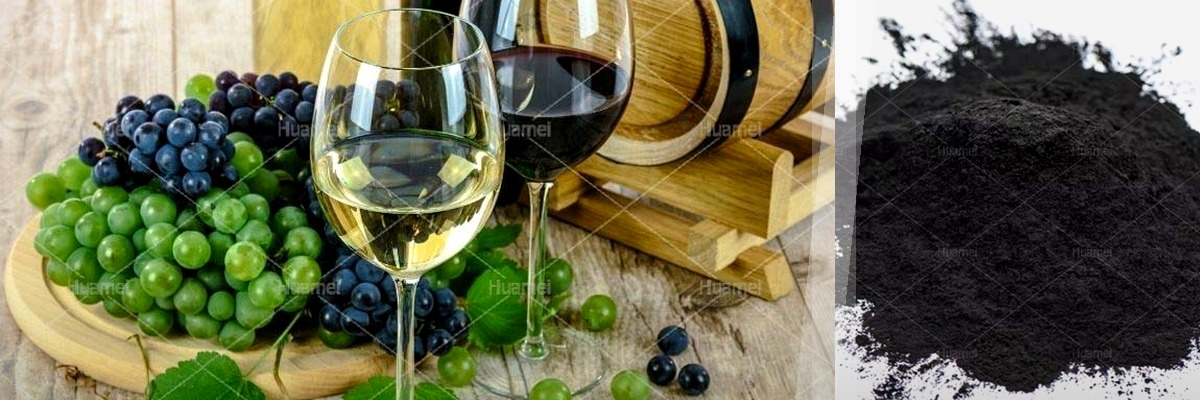
Chlorine affects taste at concentrations as low as 0.3 mg/L. Brewing, bottling, and food washing operations need dechlorinated water that also meets microbiological standards. Coconut shell GAC is preferred here — lower ash means less chance of introducing minerals that affect flavor.
Cooling Tower Makeup
Some cooling systems actually want residual chlorine for biofouling control. But if the cooling water feeds a heat exchanger with sensitive metallurgy (e.g., titanium, copper alloys), or if the blowdown goes to a biological wastewater treatment plant, dechlorination may be required. See also: activated carbon for cooling tower water treatment.
Part 3/3 — HTML(How to Order → FAQ → FAQPage Schema)
How to Order: Quantities, Packaging, and Lead Time
If you're sourcing GAC for dechlorination from a Chinese manufacturer, here's what to expect:
| Item | Details |
|---|---|
| MOQ | 10 tons (one 20 ft container) |
| Embalaje | 25 kg bags on pallets (standard) or 500 kg / 1,000 kg jumbo bags |
| Lead time | 7–15 days (stock items); 20–30 days (custom specs) |
| Shipping | FOB Xiamen/Ningde port; CIF available |
| Documentation | COA per batch, MSDS, SGS report available on request |
| Custom specs | Acid-washed, specific mesh cuts, catalytic grades — specify in RFQ |
When you send an RFQ, include:
- Application (what are you dechlorinating?)
- Feed water chlorine level (mg/L)
- Flow rate (m³/h or GPM)
- Target effluent chlorine level
- Preferred carbon type (coconut or coal) — or let us recommend
- Quantity and packaging preference
Our factory produces both coal-based and coconut shell GAC for dechlorination applications. Typical grades for chlorine removal:
| Producto | Materia prima | Número de yodo | Mesh Size | Dureza | Fresno | Best For |
|---|---|---|---|---|---|---|
| HME-AC™ 1000 | Coal | ≥1000 mg/g | 8×30 | ≥95% | ≤8% | Municipal WTP,
industrial process water |
| HME-AC™ 1050 | Coal | ≥1050 mg/g | 12×40 | ≥95% | ≤8% | Smaller vessels,
higher surface area per volume |
| Coconut Shell GAC | Coconut shell | ≥1100 mg/g | 8×30 | ≥98% | ≤3% | RO pretreatment,
F&B, pharma |
| Coconut Shell GAC (AW) | Coconut shell,
acid-washed |
≥1050 mg/g | 8×30 or 12×40 | ≥97% | ≤3% | Ultrapure water, low
pH-spike requirement |
Need a quote or technical consultation? Reach out directly:
- WhatsApp: +86 181-3792-7803
- Correo electrónico: sale@huameicarbon.com
Preguntas frecuentes
How long does activated carbon last for chlorine removal?
In a properly designed system treating municipal water with 1–2 mg/L free chlorine, GAC typically lasts 2–5 years for dechlorination. The actual lifespan depends on organic loading — high-NOM water fouls carbon faster and shortens dechlorination life. Monitor effluent chlorine weekly; when it consistently exceeds 0.1 mg/L, it's time to replace or reactivate the carbon.
Does activated carbon remove chloramine?
Standard GAC removes chloramine, but much more slowly than free chlorine. You need 3–4× the contact time (EBCT of 10–20 minutes vs. 3–5 minutes for free chlorine). Catalytic carbon — activated carbon with enhanced surface chemistry — is significantly more effective for chloramine removal and is recommended when chloramine is the primary disinfectant.
What is the best mesh size for dechlorination?
8×30 mesh is the most common choice for municipal and industrial dechlorination. It balances surface area (for fast reaction) with acceptable pressure drop. For smaller POU systems or cartridge filters, 12×40 mesh provides more surface contact per volume. Avoid going finer than 12×40 in pressure vessels — the pressure drop becomes impractical at higher flow rates.
Can I use powdered activated carbon (PAC) for chlorine removal?
Technically yes, but it's rarely practical for continuous dechlorination. PAC works in batch dosing scenarios (like water treatment plants that dose PAC for seasonal taste/odor events), but for continuous chlorine removal, GAC in a fixed bed is the standard approach. The economics, simplicity, and reliability all favor GAC for this application.
How much activated carbon do I need to remove chlorine from 100 m³/h of water?
For free chlorine removal at 5-minute EBCT: Bed volume = 100 × (5/60) = 8.33 m³. At a bulk density of ~480 kg/m³, that's roughly 4 tons of GAC. For chloramine, double the EBCT to 10 minutes, requiring ~8 tons. These are starting estimates — actual sizing depends on your target effluent level, vessel configuration, and whether you run a single bed or lead-lag.
