Sudan produced 70 tonnes of gold in 2025, exceeding the government's target by 13% and generating approximately $1.8 billion in export revenue, according to Sudan's Ministry of Minerals. That makes Sudan one of the top five gold producers in Africa — and virtually all of that gold extraction depends on activated carbon at some stage of processing.
Yet Sudan has no domestic activated carbon manufacturing. Every kilogram of carbon used in the country's gold circuits is imported. This guide covers what Sudan-based gold operations need to know about sourcing activated carbon: the right specifications for different processing methods, how to evaluate suppliers, and the logistics of getting carbon from factory to mine site.
Sudan's gold sector is split between two very different worlds: large-scale industrial mines running modern CIL/CIP circuits, and a massive artisanal mining network that accounts for the majority of output.
| Factor | Industrial Mining | Artisanal & Small-Scale (ASGM) |
|---|---|---|
| Share of production | 10–15% | 85–90% (USGS, 2024) |
| Processing method | CIL, CIP, heap leach | Gravity separation, mercury
amalgamation, small CIP units |
| Carbon usage | Continuous — 10–20 kg
per tonne daily ore capacity |
Batch — typically 0.5–5
tonnes per operation |
| Carbon reactivation | On-site kilns
(some operations) |
Rarely available — carbon
is often single-use |
| Typical order size | 20–100+ tonnes/year | 1–10 tonnes per order |
| Key concern | Lifecycle cost,
reactivation durability |
Upfront price, gold
loading speed |
Artisanal and small-scale gold mining (ASGM) is the extraction of gold by individuals or small groups using basic tools and simple processing methods, often without formal mining licenses or environmental controls. In Sudan, ASGM operations are concentrated in River Nile State, Red Sea Hills, South Kordofan, Blue Nile State, and parts of Darfur — representing over 85% of national gold output according to USGS estimates (2024).
This split matters for activated carbon sourcing because the two segments have fundamentally different requirements. Industrial operations optimize for total cost of ownership across dozens of reactivation cycles. Artisanal operators optimize for upfront affordability and fast gold loading, because they often lack reactivation kilns and use carbon only once before stripping.
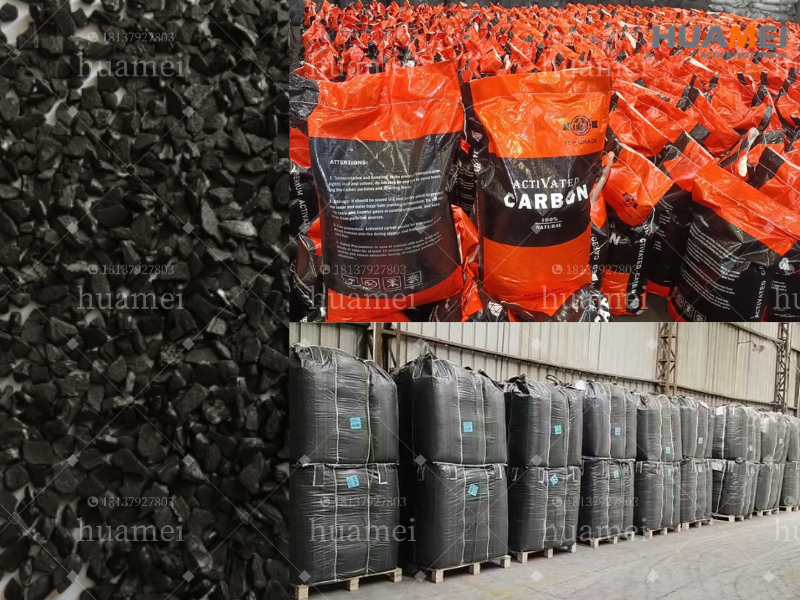
The right activated carbon specification depends entirely on how you're extracting gold. Here's what each processing method commonly used in Sudan requires:
The carbon is added directly to the leach tanks alongside the cyanide solution. It must handle continuous agitation, screening, and thermal reactivation. This is the most demanding application for activated carbon.
| Parâmetro | CIL Requirement | Test Method |
|---|---|---|
| Matéria Prima | Coconut shell | — |
| Número de iodo | ≥1,050 mg/g | ASTM D4607 |
| Ball-Pan Hardness | ≥97% | ASTM D3802 |
| Conteúdo de cinzas | ≤3% | ASTM D2866 |
| Umidade | ≤5% | ASTM D2867 |
| Mesh Size | 6×12 (1.70–3.35 mm) | ASTM D2862 |
| Densidade aparente | 0.45–0.55 g/cm³ | ASTM D2854 |
→ Why coconut shell? Coconut shell activated carbon has a naturally harder structure (ball-pan hardness ≥97%) and higher micropore volume compared to coal-based alternatives. In CIL circuits where carbon undergoes 50+ reactivation cycles at 650–750°C, this hardness translates directly to lower carbon attrition — meaning less carbon loss and less gold lost in fines.
Similar to CIL but the carbon contacts the pulp after leaching is complete. Spec requirements are nearly identical to CIL, with slightly less emphasis on abrasion resistance since the carbon sees less aggressive conditions.
→ Same spec table as CIL applies. Some CIP operations accept hardness down to 95%, but for Sudan's conditions — where reactivation facilities may be limited — starting with higher hardness (≥97%) is the safer choice.
Used for lower-grade ores. Cyanide solution percolates through ore heaps, and the pregnant solution passes through columns packed with activated carbon.
→ Carbon columns typically use 6×12 or 8×16 mesh. Hardness requirements are lower (≥95%) since there's no agitation, but iodine number should still be ≥1,000 mg/g for adequate gold loading capacity.
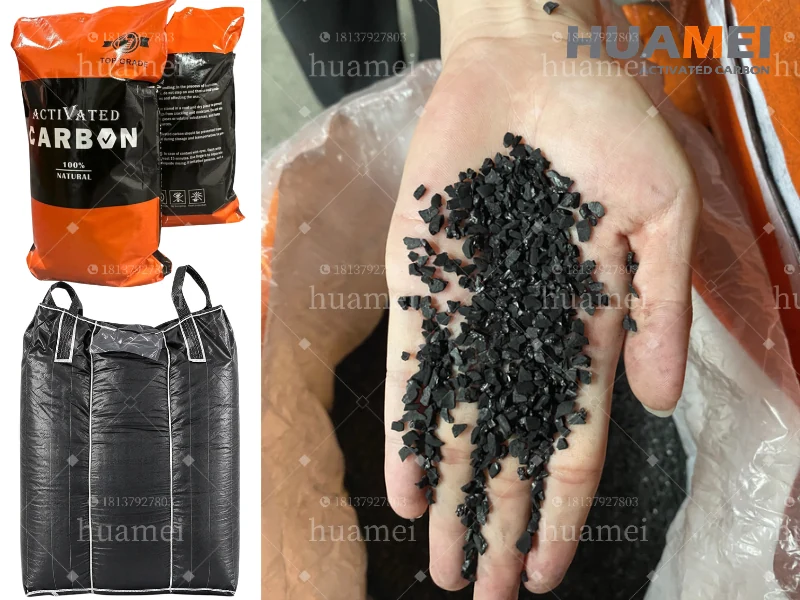
Many ASGM operators in Sudan are now reprocessing tailings from mercury amalgamation using small-scale CIP or vat leach systems. This is where carbon selection gets interesting:
Most industrial gold mines globally operate on-site reactivation kilns — rotary kilns running at 650–750°C that burn off adsorbed organics and restore the carbon's pore structure. A single batch of good carbon can survive 50–100+ reactivation cycles before it needs replacement.
In Sudan, the picture is different. Outside of a handful of large industrial operations, most gold processing sites lack reactivation equipment. Based on our experience supplying gold mines across Africa, this is one of the most common situations in emerging gold regions — and it fundamentally changes how you should evaluate activated carbon:
| Factor | With Reactivation | Without Reactivation (Most Sudan Sites) |
|---|---|---|
| Carbon lifecycle | 50–100+ cycles | 1–3 uses (strip and discard
or sell spent carbon) |
| Key cost driver | Cost per reactivation cycle | Cost per kg of gold recovered |
| Hardness priority | Critical — carbon must
survive kiln |
Important but secondary
to adsorption performance |
| Optimal strategy | Premium carbon,
maximize cycle life |
Balance price vs. gold
loading capacity |
| Annual carbon cost
(5,000 tpd plant) |
$30,000–75,000
(makeup only) |
$150,000–400,000 (full
replacement) |
The bottom line: without reactivation, your carbon is a consumable, not a durable asset. This makes the carbon's gold loading capacity per dollar spent the most important metric — not how many kiln cycles it can survive.
That said, even without a kiln, hardness still matters. Soft carbon generates fines during handling and screening. Fines carry adsorbed gold into tailings. Based on our 15+ years of manufacturing experience, we recommend a minimum ball-pan hardness of 95% even for single-use applications — the 2–3% price premium over softer carbon pays for itself in reduced gold loss to fines.
Getting activated carbon from a Chinese factory to a Sudanese mine site involves a specific logistics chain that buyers should plan around:
| Stage | Timeline | Notes |
|---|---|---|
| Production + quality testing | 15–25 days | From order confirmation;
includes COA and third-party testing if requested |
| Inland transport to port | 2–5 days | Fujian/Ningxia factory →
Shanghai/Xiamen port |
| Sea freight (FCL) | 30–45 days | Shanghai/Ningbo → Port Sudan;
varies by carrier and routing |
| Port clearance + customs | 5–14 days | Sudan customs processing;
varies significantly |
| Inland transport to mine | 1–7 days | Port Sudan → River Nile/Red Sea
/Kordofan mining regions |
Total lead time: approximately 55–95 days from order to mine site.
→ This means Sudan-based operations should plan carbon procurement at least 3 months ahead. Running out of carbon mid-campaign is not just inconvenient — it stops gold production entirely.
For Sudan's ASGM sector where mine sites are often reached by unpaved roads, 25 kg bags are often the practical choice despite the higher per-unit handling cost.
Sudan's gold mining sector imports activated carbon primarily from China, India, Sri Lanka, and Southeast Asia. Here's how to evaluate suppliers systematically:
Every reputable manufacturer provides a COA with each shipment. The COA should list iodine number, hardness, ash, moisture, mesh distribution, and apparent density — all with the specific ASTM test method referenced. If a supplier can't provide a COA with ASTM method numbers, that's a red flag.
For critical applications, request third-party verification through SGS, Intertek, or Bureau Veritas. The cost ($200–500 per sample) is trivial compared to the risk of running substandard carbon in a gold circuit.
COA data tells you what the carbon looks like in a lab. Performance in your specific leach circuit — with your ore chemistry, pH, cyanide concentration, and temperature — can only be confirmed through sample testing. Reputable suppliers provide free samples (1–5 kg) for this purpose.
A supplier who can deliver one container doesn't necessarily have the capacity for consistent quarterly supply. For operations requiring regular replenishment, verify:
Activated carbon pricing for gold recovery grade typically ranges from $1,800 to $3,500 per tonne FOB, depending on:
Several factors make carbon procurement for Sudan different from other African gold markets:
International sanctions and banking restrictions have historically complicated payments from Sudan. While gold mining imports are generally permitted, buyers should confirm payment routing through their bank before placing orders. Common workarounds include payment through intermediary countries (UAE is frequently used as a trade hub for Sudan-bound goods) and letter of credit through regional banks.
Virtually all containerized imports enter through Port Sudan on the Red Sea coast. The port has experienced congestion and operational disruptions, particularly since 2023. Build a buffer of at least 2 weeks into your logistics timeline for port clearance.
Port Sudan is Sudan's primary maritime gateway, located on the Red Sea coast approximately 675 km northeast of Khartoum. It handles over 90% of the country's imports and is the sole practical entry point for bulk cargo like activated carbon destined for inland mining regions.
| Mining Region | Distance from Port Sudan | Road Condition | Transport Time |
|---|---|---|---|
| River Nile State (Abu Hamad, Berber) | ~500–700 km | Paved highway | 1–2 days |
| Red Sea Hills (Ariab, Hassai) | ~200–400 km | Partially paved | 1 day |
| South Kordofan | ~1,200–1,500 km | Mixed — paved + unpaved | 3–5 days |
| Blue Nile State | ~1,400–1,700 km | Poor in sections | 4–7 days |
| Darfur (Jebel Amir) | ~2,000+ km | Challenging | 5–10 days |
For remote mining regions like South Kordofan and Darfur, inland freight costs can equal or exceed the sea freight from China. Factor this into your total landed cost calculation.
Whether you're running an industrial CIL plant or a small artisanal CIP unit, here's how to estimate how much activated carbon you need:
Initial carbon inventory:
Carbon inventory (tonnes) = Daily ore throughput (tonnes) × Carbon concentration (kg/t ore) ÷ 1,000
Typical carbon concentration in CIL: 15–25 g/L of slurry, which translates to roughly 10–20 kg of carbon per tonne of daily ore capacity.
Annual makeup carbon:
Makeup (tonnes/year) = Initial inventory × Attrition rate (15–25%/year)
With reactivation: 15–25% annual replacement. Without reactivation: 100% — you're replacing the entire inventory every circuit cycle.
For batch CIP or vat leach systems processing 5–50 tonnes of tailings per batch:
Direct from manufacturers, the minimum order is typically one container (10–20 tonnes). For smaller quantities, Khartoum-based industrial chemical traders often stock activated carbon in 25 kg bags. However, verify the grade and origin — traders may sell lower-specification carbon marketed as "gold grade" without proper COA documentation. If you need smaller quantities with verified specs, contact us to connect with our distribution partners in the region.
Coconut shell activated carbon is the standard for gold recovery because of its superior micropore structure and mechanical hardness. Coal-based carbon has a broader pore distribution (more mesopores) which makes it better for larger molecules but less efficient for gold-cyanide complex adsorption. For CIL and CIP gold circuits, coconut shell carbon with iodine ≥1,050 mg/g and hardness ≥97% is the industry standard worldwide.
International banking restrictions can complicate direct payments from Sudan. The most common approach is routing payments through intermediary banks in the UAE (Dubai is a major trade hub for Sudan-bound goods), or using letters of credit through regional banks with correspondent banking relationships. Discuss payment options with your supplier early in the process — experienced suppliers who have shipped to Sudan before will have established payment channels.
For most gold mining applications in Sudan, standard (non-acid-washed) coconut shell carbon is sufficient. Acid washing reduces ash content to below 2% and removes soluble metals, which matters for d
htmlrinking water treatment (NSF 61 compliance) but is not required for gold adsorption. Standard gold-grade carbon with ash ≤3% performs equally well in CIL/CIP circuits at a lower price point.
Sudan's gold sector is growing despite challenging conditions, and activated carbon demand is growing with it. Whether you're running a 5,000 tpd CIL plant in River Nile State or a 20-tonne batch CIP unit reprocessing tailings in Red Sea Hills, the fundamentals are the same: match the carbon spec to your process, verify quality through testing, and build logistics timelines that account for Sudan's import realities.
The biggest mistake we see from Sudan-based buyers is waiting until they're almost out of carbon before ordering a replacement shipment. With a 55–95 day lead time from China to mine site, procurement planning is not optional — it's the difference between continuous production and an expensive shutdown.
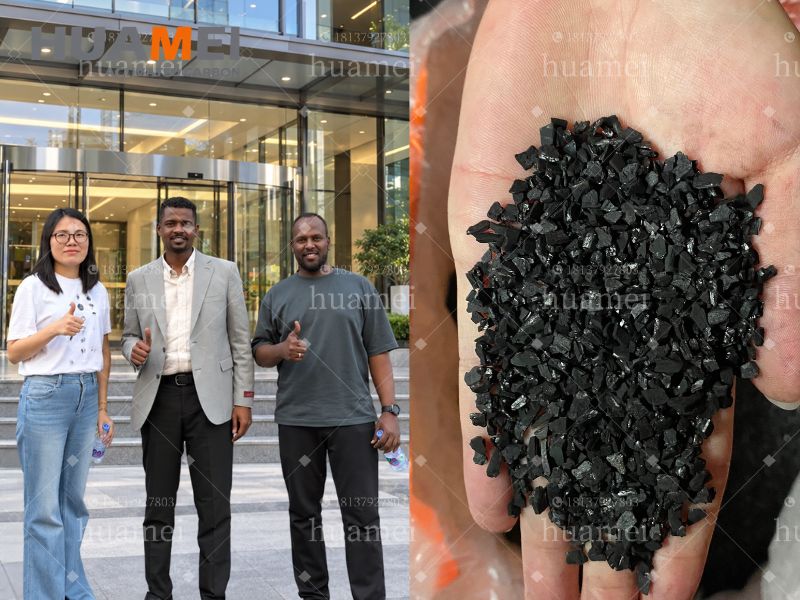
A gold mining operation in Mauritania had been purchasing premium-brand activated carbon for years. The performance was reliable, but the cost kept climbing. When they reached out to Huamei for a sample, they weren't looking for a gamble — they wanted hard data showing a Chinese supplier could match what they were already using.
The sample passed. The order followed: 24.2 tons of coconut shell activated carbon, loaded into a 40-foot container in jumbo bags. Here's how the deal came together, and what made this customer confident enough to switch suppliers on a material that directly affects gold recovery rates.
Mauritania is one of West Africa's established gold producers. According to USGS data (2024), the country's gold output reached approximately 21,950 kg (roughly 706,000 troy ounces), driven primarily by Kinross Gold's Tasiast mine — one of Africa's largest open-pit gold operations running a CIL (Carbon-in-Leach) processing circuit at approximately 24,000 tonnes of ore per day.
This customer operates in Mauritania's gold sector and had been using Jacobi's PICAGOLD G210AS — a well-known carvão ativado de casca de coco designed for gold adsorption in CIL and CIP circuits. It's a solid product with strong industry reputation. No complaints about performance.
The issue was cost. International brand-name gold carbon typically runs $2,800–3,500/ton FOB depending on grade and volume. For operations processing thousands of tonnes of ore daily, activated carbon is a recurring consumable — the carbon inventory needs regular topping up as granules degrade through thermal reactivation cycles. Even a 10–15% cost reduction on carbon procurement translates to meaningful savings over a year.
Activated carbon for gold recovery is not a commodity you swap casually. The carbon sits directly in the leach circuit, adsorbing dissolved gold from cyanide solution. If the replacement carbon has lower adsorption kinetics, weaker mechanical strength, or inconsistent quality, the consequences show up fast:
This is why many mines stick with the same carbon brand for years, even when cheaper options exist. The risk of switching outweighs the savings — unless you can prove equivalence through testing first.
| Risk Factor | What Goes Wrong | Financial Impact |
|---|---|---|
| Low iodine number | Fewer micropores →
slower gold adsorption |
Gold leaks to tailings,
recovery rate drops |
| Low hardness | Carbon breaks during
screening/transfer |
Carbon loss +
gold loss in fines |
| High ash content | Mineral impurities block
pores, reduce capacity |
Shorter carbon life,
more frequent replacement |
| Inconsistent sizing | Uneven flow through
column, channeling |
Uneven gold loading,
reduced efficiency |
| High moisture | Paying for water weight,
not carbon |
Higher effective cost
per ton of active carbon |
The customer understood these risks. That's why they didn't jump straight to a purchase order — they asked for samples first.
The procurement process followed a pattern we see regularly with mines switching from established brands to Huamei:
The customer found Huamei through published case studies and product documentation on our website. They were specifically looking at gold recovery carbon suppliers from China and comparing specifications against what they were already using (PICAGOLD G210AS).
Based on our experience, buyers in the gold mining sector typically evaluate 3–5 suppliers before requesting samples. Published case studies with real shipment data — tonnage, destination, application details — carry more weight than generic product brochures because they prove the supplier has actually delivered to similar operations.
The customer benchmarked Huamei's coconut shell gold recovery carbon against the PICAGOLD G210AS specifications they were familiar with. The key parameters for CIL/CIP gold carbon are:
| Parâmetro | CIL Gold Carbon Requirement | Why It Matters in CIL |
|---|---|---|
| Número de iodo
(ASTM D4607) |
≥1,000 mg/g | Indicates micropore volume
— where gold-cyanide complexes adsorb |
| Ball-Pan Hardness
(ASTM D3802) |
≥97% | Carbon must survive 50+
reactivation cycles without excessive attrition |
| Conteúdo de cinzas
(ASTM D2866) |
≤3% | Low ash = cleaner gold bullion
at smelting, fewe r impurities blocking pores |
| Umidade
(ASTM D2867) |
≤5% | Excess moisture = paying
for water, not carbon |
| Mesh Size | 6×12 (1.70–3.35 mm) | Standard CIL screening size —
balances adsorption rate vs mechanical handling |
| Densidade aparente | 0.45–0.55 g/cm³ | Affects carbon inventory
calculation and column loading |
The on-paper specs aligned. But specs on a datasheet and performance in a leach tank are two different things — which is why Step 3 matters most.
When the customer learned that Huamei provides free samples (typically 1–5 kg) for laboratory and pilot testing, they requested samples immediately.
Gold carbon sample testing at mine site typically involves:
The customer's test results confirmed that Huamei's coconut shell carbon met their operational requirements. The gold loading and kinetics were within acceptable range compared to what they had been achieving with the incumbent brand.
With test results in hand, the customer placed an order for 24.2 tons — enough to fill a 40-foot container. This is a typical first-order volume for gold mines testing a new supplier: large enough to run a meaningful plant trial over several weeks, but not so large that the financial exposure is uncomfortable if something unexpected happens.
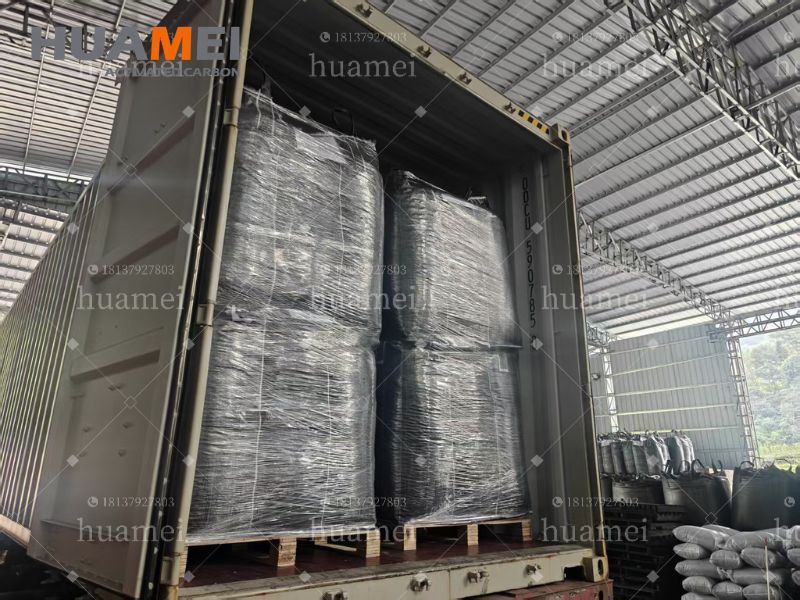
| Item | Details |
|---|---|
| Produto | Carvão ativado com casca de coco
for gold recovery (CIL grade) |
| Quantity | 24.2 tons |
| Container | 1 × 40-foot |
| Embalagem | Jumbo bags (1-ton bulk bags) |
| Mesh Size | 6×12 |
| Destination | Mauritania |
| Aplicação | Gold recovery — CIL circuit |
Why jumbo bags for gold carbon: Gold mines handling 20+ tons of carbon typically prefer 1-ton jumbo bags over 25 kg bags for practical reasons — faster unloading (a 24-ton container has 24 jumbo bags vs. 968 small bags), less manual labor at the mine site, easier inventory management, and lower risk of bag damage during handling. The carbon is transferred directly from jumbo bags into the carbon makeup hopper or wet-screened before addition to the circuit.
Mauritania is a significant but often overlooked gold producer in West Africa. The country's gold mining industry is anchored by the Tasiast mine, operated by Kinross Gold Corporation, which produced 263,325 ounces of gold during the first half of 2026 — an increase from 256,870 ounces in the same period of 2025, according to Kinross's public reporting.
Beyond Tasiast, Mauritania has emerging gold projects including the Ghabou mine in the Guidimakha region, which announced near-term launch of operations in mid-2026. The government's National Mining Pact aims to increase annual mineral exports from US$3 billion in 2025 to US$7.8 billion by 2045, with gold as a core pillar of that growth strategy.
For activated carbon suppliers, this expansion signals growing demand. Every new CIL or CIP gold processing plant requires an initial carbon inventory (typically 10–20 kg of carbon per tonne of daily ore processing capacity) plus ongoing makeup carbon to replace losses from attrition and reactivation. A plant processing 24,000 tonnes of ore per day might carry 240–480 tonnes of carbon in its circuit, with annual makeup requirements of 15–25% of that inventory.
Based on our 15+ years of manufacturing experience supplying gold mines across Africa, Asia, and South America, the factors that drive supplier switching decisions are remarkably consistent:
Yes, provided the Chinese carbon meets the same specification benchmarks — iodine ≥1,000 mg/g, ball-pan hardness ≥97%, ash ≤3%, and proper 6×12 mesh sizing. The key is sample testing at your specific mine site, because gold adsorption performance depends on your ore chemistry, cyanide concentration, pH, and circuit design. Based on our supply history, Chinese coconut shell carbon from established manufacturers performs comparably to premium international brands in CIL and CIP circuits when the specifications are matched.
A CIL plant typically maintains a carbon inventory of 10–20 kg per tonne of daily ore processing capacity. Annual makeup carbon (to replace attrition and reactivation losses) runs 15–25% of the total inventory. For a mid-size operation processing 5,000 tonnes of ore per day, that translates to roughly 50–100 tonnes of initial inventory and 10–25 tonnes of makeup carbon per year, depending on carbon quality and reactivation efficiency.
Huamei's minimum order is 10 tons (one 20-foot container). For gold mining customers, we recommend starting with a 20–25 ton trial order (one 40-foot container) to provide enough carbon for a meaningful plant evaluation over 4–8 weeks. Free samples (1–5 kg) are available for laboratory testing before committing to a bulk order. Lead time from order confirmation to port loading is typically 15–25 days.
This Mauritania shipment is a textbook example of how gold mines de-risk supplier transitions: discover through published data → compare specs → test samples → place a trial container → evaluate plant performance. The customer didn't switch because Huamei claimed to be better than the brand they were using. They switched because the test data showed equivalent performance at a meaningfully lower cost.
For gold mining operations currently evaluating activated carbon alternatives, the process doesn't need to be complicated. Request samples, run your standard battery of tests, and let the data make the decision.
Every gas mask and respirator cartridge relies on activated carbon to capture airborne contaminants. But not all activated carbon works the same way in respiratory protection — standard granular carbon handles organic vapors through physical adsorption, while impregnated carbon uses chemical reactions to neutralize toxic gases that standard carbon cannot touch.
This guide breaks down the two main types of activated carbon used in gas mask filters, the specifications that matter for each protection class, and what OEM filter manufacturers and industrial buyers need to know when sourcing carbon for respiratory protection applications.
A gas mask filter cartridge is essentially a miniature fixed-bed adsorption column. Air passes through a packed layer of activated carbon granules, and contaminant molecules are captured either by physical adsorption (van der Waals forces pulling molecules into the carbon's pore network) or by chemical reaction with impregnants on the carbon surface.
The carbon bed in a typical industrial respirator cartridge contains 30–80 g of activated carbon. Military CBRN canisters contain 150–250 g. The carbon must do its job at very short contact times — air passes through the bed in fractions of a second at breathing flow rates of 30–95 L/min — which means the carbon needs to be extremely efficient at capturing target gases on first contact.
| Filter Component | Function | Material |
|---|---|---|
| Pre-filter (P-class
particulate layer) |
Removes dust, aerosols, mist | HEPA or electrostatic fiber media |
| Activated carbon bed | Adsorbs gases and vapors | GAC or impregnated GAC
(coconut shell or coal-based) |
| Post-filter | Prevents carbon dust migration | Nonwoven fabric |
| Housing/cartridge | Contains media, directs airflow | Polypropylene or ABS plastic |
Key Point: The activated carbon bed is where the chemistry happens. Everything else in the cartridge is mechanical filtration or structural. The type, quality, and quantity of activated carbon directly determines what gases the mask can protect against, how long the protection lasts, and at what concentrations it remains effective.
All gas mask carbons fall into two categories based on how they capture contaminants:
Standard activated carbon removes contaminants through physical adsorption — organic vapor molecules are trapped in the carbon's micropore network by van der Waals forces. No chemical reaction occurs. The carbon simply provides an enormous internal surface area (800–1,200 m²/g) for molecules to stick to.
→ What it removes: Organic vapors and gases with boiling points above 65 °C — solvents (toluene, xylene, acetone), paint fumes, fuel vapors, pesticide sprays. These are the contaminants classified as Type A (Europe, EN 14387) or OV (North America, NIOSH 42 CFR 84).
→ What it does NOT remove: Low-boiling-point gases, acid gases (HCl, SO₂, HF), ammonia, carbon monoxide, formaldehyde, mercury vapor, hydrogen cyanide, or cyanogen chloride. These molecules are too small, too volatile, or too reactive to be captured by physical adsorption alone.
→ Preferred raw material: Carvão ativado com casca de coco is the industry standard for respirator-grade GAC. Its predominantly microporous structure (pores <2 nm) provides higher adsorption capacity per gram for small organic molecules compared to coal-based carbon. Coconut shell carbon also has superior hardness (≥97%), which minimizes dust generation inside the cartridge — critical for a device that delivers air directly to the user's lungs.

Impregnated carbon starts with a standard activated carbon base (usually coconut shell) and adds chemical agents — metals, metal oxides, or organic compounds — to the surface. These impregnants react with specific toxic gases that standard carbon cannot adsorb, converting them into less harmful compounds that remain bound to the carbon.
→ What it removes: Acid gases (HCl, HF, SO₂, H₂S), ammonia, formaldehyde, mercury vapor, hydrogen cyanide, cyanogen chloride, phosgene, and radioactive iodine (¹³¹I). The specific gases removed depend entirely on which impregnants are used.
| Impregnant | Chemical Symbol | Target Gases | Mechanism |
|---|---|---|---|
| Copper | Cu | HCN, CNCl, H₂S, phosgene | Catalytic oxidation and
chemisorption |
| Silver | Ag | Toxic organics, antimicrobial | Catalytic oxidation |
| Zinc | Zn | HCN, CNCl
(synergistic with Cu) |
Complex formation |
| Molybdenum | Mo | HCN, CNCl (enhances Cu/Zn) | Catalytic enhancement |
| TEDA (triethylenediamine) | C₆H₁₂N₂ | CNCl, phosgene | Nucleophilic substitution |
| Sulfuric acid /
Phosphoric acid |
H₂SO₄ / H₃PO₄ | Ammonia, amines | Acid-base neutralization |
| Potassium iodide | KI | Radioactive iodine (¹³¹I) | Isotope exchange |
| Potassium hydroxide | KOH | SO₂, HCl, HF, Cl₂, H₂S | Acid-base neutralization |
The ASZM-TEDA Standard: The most widely used military-grade impregnated carbon is designated ASZM-TEDA, where A = silver, S = copper (sulfur-reactive), Z = zinc, M = molybdenum, and TEDA = triethylenediamine. This formulation is the current NATO standard for CBRN (Chemical, Biological, Radiological, Nuclear) gas mask canisters, replacing the older ASC (chromium-containing) formulation which posed hexavalent chromium exposure risks during production and disposal.
Gas mask filters are classified by the type of gas they protect against. In Europe, the EN 14387 standard uses letter codes (A, B, E, K, etc.). In North America, NIOSH uses descriptive codes (OV, AG, AM, etc.). Each class requires different activated carbon specifications.
| EN 14387 Class | NIOSH Equivalent | Protection Against | Carbon Type Required | Color Code |
|---|---|---|---|---|
| A (A1, A2, A3) | OV | Organic vapors
(BP >65 °C) |
Standard coconut shell GAC | Brown |
| B (B1, B2, B3) | AG | Inorganic/acid gases
(Cl₂, H₂S, HCN) |
Impregnado
(Cu, Zn, TEDA or KOH) |
Gray |
| E (E1, E2, E3) | AG | Sulfur dioxide
and acid gases |
Impregnado
(KOH or amine-based) |
Yellow |
| K (K1, K2, K3) | AM | Ammonia and
organic amines |
Impregnado
(H₂SO₄ or H₃PO₄) |
Green |
| AX | OV (low BP) | Low-BP organics
(BP <65 °C) |
High-activity coconut
shell GAC |
Brown |
| Hg-P3 | — | Mercury vapor | Sulfur-impregnated
carbon |
Red |
| NO-P3 | — | Nitrous gases
(NO, NO₂) |
KMnO₄ or specialized
impregnation |
Blue |
| Reactor / CBRN | CBRN | Military/CBRN
threats |
ASZM-TEDA
impregnated carbon |
Varies |
→ ABEK combination filters: The most common multi-gas industrial filter is the ABEK cartridge, which protects against organic vapors (A), inorganic gases (B), acid gases (E), and ammonia (K) simultaneously. Manufacturing an ABEK filter requires either multiple carbon layers with different impregnations or a single carbon with combined impregnants — the latter is more complex but reduces pressure drop.
→ Capacity classes (1, 2, 3): Within each type, EN 14387 defines three capacity levels. Class 1 filters handle up to 1,000 ppm. Class 2 handles up to 5,000 ppm. Class 3 handles up to 10,000 ppm. Higher capacity requires more carbon per cartridge and/or carbon with higher adsorption capacity.
Respirator-grade activated carbon has tighter spec requirements than most water treatment applications. The carbon must perform at very short contact times, generate minimal dust, and meet strict safety standards because the treated air goes directly into human lungs.
| Parâmetro | Standard GAC (Type A/OV) | Impregnated (ABEK/CBRN) | Why It Matters |
|---|---|---|---|
| Raw
Material |
Coconut shell
(preferred) |
Coconut shell
(required for military) |
Microporous structure +
high hardness = best for short-contact gas capture |
| Mesh
Tamanho |
12×20 or 14×25 | 12×20 or 20×50 | Balances pressure
drop vs contact time at 30–95 L/min airflow |
| Iodo
Number |
≥1,000 mg/g | ≥900 mg/g
(pre-impregnation) |
Higher iodine =
more micropore volume for organic vapor capture |
| CTC | ≥60% | ≥50%
(pre-impregnation) |
Better correlates
to organic vapor capacity than iodine for gas-phase use |
| Dureza
(ASTM D3802) |
≥98% | ≥95% | Prevents dust
migration into inhaled air; critical safety parameter |
| Cinza
Content |
≤3% | ≤5% (impregnant
adds weight) |
Low ash = fewer
leachable minerals, cleaner airstream |
| Umidade | ≤5% | ≤5% | Excess moisture
reduces adsorption capacity and adds dead weight |
| Bulk
Density |
0.48–0.55 g/cm³ | 0.55–0.70 g/cm³ | Determines mass
of carbon per cartridge volume |
| Dust
Content |
≤0.5% | ≤0.5% | User breathes through
this carbon — minimal dust is non-negotiable |
→ Why coconut shell dominates respiratory protection: Three reasons. First, micropore volume — coconut shell carbon has 85–90% of its pore volume in micropores (<2 nm), which is exactly the pore size needed to trap small gas molecules at the millisecond contact times in a respirator. Coal-based carbon has more mesopores, which are less efficient for gas-phase capture. Second, hardness — coconut shell carbon at ≥97% ball-pan hardness generates far less dust than coal-based alternatives, which matters enormously when the air goes into someone's lungs. Third, low ash — coconut shell typically has ≤3% ash versus 8–15% for coal-based carbon, meaning less risk of mineral particulate contamination.
→ Mesh size selection: The standard mesh sizes for respirator carbon are 12×20 (0.85–1.70 mm) and 20×50 (0.30–0.85 mm). Finer mesh provides more surface contact and better capture efficiency at high flow rates, but increases breathing resistance (pressure drop). The OEM filter designer must balance protection performance against user comfort. For a deeper look at how mesh size affects performance, see our mesh size selection guide.
Activated carbon for respiratory protection must meet both material standards (carbon quality) and performance standards (breakthrough testing with specific challenge gases).
→ Material testing (carbon quality):
→ Filter performance testing (cartridge level):
Important for OEMs: The activated carbon you purchase is a raw material. The finished filter cartridge must pass regulatory certification testing (EN 14387 type approval or NIOSH approval) before it can be sold. Carbon suppliers provide material certificates (COA) with iodine, CTC, hardness, and ash data. But the breakthrough time — how long the filter actually protects — depends on your cartridge design (bed depth, cross-section area, airflow path) combined with the carbon quality.
If you manufacture respirator cartridges, gas mask canisters, or portable air purifiers, here's what to evaluate when choosing an activated carbon supplier:
→ Consistent particle size distribution: Respirator cartridges are precision products. If the carbon PSD varies batch to batch, your pressure drop and breakthrough time will vary — leading to failed certification tests. Request PSD analysis (ASTM D2862) for every production batch.
→ Dust-free processing: Insist on <0.5% dust content. Some suppliers skip the dedusting step to save cost. For water treatment GAC, a little dust is washed out during backwash. For respirator carbon, there is no backwash — any dust goes directly into the user's airway.
→ Batch-to-batch reproducibility: Request a minimum of 5 recent COAs to verify consistency. Key parameters to compare across batches: iodine number (should vary ≤5%), hardness (should be consistently ≥97%), and mesh size distribution (sieve analysis should be repeatable within ±2%).
→ Custom mesh sizing: Standard water treatment mesh sizes (8×30, 12×40) may not match your cartridge design. Respirator applications often need non-standard cuts like 12×20, 14×25, or 20×50. Confirm the supplier can produce and hold these custom sizes reliably.
→ Third-party certification: Request SGS, BV, or equivalent third-party test reports — not just in-house COAs. For food/pharma-adjacent applications (clean room air systems, medical respirators), NSF/ANSI 61 or equivalent certification may be required.
→ Packaging for sensitivity: Respirator-grade carbon should ship in moisture-proof packaging (sealed PE-lined bags or vacuum-sealed) to prevent moisture uptake during transit. Carbon that absorbs 5% moisture during a 30-day ocean shipment loses measurable adsorption capacity. Standard woven PP bags used for water treatment GAC are not adequate for respirator applications.
Huamei manufactures coconut shell granular act
htmlivated carbon suitable for OEM respirator and gas mask filter applications:
→ Standard (non-impregnated) GAC: Available in 12×20 and 20×50 mesh with iodine ≥1,000 mg/g, CTC ≥60%, hardness ≥98% (ball-pan, ASTM D3802), and ash ≤3%. This covers Type A (organic vapor) and AX (low-boiling-point organic) filter applications. The same HMGOLD™ coconut shell carbon used in gold recovery — with its ≥99% hardness and 1,050–1,200 mg/g iodine number — provides an excellent base material for high-performance respirator cartridges.
→ Production capacity: 700+ tons/month across manufacturing facilities in Fujian and Ningxia provinces. Minimum order: 10 tons (one 20-foot container).
→ Quality documentation: Every shipment includes COA with iodine number, CTC, hardness, ash, moisture, pH, bulk density, and full sieve analysis. Third-party testing (SGS) available on request.
→ Packaging options: 25 kg PE-lined bags, 500 kg or 1-ton jumbo bags. Moisture-proof vacuum sealing available for respirator-grade shipments.
Note: Huamei supplies the activated carbon base material for filter manufacturing. We do not supply finished impregnated carbon (ASZM-TEDA, acid-impregnated, etc.) or assembled respirator cartridges. OEM filter manufacturers typically perform impregnation in-house using our coconut shell GAC as the substrate, or source impregnated carbon from specialized chemical processors.
Gas masks use two types of activated carbon. Standard (non-impregnated) coconut shell GAC in 12×20 or 20×50 mesh removes organic vapors through physical adsorption. Impregnated carbon — with metals like copper, silver, zinc, and organic compounds like TEDA — removes toxic industrial chemicals, acid gases, ammonia, and CBRN agents through chemical reactions on the carbon surface. Most multi-gas industrial filters (ABEK type) use impregnated carbon to cover a broad range of hazards.
Three reasons: (1) its microporous structure captures small gas molecules efficiently at the very short contact times inside a respirator cartridge, (2) its high hardness (≥97%) minimizes dust generation — critical because inhaled dust from the carbon itself would be a health hazard, and (3) its low ash content (≤3%) means fewer mineral particles that could contaminate the airstream.
ASZM-TEDA is the current NATO/military standard for CBRN gas mask carbon. The acronym stands for the impregnants: Silver (A), Copper/sulfur-reactive (S), Zinc (Z), Molybdenum (M), and triethylenediamine (TEDA). It replaced the older ASC formulation, which contained hexavalent chromium — a known carcinogen. ASZM-TEDA provides broad-spectrum protection against chemical warfare agents, toxic industrial chemicals, and radioactive iodine.
It depends on the contaminant type, concentration, breathing rate, temperature, and humidity. A Type A1 (EN 14387) filter tested against 1,000 ppm cyclohexane at 30 L/min must last at least 70 minutes before breakthrough. In real-world use at much lower ambient concentrations, a cartridge may last
html 8–40 hours of actual use. All gas mask manufacturers specify a maximum service life and replacement schedule — follow those guidelines, because once the carbon is saturated, contaminants pass straight through.
From Huamei, the minimum order for coconut shell GAC in respirator mesh sizes (12×20 or 20×50) is 10 tons — one 20-foot container. Free samples (1–5 kg) are available for laboratory cartridge testing before committing to bulk orders. Lead time from order confirmation to port is typically 15–25 days.
Activated carbon is the core functional material in every gas mask and respirator filter. Standard coconut shell GAC handles organic vapors. Impregnated carbon handles the rest — acid gases, ammonia, CBRN threats, mercury, and formaldehyde. The quality of the carbon directly determines the protection performance and service life of the finished filter.
For OEM filter manufacturers: the specs that matter most are hardness (≥97% for minimal dust), mesh size consistency (repeatable PSD for predictable pressure drop), and adsorption capacity (iodine ≥1,000 mg/g, CTC ≥60% for gas-phase performance). Get these right, and your cartridge design has a strong foundation. Get them wrong, and no amount of clever engineering in the housing will compensate.
Activated carbon removes organics. Zeolite removes ammonia and heavy metals through ion exchange. They solve different problems — and the fastest way to waste money on filter media is to pick the wrong one.
This guide puts both materials side by side with real specs and cost data so you can make a clear decision. If you're designing a treatment system, retrofitting an existing one, or evaluating suppliers, the comparison tables below will save you hours of research.
| Property | Carvão ativado | Zeolite (Natural Clinoptilolite) |
|---|---|---|
| Primary Mechanism | Physical adsorption (van der Waals forces) | Cation exchange + molecular sieving |
| BET Surface Area | 800–1,500 m²/g | 30–60 m²/g |
| CEC (Cation Exchange
Capacity) |
Negligible | 150–230 meq/100 g |
| Removes Organics
(TOC, VOCs, pesticides) |
✅ Yes — primary
strength |
❌ No — no organic
adsorption capacity |
| Removes Ammonia (NH₃/NH₄⁺) | ❌ Poor | ✅ Yes — primary strength |
| Removes Chlorine/
Chloramine |
✅ Yes (catalytic
reduction) |
❌ No |
| Removes Heavy Metals | Limited (impregnated
grades only) |
✅ Yes (Pb²⁺, Cu²⁺, Zn²⁺,
Cd²⁺ via ion exchange) |
| Removes PFAS | ✅ Yes (GAC + resin
systems) |
❌ No (PFAS are anionic,
zeolite exchanges cations) |
| pH Effect on
Performance |
Minimal (pH 2–12) | Optimal at pH 4–8; loses
capacity outside range |
| Regeneração | Thermal (700–900 °C)
or chemical |
NaCl brine wash or thermal
(350–600 °C) |
| Typical Service Life | 6–24 months (depends
on loading) |
12–36 months for ion
exchange applications |
| Price Range
(FOB China) |
$800–$2,500/ton | $100–$400/ton |
Key Distinction: Activated carbon works by adsorbing molecules into its pore network. Zeolite works by exchanging cations in its crystal lattice. They're solving fundamentally different chemistry problems — one captures organics, the other swaps ions.
Activated carbon is an adsorption powerhouse. Its internal surface area — 800 to 1,500 m²/g for commercial grades — gives it unmatched capacity for trapping organic molecules, chlorine, taste and odor compounds, VOCs, and emerging contaminants like PFAS.
The pore structure is what makes it work. Micropores (<2 nm) capture small dissolved molecules. Mesopores (2–50 nm) handle larger organics and provide transport channels. The ratio of micropores to mesopores determines which contaminants the carbon targets most effectively.
→ Chlorine and chloramine removal: Activated carbon removes free chlorine through catalytic decomposition, not just adsorption. A properly sized GAC bed with 10+ minutes of empty bed contact time (EBCT) can reduce chlorine from 2–3 ppm to <0.1 ppm — consistently, for months. Zeolite has zero chlorine removal capacity.
→ Organic contaminant removal (TOC, COD, VOCs): This is where activated carbon has no substitute. Dissolved organics — from industrial solvents to pesticide residues to pharmaceutical traces — bind to the carbon surface. Coal-based GAC is the standard choice for industrial wastewater with high COD loading. Zeolite removes essentially zero dissolved organics.
→ Taste and odor control: Geosmin (earthy taste) and 2-MIB (musty odor) in municipal water are organic molecules that activated carbon adsorbs readily. PAC dosing at 5–20 mg/L during seasonal taste/odor events is standard practice at water treatment plants worldwide.
→ PFAS removal: GAC is one of the EPA-recognized best available technologies for PFAS removal. Long-chain PFAS (PFOA, PFOS) adsorb well onto coal-based or coconut shell GAC with EBCTs of 10–20 minutes. Zeolite is ineffective against PFAS because these contaminants are anionic — they carry negative charges, and zeolite only exchanges positively charged cations.
→ Gold recovery: In CIP/CIL mining circuits, coconut shell activated carbon (HMGOLD™ series) adsorbs gold cyanide complexes from pregnant leach solution. Iodine values of 1,050–1,200 mg/g and ball-pan hardness ≥98% are the industry standard. Zeolite has no application in gold extraction.
Natural zeolite — primarily clinoptilolite — is a crystalline aluminosilicate mineral with a rigid, cage-like pore structure. Unlike activated carbon's random pore network, zeolite has uniform channels of fixed diameter (approximately 4–7 Å), which gives it molecular sieving capability. But its real value is cation exchange.
Zeolite's CEC of 150–230 meq/100 g means it can swap sodium or calcium ions in its lattice for target contaminant cations in the water. This is a different mechanism entirely from adsorption — and it's extremely effective for specific applications.
→ Ammonia removal (NH₄⁺): This is zeolite's signature application. Clinoptilolite has a strong selectivity for ammonium ions, with removal efficiency of 85–97% at initial concentrations of 1–50 mg/L. In aquaculture, municipal wastewater polishing, and agricultural runoff treatment, zeolite is the go-to media. Activated carbon removes almost no ammonia.
→ Heavy metal ion exchange: Zeolite's selectivity series for heavy metals is typically: Pb²⁺ > Cu²⁺ > Cd²⁺ > Zn²⁺ > Ni²⁺. For lead removal, clinoptilolite can achieve >95% removal from concentrations up to 100 mg/L. Activated carbon has limited heavy metal capacity unless specially impregnated.
→ Cesium and strontium removal (nuclear): Zeolite is used in nuclear wastewater treatment for selective removal of Cs⁺ and Sr²⁺ radionuclides. The Fukushima cleanup operation used thousands of tons of zeolite for this purpose.
→ Aquaculture and fish farming: Zeolite reduces ammonia toxicity in fish tanks and ponds, which is critical because ammonia at just 0.02 mg/L (as un-ionized NH₃) is lethal to many fish species. Zeolite dosing at 10–20 g/L of pond volume provides immediate ammonia control.
→ Soil amendment and slow-release fertilizer: Zeolite retains nutrients (NH₄⁺, K⁺) in the root zone and releases them gradually. Mixing 5–10% zeolite into soil can reduce fertilizer use by 20–30% while preventing nitrate leaching into groundwater.
The table below maps common water treatment applications to the recommended media. In some cases, both materials work — but one is clearly superior.
| Aplicação | Carvão ativado | Zeolite | Recommended |
|---|---|---|---|
| Chlorine/chloramine removal | ★★★★★ | ☆☆☆☆☆ | Carvão activado |
| VOC/solvent removal | ★★★★★ | ☆☆☆☆☆ | Carvão activado |
| Taste & odor control | ★★★★★ | ☆☆☆☆☆ | Carvão activado |
| PFAS removal | ★★★★☆ | ☆☆☆☆☆ | Carvão activado |
| Ammonia (NH₄⁺) removal | ★☆☆☆☆ | ★★★★★ | Zeolite |
| Lead (Pb²⁺) removal | ★★☆☆☆ | ★★★★★ | Zeolite |
| Copper/zinc removal | ★★☆☆☆ | ★★★★☆ | Zeolite |
| COD/TOC reduction | ★★★★★ | ★☆☆☆☆ | Carvão activado |
| Radioactive Cs/Sr removal | ★☆☆☆☆ | ★★★★★ | Zeolite |
| Municipal drinking water | ★★★★★ | ★★☆☆☆ | Activated carbon (often primary) |
| Aquaculture ammonia control | ★☆☆☆☆ | ★★★★★ | Zeolite |
| Gold recovery (CIP/CIL) | ★★★★★ | ☆☆☆☆☆ | Carvão activado |
| Industrial wastewater (mixed) | ★★★★☆ | ★★★☆☆ | Both (dual-media system) |
Rule of Thumb: If the contaminant is organic or uncharged, use activated carbon. If it's a positively charged metal ion or ammonia, use zeolite. If it's both, use a dual-media system with zeolite upstream and carbon downstream.
Zeolite is dramatically cheaper per ton — but per-ton price is misleading without considering what each ton actually removes.
| Cost Factor | Activated Carbon (GAC) | Zeolite (Clinoptilolite) |
|---|---|---|
| Media price (FOB) | $800–$2,500/ton | $100–$400/ton |
| BET surface area per metric tonne (1,000,000 g) | 800,000,000–1,500,000,000 m² | 30,000,000–60,000,000 m² |
| Organic removal capacity | High (0.1–0.4 g contaminant/g carbon) | Near zero |
| Ammonia exchange capacity | Near zero | 10–25 mg NH₄⁺/g zeolite |
| Regeneration cost | $400–$800/ton (thermal) | $50–$150/ton (brine wash) |
| Regeneration cycles | 3–8 cycles (thermal) | 10–50+ cycles (brine wash) |
| Freight sensitivity | Higher (lighter material, lower bulk density) | Lower (dense mineral, 0.9–1.1 g/cm³) |
→ For organic removal: There is no cost comparison — zeolite simply doesn't work for organics. If you need to remove chlorine, VOCs, pesticides, or PFAS, activated carbon is the only option regardless of price.
→ For ammonia removal: Zeolite wins on cost by a wide margin. At $150–$300/ton with brine regeneration capability, zeolite costs roughly 1/10th as much as activated carbon per unit of ammonia removed. Even if you tried using impregnated carbon for ammonia (which is unconventional), the cost per mg of NH₄⁺ removed would be 5–8× higher than zeolite.
→ For heavy metals: Zeolite is usually more cost-effective for cationic metals (Pb, Cu, Zn, Cd). However, for arsenic (which exists as an oxyanion in water), neither material is ideal — iron-based adsorbents or ion exchange resins are typically more effective.
Both materials can be regenerated, but the methods and economics differ significantly.
→ Activated carbon regeneration: Thermal reactivation at 700–900 °C in a rotary kiln or multiple hearth furnace. This burns off adsorbed contaminants and restores 90–95% of original adsorption capacity. Cost: $400–$800/ton per cycle. Typical carbon loses 5–10% mass per regeneration cycle due to burnoff. After 3–8 cycles, replacement with virgin carbon is needed. For more detail, see our complete regeneration guide.
→ Zeolite regeneration: Much simpler — soak or backwash with 2–10% NaCl (sodium chloride) brine solution. The sodium displaces the adsorbed cations (NH₄⁺, Pb²⁺, etc.) from the zeolite lattice, restoring exchange capacity. Cost: $50–$150/ton per cycle. Zeolite can withstand 10–50+ brine regeneration cycles with minimal capacity loss. Thermal regeneration at 350–600 °C is also possible for heavily fouled zeolite, but rarely necessary.
Pro Tip: The brine waste stream from zeolite regeneration contains concentrated heavy metals or ammonia. Don't discharge it without treatment. In ammonia applications, the brine concentrate can be converted to ammonium sulfate fertilizer through air stripping — turning a waste stream into a revenue stream.
Many real-world water streams contain both organic contaminants and ionic pollutants. In these cases, the smartest design uses both materials in sequence:
→ Zeolite first, carbon second: This is the standard configuration. Zeolite removes ammonia and heavy metal cations upstream, which reduces the organic fouling load on the downstream carbon bed. The carbon then handles chlorine, organics, and taste/odor. This sequencing extends activated carbon service life by 20–40% because the carbon isn't wasting capacity on contaminants that zeolite handles more efficiently.
→ Blended media beds: Some smaller systems use a mixed bed of zeolite and GAC in a single vessel. This is simpler but makes regeneration impossible — you can't brine-wash zeolite without the brine contacting the carbon. Blended beds are single-use only, which limits them to small-scale or point-of-use applications.
→ Parallel treatment trains: Industrial plants sometimes run separate zeolite and carbon treatment trains in parallel, then blend the treated streams. This allows independent optimization and regeneration of each media but doubles the equipment footprint.

We see these errors regularly from buyers who don't understand the chemistry difference:
→ Mistake #1: Using zeolite for chlorine removal. Zeolite has zero chlorine removal capacity. If your water has residual chlorine (most municipal supplies do), you need activated carbon — period. Installing zeolite for "general water treatment" without checking chlorine levels wastes money and leaves chlorine in the treated water.
→ Mistake #2: Using activated carbon for ammonia. Standard activated carbon adsorbs almost no ammonia. Some buyers assume "carbon removes everything" — it doesn't. If ammonia is your target contaminant (common in aquaculture, landfill leachate, and agricultural runoff), zeolite is the correct media.
→ Mistake #3: Choosing based on price per ton alone. Zeolite at $200/ton looks cheap next to GAC at $1,500/ton. But if your problem is organic contamination, you'll need to replace the zeolite immediately because it removes zero organics — making your actual cost infinite per unit of contaminant removed.
→ Mistake #4: Ignoring pH effects on zeolite. Zeolite's ion exchange capacity drops sharply below pH 4 and above pH 8. If your water is outside the pH 4–8 range, zeolite performance will disappoint. Activated carbon, by contrast, works across pH 2–12 with minimal performance variation.
→ Mistake #5: Overlooking competing ions. Zeolite doesn't just exchange target metals — it exchanges all cations. Hard water with high calcium and magnesium will compete with ammonia or lead for exchange sites, reducing effective capacity by 30–60%. If your water is hard (>200 mg/L CaCO₃), you'll need significantly more zeolite than lab data suggests.
When sourcing either material, these are the specs to request from suppliers:
| Parâmetro | Test Method | Typical Range | Why It Matters |
|---|---|---|---|
| Número de iodo | ASTM D4607 | 800–1,200 mg/g | Indicates micropore volume
— higher = more capacity for small molecules |
| BET Surface Area | ASTM D6556 | 800–1,500 m²/g | Total available surface
for adsorption |
| Dureza | ASTM D3802 | ≥95% (ball-pan) | Resistance to breakage
during backwash and handling |
| Conteúdo de cinzas | ASTM D2866 | ≤5% (coal), ≤3% (coconut) | Lower ash = fewer leachable
minerals, better for drinking water |
| Umidade | ASTM D2867 | ≤5% | You're paying for
carbon, not water |
| Effective Size (D10) | ASTM D2862 | 0.6–1.1 mm (for water treatment GAC) | Affects pressure
drop and contact time |
| Parâmetro | Typical Range | Why It Matters |
| Clinoptilolite Content | ≥85% | Higher purity = higher
exchange capacity |
| CEC | 150–230 meq/100 g | Directly determines ion
exchange capacity |
| Si/Al Ratio | 4.0–5.5 | Affects selectivity and
acid resistance |
| Grain Size | 0.5–2.0 mm (water treatment) | Smaller = faster kinetics,
higher pressure drop |
| Densidade a granel | 0.9–1.1 g/cm³ | Heavier than GAC —
affects vessel sizing |
| Ammonia Capacity | 10–25 mg NH₄⁺/g | The actual performance
metric for ammonia removal |
No. Zeolite has no capacity for chlorine removal. Chlorine is removed through catalytic decomposition on the activated carbon surface — a fundamentally different mechanism from ion exchange. If your water contains residual chlorine, you need activated carbon (either casca de coco or coal-based GAC).
It depends on the problem. For ammonia spikes in new tanks (new tank syndrome), zeolite is excellent — it provides immediate ammonia reduction while the biological filter establishes. For removing medications, tannins, or discoloration after treatment, activated carbon is the right choice. Many aquarists use both: zeolite for ammonia, carbon for organics.
Physically, yes — but it complicates maintenance. You can't regenerate zeolite with brine if it's mixed with activated carbon (the salt will desorb some contaminants from the carbon). For small-scale applications, mixed beds work as single-use media. For larger systems, separate vessels for each media is the standard approach.
For ammonia removal: zeolite at $100–$400/ton with brine regeneration is far cheaper annually than any alternative. For organic removal: activated carbon at $800–$2,500/ton is the only option — there is no cheaper alternative that actually works. Annual cost depends on contaminant loading, flow rate, and regeneration frequency. A 100 m³/hour water treatment system typically uses 5–15 tons/year of GAC ($4,000–$37,500) or 3–10 tons/year of zeolite ($300–$4,000) depending on the application.
Standard activated carbon has limited heavy metal capacity. However, impregnated activated carbon (with sulfur, iron, or other agents) can remove specific metals like mercury (Hg), arsenic (As), and lead (Pb). For general heavy metal removal (Pb, Cu, Zn, Cd, Ni), zeolite is usually more effective and more cost-efficient through ion exchange.
Activated carbon and zeolite are not competing products — they solve different problems. Activated carbon is the irreplaceable adsorbent for organics, chlorine, VOCs, and PFAS. Zeolite is the cost-effective ion exchanger for ammonia and heavy metals. If your water has both types of contaminants, use both materials in a dual-media system with zeolite upstream and carbon downstream.
The wrong choice doesn't just underperform — it fails completely. Zeolite will remove zero chlorine. Carbon will remove near-zero ammonia. Match the media to the chemistry, and you'll get reliable results at the lowest lifecycle cost.
Activated carbon is the most widely used method for removing residual chlorine from process water, drinking water, and RO feed streams. But choosing the right carbon — and designing the system correctly — is the difference between a bed that lasts 5 years and one that fails in 6 months. This guide covers the dechlorination mechanism, GAC specifications, system sizing with worked examples, and how to avoid the most common design mistakes.
Most people call it a "carbon filter," but activated carbon doesn't filter chlorine the way a screen catches dirt. It removes free chlorine through a catalytic reduction reaction on the carbon surface, not physical trapping.
Here's what actually happens: free chlorine (HOCl or OCl⁻) contacts the carbon surface and reacts with carbon sites to form chloride ions (Cl⁻) and carbon oxide. The simplified reaction:
C* + HOCl → C*O + H⁺ + Cl⁻
Where C* = active carbon surface site, C*O = oxidized carbon site.
This is a surface chemical reaction, not adsorption. That distinction matters because:
| Parâmetro | Chlorine Removal | Organic Removal (NOM/TOC) |
|---|---|---|
| Mechanism | Catalytic reduction | Physical adsorption |
| Controlling Factor | Contact time (EBCT) | Pore volume + surface area |
| Exhaustion Signal | Chlorine breakthrough in effluent | Rising TOC in effluent |
| Typical Bed Life | 2–5 years (if organics are low) | 6–18 months |
| Regeneration Needed? | Less frequently | More frequently |
Key takeaway: if your primary goal is dechlorination (not organics removal), your carbon bed will last significantly longer — but you still need to design for the right EBCT.
Municipal water plants use two types of disinfectant residuals: free chlorine (hypochlorous acid / hypochlorite) and chloramines (monochloramine, NH₂Cl). The carbon you need depends on which one you're dealing with.
| Property | Free Chlorine (HOCl/OCl⁻) | Chloramine (NH₂Cl) |
|---|---|---|
| Carbon reaction | Fast catalytic reduction | Slow catalytic decomposition |
| Required EBCT | 2–5 minutes | 10–20 minutes |
| Carbon type | Standard GAC (coconut or coal) | Catalytic carbon recommended |
| Bed life | 2–5 years | 1–3 years |
| Effluent target | <0.1 mg/L | <0.1 mg/L |
This is the most common mistake we see in RFQs: buyers spec standard GAC for chloramine removal and wonder why the carbon exhausts in months instead of years. If your feed water contains chloramines (check with your water utility), you need catalytic carbon with higher surface reactivity, and you need to double or triple your EBCT.
Not sure which disinfectant your water plant uses? Most US and Australian utilities publish annual water quality reports. In the Middle East and Southeast Asia, free chlorine is far more common. If you're designing for an industrial process downstream of a municipal supply, ask the utility — don't guess.
Carbon spec sheets throw 15+ parameters at you. For dechlorination, here's what actually drives performance — and what's just noise.
| Parâmetro | Why It Matters for Dechlorination | Recommended Range | Test Method |
|---|---|---|---|
| Número de iodo | Indicates total surface area — higher
= more reactive sites |
≥900 mg/g (coal), ≥1000 mg/g (coconut) | ASTM D4607 |
| Mesh Size | Smaller particles = more surface
contact per bed volume |
8×30 or 12×40 | ASTM D2862 |
| Dureza | Prevents fines generation
that causes pressure drop |
≥95% (coal), ≥97% (coconut) | ASTM D3802 |
| Umidade | You're paying for water
weight if too high |
≤5% | ASTM D2867 |
| Conteúdo de cinzas | High ash can leach minerals
and reduce active surface |
≤8% (coal), ≤3% (coconut) | ASTM D2866 |
| Parâmetro | Relevance | Typical Range |
|---|---|---|
| Densidade aparente | Affects bed weight and vessel sizing | 0.45–0.55 g/cm³ |
| pH | Alkaline carbon may affect process water pH initially | 9–11 (coal), 9–10 (coconut) |
| Abrasion Number | Important for backwash durability | ≥75 |
| CTC (Carbon Tetrachloride) | Gas-phase indicator, less relevant for water | ≥50% |
What you can safely ignore for dechlorination: Methylene Blue number (relevant for decolorization, not dechlorination), Ball-Pan Hardness vs. Stirring Hardness (just make sure the method is stated), and most proprietary "activity" indices.
Both work. The choice comes down to your system design, water chemistry, and budget.
| Factor | Coconut Shell GAC | Coal-Based GAC |
|---|---|---|
| Pore structure | Predominantly microporous | Micro + mesoporous |
| Best for | Pure dechlorination,
low-organics water |
Dechlorination + some organics removal |
| Iodine number (typical) | 1000–1300 mg/g | 900–1100 mg/g |
| Dureza | ≥97% (very durable) | ≥90–95% |
| Dust / fines | Less fines during backwash | More fines, higher attrition |
| Price range (FOB China) | $1,200–1,800/ton | $700–1,100/ton |
| Typical applications | RO pretreatment,
boiler feed, pharma, F&B |
Municipal WTP, industrial
wastewater, cooling towers |
| Acid-washed option | Available — removes
soluble ash, lowers pH spike |
Available but less common |
Rule of thumb:

Getting the carbon spec right is half the job. The other half is designing the contact system so the carbon actually works.
EBCT is the single most important design parameter for dechlorination. It's calculated as:
EBCT (min) = Bed Volume (m³) ÷ Flow Rate (m³/min)
| Aplicação | Disinfectant | Recommended EBCT | Notes |
|---|---|---|---|
| RO pretreatment | Free chlorine | 3–5 min | Target <0.05 mg/L to protect membranes |
| Municipal drinking water | Free chlorine | 5–10 min | Also removing some THMs/organics |
| Boiler feed water | Free chlorine | 3–5 min | Target <0.1 mg/L |
| Pharmaceutical / ultrapure | Free chlorine | 5–10 min | Very low target (<0.02 mg/L) |
| Any application | Chloramine | 10–20 min | Catalytic carbon preferred |
| Parâmetro | Typical Range | Design Note |
|---|---|---|
| Service flow rate | 5–15 m/h (2–6 gpm/ft²) | Lower = better removal, but bigger vessel |
| Minimum bed depth | 0.6 m (2 ft) | Below this, channeling risk increases |
| Typical bed depth | 1.0–2.5 m (3–8 ft) | Deeper beds = longer EBCT at same flow |
| Backwash rate | 25–40 m/h (10–16 gpm/ft²) | Expand bed 20–30% to release fines |
| Freeboard | ≥50% of bed depth | For backwash expansion |
Let's say you need to dechlorinate 50 m³/h of municipal water (free chlorine, 1.5 mg/L) for an RO pretreatment system:
For a lead-lag configuration (two vessels in series), you'd split the bed volume across two vessels, which gives redundancy during carbon replacement.
| Problem | Root Cause | Solution |
|---|---|---|
| Chlorine breakthrough after 6 months | Organic fouling blocking
reactive sites |
Add pre-filtration (multimedia filter)
upstream; increase EBCT |
| High pressure drop across bed | Fines accumulation from
low-hardness carbon |
Spec hardness ≥95%; increase
backwash frequency |
| pH spike in fresh carbon bed | Alkaline ash leaching
from new carbon |
Use acid-washed carbon; or flush
2–3 bed volumes before service |
| Channeling (uneven flow) | Bed too shallow, poor
distributor design |
Minimum 0.6 m bed depth;
proper inlet distribution |
| Black water on startup | Carbon fines
not rinsed |
Backwash and rinse until effluent
runs clear (30–60 min) |
| Bacterial growth in carbon bed | Stagnant water, no residual
chlorine downstream |
Regular backwash; consider silver
-impregnated carbon for POU |
Polyamide RO membranes (the most common type) are destroyed by chlorine. Even 0.1 mg/L of free chlorine will degrade membrane performance within weeks. Most RO manufacturers specify <0.05 mg/L free chlorine in feed water. For more on carbon in desalination systems, see our activated carbon for desalination guide.
Two approaches:
| Method | GAC Bed | SMBS Injection |
|---|---|---|
| Capital cost | Higher (vessel + carbon) | Lower (pump + tank) |
| Operating cost | Lower (carbon lasts 2–5 yr) | Higher (continuous chemical) |
| Reliability | Passive — works even during power outage | Active — pump failure = chlorine passes through |
| Side benefits | Also removes organics, taste, odor | None |
| Maintenance | Backwash weekly; replace carbon every 2–5 yr | Calibrate dosing pump; refill chemicals |
| Best for | Plants >10 m³/h, variable feed quality | Small systems, stable feed, tight budget |
Chlorine in boiler feed water causes pitting corrosion in tubes and drums. Most boiler OEMs require <0.1 mg/L free chlorine in feed water. For high-pressure boilers (>40 bar), the target drops to <0.02 mg/L.
GAC filters are standard in demineralization trains between the sand filter and ion exchange resins. Chlorine also degrades anion exchange resins, so dechlorination protects your entire demin system. Related: granular activated carbon for water treatment.
Chlorine affects taste at concentrations as low as 0.3 mg/L. Brewing, bottling, and food washing operations need dechlorinated water that also meets microbiological standards. Coconut shell GAC is preferred here — lower ash means less chance of introducing minerals that affect flavor.
Some cooling systems actually want residual chlorine for biofouling control. But if the cooling water feeds a heat exchanger with sensitive metallurgy (e.g., titanium, copper alloys), or if the blowdown goes to a biological wastewater treatment plant, dechlorination may be required. See also: activated carbon for cooling tower water treatment.
Part 3/3 — HTML(How to Order → FAQ → FAQPage Schema)
If you're sourcing GAC for dechlorination from a Chinese manufacturer, here's what to expect:
| Item | Details |
|---|---|
| MOQ | 10 tons (one 20 ft container) |
| Embalagem | 25 kg bags on pallets (standard) or 500 kg / 1,000 kg jumbo bags |
| Lead time | 7–15 days (stock items); 20–30 days (custom specs) |
| Shipping | FOB Xiamen/Ningde port; CIF available |
| Documentation | COA per batch, MSDS, SGS report available on request |
| Custom specs | Acid-washed, specific mesh cuts, catalytic grades — specify in RFQ |
When you send an RFQ, include:
Our factory produces both coal-based and coconut shell GAC for dechlorination applications. Typical grades for chlorine removal:
| Produto | Matéria Prima | Número de iodo | Mesh Size | Dureza | Cinza | Best For |
|---|---|---|---|---|---|---|
| HME-AC™ 1000 | Coal | ≥1000 mg/g | 8×30 | ≥95% | ≤8% | Municipal WTP,
industrial process water |
| HME-AC™ 1050 | Coal | ≥1050 mg/g | 12×40 | ≥95% | ≤8% | Smaller vessels,
higher surface area per volume |
| Coconut Shell GAC | Coconut shell | ≥1100 mg/g | 8×30 | ≥98% | ≤3% | RO pretreatment,
F&B, pharma |
| Coconut Shell GAC (AW) | Coconut shell,
acid-washed |
≥1050 mg/g | 8×30 or 12×40 | ≥97% | ≤3% | Ultrapure water, low
pH-spike requirement |
Need a quote or technical consultation? Reach out directly:
In a properly designed system treating municipal water with 1–2 mg/L free chlorine, GAC typically lasts 2–5 years for dechlorination. The actual lifespan depends on organic loading — high-NOM water fouls carbon faster and shortens dechlorination life. Monitor effluent chlorine weekly; when it consistently exceeds 0.1 mg/L, it's time to replace or reactivate the carbon.
Standard GAC removes chloramine, but much more slowly than free chlorine. You need 3–4× the contact time (EBCT of 10–20 minutes vs. 3–5 minutes for free chlorine). Catalytic carbon — activated carbon with enhanced surface chemistry — is significantly more effective for chloramine removal and is recommended when chloramine is the primary disinfectant.
8×30 mesh is the most common choice for municipal and industrial dechlorination. It balances surface area (for fast reaction) with acceptable pressure drop. For smaller POU systems or cartridge filters, 12×40 mesh provides more surface contact per volume. Avoid going finer than 12×40 in pressure vessels — the pressure drop becomes impractical at higher flow rates.
Technically yes, but it's rarely practical for continuous dechlorination. PAC works in batch dosing scenarios (like water treatment plants that dose PAC for seasonal taste/odor events), but for continuous chlorine removal, GAC in a fixed bed is the standard approach. The economics, simplicity, and reliability all favor GAC for this application.
For free chlorine removal at 5-minute EBCT: Bed volume = 100 × (5/60) = 8.33 m³. At a bulk density of ~480 kg/m³, that's roughly 4 tons of GAC. For chloramine, double the EBCT to 10 minutes, requiring ~8 tons. These are starting estimates — actual sizing depends on your target effluent level, vessel configuration, and whether you run a single bed or lead-lag.
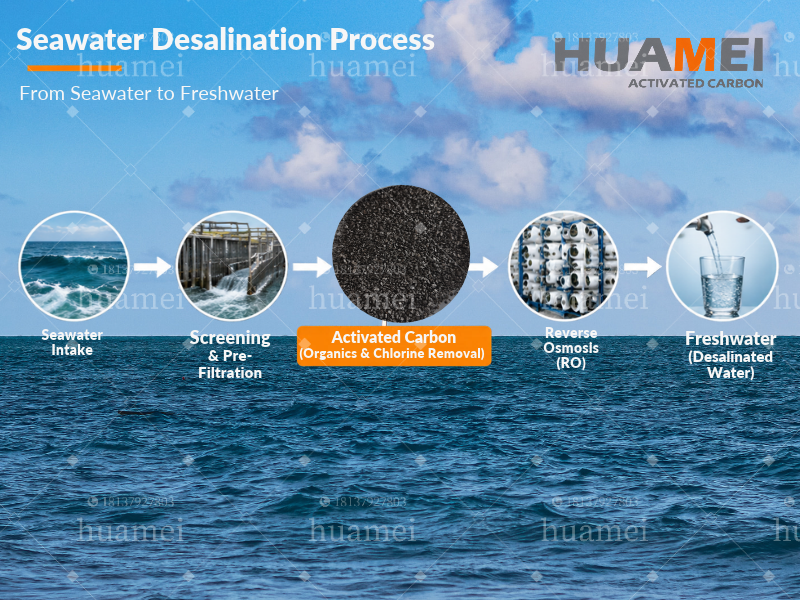
Activated carbon can support desalination pretreatment by reducing specified residual disinfectants and adsorbing suitable organic contaminants before water reaches RO membranes. Whether your plant needs a dedicated GAC filter depends on source water quality, existing treatment steps and membrane protection requirements.
The first question is not "Which carbon has the highest iodine number?" It is: what must this carbon remove, under what conditions, and how will you verify performance?
No. A GAC filter is one pretreatment option, not a mandatory stage in every desalination plant.
Chlorine-sensitive polyamide RO membranes require oxidant control — but that can be achieved through GAC filtration or chemical dosing (sodium metabisulfite). DuPont's FilmTec Technical Manual discusses both approaches without establishing either as universally preferred. [Source: DuPont FilmTec Manual]
A GAC stage deserves evaluation when:
| Situation | What to Establish First |
|---|---|
| Residual disinfectant reaching RO feed | Disinfectant type, concentration range, membrane supplier's limit |
| Organics contributing to membrane fouling | Water analysis, TOC/DOC levels, contaminants of concern |
| Existing carbon filter underperforming | Current media spec, bed dimensions, flow, breakthrough data |
| Seasonal water-quality swings | Representative data covering worst-case conditions |
If none of these apply and your existing pretreatment handles oxidant control adequately, a carbon filter may not be necessary.
The following is one illustrative route for a plant using a GAC stage, not a standard configuration for all SWRO or BWRO systems:
| Stage | Function | Position |
|---|---|---|
| Intake Screen | Remove debris, marine life | 1st |
| Coagulation / Flocculation | Aggregate suspended solids | 2nd |
| Multimedia Filter | Remove suspended matter using a project-specific media arrangement | 3rd |
| GAC Filter | Dechlorination + organic adsorption | 4th |
| Cartridge Filter | Downstream particle protection selected for the equipment requirements | 5th |
| High-Pressure Pump → RO | Desalination | 6th |
| Post-Treatment | Remineralization, pH adjustment, disinfection | 7th |
For the upstream filtration medium, see Huamei’s meios filtrantes de antracite. For background on the separate roles of filter media and activated carbon, see Huamei’s anthracite vs bituminous coal water-filtration guide. Anthracite filtration and activated-carbon adsorption should not be treated as interchangeable duties.
Actual process trains vary. Some plants use dissolved air flotation (DAF) or ultrafiltration (UF) instead of multimedia filters. The process designer should confirm where oxidants are introduced and removed, how carbon fines are controlled, and how downstream equipment is protected during startup and backwash.
These duties require separate performance evaluations; the same carbon grade and operating conditions should not be assumed suitable for both.
GAC removes free chlorine through a catalytic surface reaction, reducing it to chloride. Confirm the permitted oxidant exposure and monitoring requirements with the supplier of the exact membrane. Do not apply a universal residual-chlorine limit from a general purchasing guide. The key is specifying which disinfectant needs removal: free chlorine and chloramine behave differently and require different design conditions.
NORIT's dechlorination guidance explains that disinfectant chemistry directly affects adsorber design — a carbon selected for one duty should not be assumed suitable for another. [Source: NORIT Dechlorination White Paper]
"Organic matter" is a mixture of substances, not one contaminant. Seawater carries dissolved organic carbon (DOC) from algal decay, humic substances and industrial runoff. Some organic constituents can contribute to RO fouling. Their relevance and removal should be evaluated using representative water and operating data.
Define what you're targeting: specific compounds, color, taste/odor, DOC reduction, or another parameter. Where performance is uncertain, pilot testing with representative water and candidate media is the responsible path. Calgon Carbon's technical guidance specifically cautions against installing carbon systems based on assumptions without adequate analysis. [Source: Calgon Carbon — Optimizing Water Cleanup]
| Factor | GAC filtration | SMBS dosing |
|---|---|---|
| Dechlorination | Evaluate the grade, disinfectant, contact conditions and outlet performance. | Evaluate chemical quality, dose control, mixing and outlet performance. |
| Organic removal | Can adsorb suitable compounds; assess the target mixture and breakthrough. | Does not provide an equivalent adsorption stage. |
| Equipment | Contactors, media retention and required backwash/handling arrangements. | Chemical storage/preparation, dosing equipment and mixing arrangements. |
| Operating costs | Include media, pumping, maintenance, backwashing where applicable and spent-media management. | Include chemicals, equipment, monitoring and maintenance. |
| Failure conditions | Breakthrough, uneven flow, fines release or inadequate biological management. | Dosing interruption, unsuitable dose or inadequate mixing. |
| Protection | Define monitoring, alarms and protective responses for the exact treatment duty and membrane system. | |
Neither approach is automatically fail-safe or universally less expensive. Compare them against a defined treatment objective. Variable organic loading can justify evaluating GAC, but it does not by itself prove that GAC will prevent membrane fouling or outperform another pretreatment arrangement.

Raw material is a starting point, not a performance guarantee. Compare coal-based activated carbon and coconut-shell activated carbon at the grade level against the actual water and treatment duty.
| Selection question | Evidence to request for either material |
|---|---|
| Will it remove the target disinfectant? | Relevant dechlorination evidence and operating conditions. |
| Will it adsorb the organics of concern? | Representative-water testing and a defined breakthrough criterion. |
| Will it suit the filter equipment? | Particle-size distribution, density, mechanical data and hydraulic guidance. |
| What is the operating cost? | Compare scoped quotations and expected operating requirements, not raw-material labels alone. |
For the available granular product form, review Huamei’s granular activated carbon product page. Product listings help identify candidates; they do not establish suitability for a particular seawater or brackish-water installation.
Set acceptance criteria for the selected grade and treatment duty. Distinguish contractual limits from typical values; do not apply one universal desalination-carbon specification.
| Item | What to agree or request |
|---|---|
| Product identity | Manufacturer, grade, raw material and traceable batch identification. |
| Número de iodo | Agreed value, reporting basis and actual test method, such as ASTM D4607 where specified. It is not a substitute for target-contaminant testing. |
| Particle size | Sieve standard, full distribution and oversize/undersize limits compatible with the equipment. |
| Mechanical properties | Named method, such as ASTM D3802 where applicable, and a method-specific limit. |
| Ash and extractables | Relevant methods and limits. Total ash, for example measured by ASTM D2866, does not alone establish leaching behaviour. |
| Moisture and density | Delivery and reporting basis; actual density method, such as ASTM D2854 where specified, for media-mass calculations. |
| Treatment evidence | Test conditions and results relevant to dechlorination, specified organic removal or both. |
| Compliance and acceptance | Project-specific approvals, sampling, documents, retained samples and retesting procedure. |
ASTM references identify potential test methods, not universal pass values or certification. Check the method and result on the actual report. For potable-water applications, Huamei’s drinking-water treatment application page provides related application context; confirm approvals for the exact proposed grade rather than assuming a general application listing proves compliance.
Start with the flow through the carbon bed, not the plant's advertised production capacity.
Carbon-bed volume (m³) = Flow through GAC (m³/h) × EBCT (hours)
| Input | How to establish it |
|---|---|
| EBCT | Select for the actual disinfectant or adsorption duty using relevant evidence. |
| Superficial velocity and bed depth | Evaluate with flow, vessel area, contact requirements and pressure loss. EBCT = bed depth ÷ superficial velocity, with consistent units. |
| Backwash flow and bed expansion | Specify separately using media-specific guidance and water temperature; expansion percentage is not a flow-rate unit. |
| Service life | Establish monitoring and replacement criteria for the actual duty rather than a universal calendar life. |
A critical sizing distinction is the meaning of the stated capacity. The example below assumes 15-minute EBCT and 500 kg/m³ apparent density solely to explain the arithmetic; neither is a universal design recommendation. It also assumes 24-hour operation and that the entire corresponding RO feed passes through GAC, without additional process-water allowances.
| What "10,000 m³/day" Means | Flow to GAC | Bed Volume (15-min EBCT) | Media Mass (at 500 kg/m³) |
|---|---|---|---|
| Actual flow through GAC stage | ~417 m³/h | ~104 m³ | ~52 tons |
| RO product water (assuming 45% recovery) | ~926 m³/h | ~231 m³ | ~116 tons |
In the illustrated 45% recovery scenario, confusing RO permeate output with feed flow understates the calculated pretreatment flow by about 2.22 times. The factor changes with recovery. Clarify this in your RFQ. [Source: DuPont — RO Definitions and Terms]
Two parallel vessels do not automatically mean full-flow redundancy. If one is offline for backwash, the remaining vessel must still meet hydraulic and treatment conditions.
For coastal and island projects, request seasonal source-water analyses, temperature ranges and records of any algal or contamination events. For brackish groundwater, evaluate relevant dissolved constituents, suspended matter and oxidant treatment. Country or region alone does not determine the carbon grade, iodine number, replacement interval or container loading.
Use observed site conditions to define testing. Media quantity and shipping arrangements should follow the selected product, packaging, container limits and destination requirements.
Carbon filters can develop biofilm. Biofilm sloughing from biologically active GAC can affect downstream water quality — GAC filtration alone should not be assumed to prevent RO biofouling. A biological-management plan appropriate to your process conditions is essential. [Source: Ontario Drinking-Water System Design Guidelines]
Agree on handling, initial rinsing, startup checks and downstream protection with equipment and media suppliers. A mesh designation alone does not describe fines quantity or prove commissioning is complete.
Establish measurable criteria for each duty: chlorine breakthrough, TOC threshold, hydraulic degradation, or media property decline. A fixed calendar replacement schedule is not a substitute for operating evidence.

Huamei’s published product information identifies HMG-BC as its granular liquid-phase carbon series. Request the current grade-specific TDS, quotation and relevant batch documents for evaluation. Confirm the product identity and required tests before approving a substitution.
Huamei’s coal-based activated carbon page and published supply record includes a 600-tonne order for municipal drinking-water treatment in Saudi Arabia, specifying 8×30 mesh, iodine value 950 mg/g and 500 kg jumbo-bag packaging. This is a published water-treatment supply reference, not evidence of desalination operating performance or longer RO membrane life.
The product page currently states a 3-tonne MOQ. Confirm the current order terms for the exact grade; do not equate MOQ with a fixed container payload.
For another media-supply example, see the 40-tonne anthracite filter-media shipment to Saudi Arabia. Anthracite is a separate filtration medium, and this shipment should not be presented as proof of activated-carbon adsorption or desalination performance.
Before comparing quotations, agree on the specification, quantity, packaging, delivery basis and document requirements. Keep procurement cost separate from an unverified promise of membrane-life savings.
Send your project specs on WhatsApp or submit an inquiry to discuss grade selection and documentation for your desalination project.
Not in every plant. Determine whether the existing process meets oxidant-control and fouling-management requirements. GAC is one option to evaluate for an identified treatment duty; it is not a mandatory stage in every SWRO plant.
There is no universal best raw material or grade. Compare the proposed products against actual water quality, treatment duty, hydraulic conditions and acceptance requirements.
Agree on a grade-specific value and test method. Iodine number is a characterization parameter and does not independently predict dechlorination rate or organic removal from the actual water.
Multiply the actual flow through the carbon bed by the selected EBCT using consistent units, then use the proposed density to estimate mass. The example in this guide uses 15 minutes and 500 kg/m³ only as calculation assumptions, not design recommendations.
Service life depends on the treatment duty, inlet loading, operating conditions and media condition. Set measurable replacement criteria and monitor the relevant outlet quality and hydraulic performance rather than relying on a universal number of months.
