Acid Washed Activated Carbon: Specs, Applications & Buying Guide

What Is Acid Washed Activated Carbon?

Acid washed activated carbon is standard activated carbon that has been treated with hydrochloric acid (HCl) — sometimes phosphoric or citric acid — to strip out soluble ash, heavy metals, and mineral impurities from the carbon's pore structure. The result is a cleaner carbon with lower ash content, reduced pH, and significantly lower leachable metals.

The acid wash doesn't change the carbon's pore structure or adsorption capacity. What it does is remove the stuff that shouldn't be there — iron, calcium, magnesium, sodium, silica — so the carbon doesn't contaminate the product it's supposed to be purifying.

Acid washed activated carbon is treated with acid and then thoroughly rinsed to reduce acid-soluble mineral impurities and potential contaminant leaching. It is commonly selected for applications where carbon purity, extractable metals, or pH control matters. The appropriate grade depends on the process conditions and the required product specifications.

Acid Washed vs Standard Activated Carbon: What Changes

Parameter Standard Grade Acid Washed Grade Why It Matters
Зольность 3–8% ≤2–3% Less inert material =

more active carbon per kg

pH 9–11 (alkaline) 6–8 (near neutral) Won't shift treated

water or product pH

Leachable iron 0.05–0.3% <0.01% Prevents discoloration

in food/beverage processing

Water-soluble ash 1–3% <0.5% No mineral contamination

in treated product

Йодное число Same as base grade Same as base grade Acid wash doesn't affect

adsorption capacity

твердость Same as base grade Same as base grade No structural change from

acid treatment

Price premium Baseline +15–30% Extra processing step +

acid + wastewater treatment

The key takeaway: acid washing is a purification step, not an activation step. It cleans the carbon but doesn't make it adsorb more. If someone claims their acid washed carbon has dramatically higher iodine than the standard version, question that — the acid wash shouldn't meaningfully change the iodine number.

How Acid Washing Works: The Process

The production process adds three steps after standard activation:

  1. Acid soaking — activated carbon is immersed in dilute hydrochloric acid (typically 3–10% HCl solution) at elevated temperature (60–90°C) for several hours. The acid dissolves metal oxides, calcium carbonate, and other mineral impurities trapped in the carbon's pore network.
  2. Rinsing — the carbon is rinsed repeatedly with purified water until the wash water reaches target pH (typically 6–8) and conductivity drops below specification. This step uses significant water volume and is a major factor in the cost premium.
  3. Drying — the washed carbon is dried to target moisture (≤5%) in controlled conditions to prevent recontamination.

The entire acid wash cycle adds 8–16 hours of processing time per batch, depending on the base carbon's ash level and the target purity specification. Coconut shell carbon, which starts with lower ash (3–5%) than coal-based carbon (8–15%), requires less aggressive treatment and reaches specification faster.

Huamei quality control lab — technician testing activated carbon with Erlenmeyer flasks and shaker equipment (left); customer giving thumbs-up beside stockpile of packed activated carbon bags in warehouse (right)

Acid Types Used

Acid Приложение Pros Cons
Hydrochloric acid (HCl) Most common,

general purpose

Effective on iron,

calcium, most metals;

easy to rinse

Corrosive, requires

acid-resistant equipment

Phosphoric acid (H₃PO₄) Food-grade

applications

Gentler, food-safe

residue

Less effective

on iron removal

Citric acid Specialty

food/pharma

Organic, minimal

residue concerns

Weak acid, limited

metal removal

HCl is the industry standard for most applications. If your end-use specification calls for a specific acid type, mention it when requesting quotes — it affects both process setup and pricing.

When You Need Acid Washed Carbon (and When You Don't)

Applications Where Acid Washed Carbon May Be Preferred

Приложение Why Acid Washed Is Required Key Spec to Watch
Drinking water filtration NSF/ANSI 61 compliance

requires low leachable

metals and controlled pH

pH 5-7, leachable metals

per NSF extraction test

Food & beverage decolorization Iron and mineral contamination

causes off-colors and off-flavors

Iron <0.01%, ash ≤3%,

food-grade certification

Pharmaceutical purification USP/EP/BP pharmacopeia

standards mandate purity limits

Heavy metals, sulfate, chloride,

acid-soluble substances

per pharmacopeia

Electronics-grade water (UPW) Ultrapure water systems

cannot tolerate any

leachable minerals

Conductivity of wash water,

total leachables

Aquarium / fish farming Fish are sensitive to pH spikes

and dissolved metals

from unwashed carbon

pH ≤8, low phosphate

leaching

Applications Where Standard (Unwashed) Carbon Is Fine

Приложение Why Standard Grade Works
Industrial wastewater treatment Treating contaminated water

— minor mineral leaching is irrelevant

Восстановление золота (CIL/CIP/CIC) Carbon operates in alkaline cyanide

solution; pH and ash are not critical factors

VOC / gas phase adsorption Gas-phase applications are

not affected by water-soluble ash

Регенерация растворителя Adsorption-desorption cycle; mineral

content doesn't impact solvent purity significantly

Odor control H₂S, ammonia, and odor compounds

don't require acid washed carbon

The rule of thumb: if the activated carbon touches a product that people consume, inject, or drink — acid washed. If the carbon is treating waste or capturing pollutants — standard grade saves you 15–30% without sacrificing performance where it counts.

Acid Washed Carbon Specifications: What to Put in Your Purchase Order

When you request quotes for acid washed activated carbon, these are the specs that matter. Vague specs get vague quotes — and vague carbon.

Parameter Typical AW Spec (Coconut Shell GAC) Typical AW Spec (Coal-Based GAC) Test Method
Йодное число ≥1000–1200 mg/g ≥800–1100 mg/g ASTM D4607
Зольность ≤2–3% ≤5–8% ASTM D2866
pH 5-7 5-7 ASTM D3838
Влага ≤5% ≤5% ASTM D2867
твердость ≥95% (water treatment) /

≥98% (gold recovery)

≥90% ASTM D3802
Iron content <0.01% (food grade) /

<0.05% (water treatment)

<0.05% ICP-OES after

acid extraction

Water-soluble ash <0.5% <1% —

Three things buyers commonly miss in acid washed carbon specs:

  1. Specify the pH range, not just "acid washed." "Acid washed" without a target pH means different things to different suppliers. Some consider pH 8.5 acceptable; others target pH 6.5–7.5. Write the number you need.
  2. Include leachable metals limits if required. For NSF 61 or food-grade applications, total ash isn't enough. You need specific limits on iron, lead, arsenic, and other extractable metals. If your country has a drinking water standard (EPA, EU, WHO), reference it.
  3. State the test method. An iodine number of 1050 tested by ASTM D4607 is not the same as 1050 tested by a non-standard method. Pin down the test standard for every critical parameter.

Coconut Shell vs Coal-Based: Which Base Material for Acid Washed Carbon?

Factor Coconut Shell (Acid Washed) Coal-Based (Acid Washed)
Starting ash 3–5% → washes

down to ≤2–3%

8–15% → washes

down to ≤5–8%

Pore structure Predominantly

microporous (<2 nm)

Mixed micro/mesoporous
Best for Drinking water,

food/beverage, pharma,

извлечение золота

Municipal water, industrial water,

general purification

твердость Higher (≥95–99%) Lower (≥85–95%)
Price (FOB China) Higher ($1,850–3,800/ton

depending on grade)

Lower ($800–1,800/ton

depending on grade)

Acid wash efficiency Faster — less ash to remove Slower — more acid, more

rinse cycles needed

For drinking water and food-grade applications, coconut shell is the default choice. Its low starting ash means the acid wash is more efficient, and the final product achieves lower residual metals. Coal-based acid washed carbon makes sense for municipal water treatment where cost matters more than ultra-low ash, and the volumes are large enough that the price difference per ton adds up fast.

Acid Washed Carbon for Food and Beverage Processing

In food processing — sugar refining, edible oil decolorization, amino acid purification, beverage treatment — the carbon directly contacts the product. Any minerals, metals, or contaminants leaching from the carbon end up in the food.

Food-grade acid washed carbon requirements typically include:

Parameter Typical Food-Grade Limit
Total ash ≤3%
Iron (Fe) <0.01%
Lead (Pb) <2 mg/kg
Arsenic (As) <1 mg/kg
Mercury (Hg) <0.1 mg/kg
pH of water extract 5-7
Acid-soluble substances ≤3%

Wood-based PAC (powder activated carbon) is more common for decolorization in food processing — its mesoporous structure removes color molecules faster. But for fixed-bed polishing after the primary decolorization step, acid washed coconut shell GAC is the standard. For a deeper dive on PAC for food and beverage applications, see our powder activated carbon buying guide.
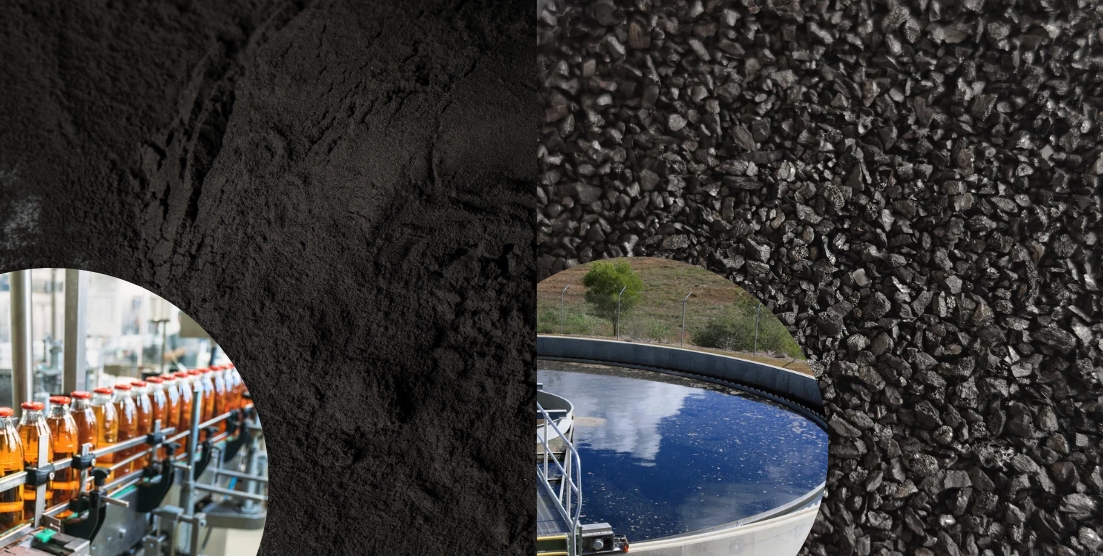
Huamei powdered and granular activated carbon for beverage processing and wastewater treatment.

How to Order Acid Washed Activated Carbon

To get an accurate quote and avoid back-and-forth, include these details in your inquiry:

  1. Приложение — drinking water, food processing, pharmaceutical, or other. This determines the purity tier.
  2. Base material preference — coconut shell or coal-based. If you're not sure, describe your application and we'll recommend.
  3. Target specs — iodine number, particle size (mesh), ash content, pH range, and any specific metal limits.
  4. Regulatory requirements — NSF 61, FDA, EU food contact, USP/EP, or local standards your project must meet.
  5. Volume — annual usage or order quantity. Minimum order is 10 tons (one 20ft container).
  6. Destination port — for freight calculation and lead time estimate.

Huamei Carbon manufactures acid washed activated carbon in both coconut shell and coal-based grades at our facilities in Fujian and Ningxia, China. Monthly production capacity exceeds 700 tons across all product lines. Every shipment includes a Certificate of Analysis (COA) with batch-specific test results, and we support pre-shipment third-party inspection by SGS, Bureau Veritas, or Intertek.

📱 WhatsApp: +86 181-3792-7803
📧 Email: sale@huameicarbon.com
🌐 Website: www.huameicarbon.com

Часто задаваемые вопросы

What does acid washed mean for activated carbon?

Acid washed activated carbon has been treated with hydrochloric acid (HCl) to remove mineral ash, heavy metals, and soluble impurities from the carbon's pore structure. This reduces the ash content, lowers pH to near-neutral (6–8), and minimizes leachable metals. The acid wash is a purification step — it cleans the carbon but does not change its adsorption capacity or pore structure.

Is acid washed activated carbon necessary for water treatment?

For drinking water treatment, yes — acid washed carbon with low pH and low leachable metals is required to meet standards like NSF/ANSI 61. For industrial wastewater treatment, standard (unwashed) carbon is usually sufficient because minor mineral leaching doesn't affect treatment goals. The deciding factor is whether the treated water will be consumed by people.

How much more does acid washed activated carbon cost?

Acid washed grades typically carry a 15–30% premium over the equivalent standard grade. For coconut shell GAC, acid washed water treatment grades range from $1,850 to $3,100/ton FOB China in 2026. The premium covers hydrochloric acid, extended processing time, water consumption for rinsing, and wastewater treatment from the acid wash step.

Can coal-based activated carbon be acid washed?

Yes. Coal-based GAC can be acid washed, but it starts with higher ash content (8–15%) than coconut shell (3–5%), so the process takes longer and uses more acid. The final ash of acid washed coal-based carbon is typically 5–8%, compared to 2–3% for acid washed coconut shell. Coal-based AW carbon is common in municipal drinking water systems where the volume is large and cost per ton matters.

What is the difference between acid washed and steam washed activated carbon?

Acid washing uses hydrochloric acid to dissolve and remove mineral impurities (ash, metals). Steam washing uses high-temperatur
htmle steam to remove volatile organic residues and fine dust. They address different problems: acid washing targets inorganic contaminants, while steam washing targets organic residues. Some applications — particularly food and pharma — may require both treatments.

Powder Activated Carbon: Types, Specs & Buying Guide

Powder activated carbon (PAC) is activated carbon ground to a fine particle size — typically 80% passing 200 mesh (75 µm) or finer. Unlike granular activated carbon (GAC) that sits in a fixed bed, PAC is dosed directly into liquid streams, mixed, and then removed by settling or filtration.

PAC is the fastest and most flexible way to add activated carbon treatment to any process. No vessels, no plumbing changes — just dose and filter. This guide covers PAC types, specifications, applications, and how to source it for your operation.

PAC vs GAC: When to Use Which

Factor PAC (Powder) GAC (Granular)
Contact method Dosed into liquid,

mixed, filtered out

Liquid flows througha fixed

carbon bed

Capital cost Low — needs only a dosing system and

existing clarifier/filter

High — needs adsorption vessels,

piping,

backwash system

Operating cost Higher carbon consumption per volume treated Lower carbon consumption

(longer contact time,

better utilization)

Best for Intermittent dosing, seasonal events, emergencies,

taste/odor control, decolorization

Continuous treatment, large

volumes, trace

contaminant polishing

Carbon reuse Typically single-

use (removed with sludge)

Can be reactivated and reused

multiple times

Flexibility High — adjust dose

rate instantly based on conditions

Fixed — bed changeout needed to

adjust capacity

Particle size 80%+ passing 200 mesh (75 µm) 8×30, 12×40, or similar mesh

ranges

Rule of thumb: Use PAC when you need flexible, on-demand treatment without capital investment in adsorption vessels. Use GAC when you have continuous treatment needs and want lower long-term carbon costs through bed reactivation.

Coal-based granular activated carbon and powdered activated carbon for sugar syrup decolorization and purification | HUAMEI Activated Carbon

Types of Powder Activated Carbon

By Raw Material

Тип Сырье Key Characteristics Typical Applications
Wood-based PAC Sawdust,

wood chips

High mesopore volume,

excellent decolorization,

lower density

Sugar refining, food/beverage

decolorization, pharmaceutical

purification

Coal-based PAC Bituminous or

lignite coal

Balanced micropore

/mesopore, good

all-round adsorption,

cost-effective

Municipal water treatment,

industrial wastewater,

general purpose

Coconut shell PAC Coconut shell High micropore volume,

high hardness (less relevant

for powder), highest cost

Pharmaceutical, food-grade

applications requiring

high purity

For most industrial applications, wood-based PAC is the default choice. Its high mesopore volume makes it the best decolorizer, and it's produced through phosphoric acid activation which gives it naturally high mesopore content. Coal-based PAC is preferred for water treatment where broad-spectrum adsorption matters more than decolorization.

By Activation Method

Key PAC Specifications

Parameter What It Measures Typical Spec Range Why It Matters
Йодное число Micropore adsorption

capacity (ASTM D4607)

800–1200 mg/g Higher = better for small

molecule removal

(taste, odor, solvents)

Метиленовый синий

number

Mesopore adsorption

capacity

120–280 mg/g Higher = better for

decolorization (large color

molecules adsorb in

mesopores)

Particle size

(passing 200 mesh)

Fineness 80–95% Finer = faster adsorption

kinetics but harder

to filter out

Влага Water content ≤10% You're paying for carbon,

not water

Зольность Inorganic mineral

residue

3–15% Lower ash = higher purity,

critical for food/

pharma applications

pH Acid or alkaline

character

3–5

(acid-activated)

or 8–11

(steam-activated)

Must match

process pH

requirements

Iron content Fe contamination <0.1% for

food grade

High iron causes

discoloration in

some food processes

The two most important specs for PAC selection:

  1. Methylene blue number — if your primary goal is decolorization (sugar, chemicals, beverages), this is the spec that matters most. Iodine number tells you about micropores, but color molecules need mesopores
  2. Particle size distribution — finer PAC reacts faster but is harder to separate. Match the fineness to your filtration capability

HMPAC-W22 wood powder activated carbon for wine decolorization

PAC Applications and Selection Guide

Приложение Recommended PAC Type Key Spec Typical Dose Rate
Municipal drinking

water (taste/odor)

Coal-based or

wood-based

Iodine ≥900 mg/g 5–30 mg/L
Обесцвечивание сахара Wood-based

(phosphoric

acid activated)

MB ≥200 mg/g,

low ash

0.1–0.5% by

weight of sugar

Edible oil refining Wood-based,

acid-washed

MB ≥180 mg/g,

low iron

0.5–2% by

weight of oil

Фармацевтическая

purification

Coconut shell or

wood-based,

food grade

Low ash, low iron,

USP/EP grade

Process-specific
Industrial wastewater

(COD/color)

Wood-based

or coal-based

MB ≥150 mg/g,

Iodine ≥800

50–500 mg/L
Chemical decolorization

(glycerin, citric acid)

Wood-based MB ≥220 mg/g 0.2–1% by weight
Emergency spill

response

Any available PAC Fine particle size

for fast kinetics

Depends on

contaminant

For specific guidance on PAC in water treatment, see our article on PAC for water treatment. For food industry decolorization, see our guides on обесцвечивание сахара and glycerin decolorization.

PAC Dosing and Handling

Dosing Methods

Handling Precautions

PAC Packaging and Ordering

Packaging Option Typical Weight Best For
Paper bags

(multi-layer kraft)

20–25 kg Small to medium users,

manual handling

Jumbo bags

(FIBC)

500–1000 kg Large users with

forklift/crane unloading

Bulk (pneumatic

tanker)

20+ tons Very large continuous

users (municipal water plants)

Huamei Carbon manufactures wood-based and coal-based powder activated carbon for water treatment, decolorization, chemical purification, and industrial wastewater applications. Available in 25 kg bags, jumbo bags, or bulk. Minimum order: 10 tons (one 20ft container).

📱 WhatsApp: +86 181-3792-7803
📧 Email: sale@huameicarbon.com
🌐 Website: www.huameicarbon.com

Часто задаваемые вопросы

What is the difference between powder activated carbon and granular activated carbon?

Powder activated carbon (PAC) has a particle size where 80%+ passes 200 mesh (75 µm). It's dosed directly into liquids, mixed, and removed by filtration. Granular activated carbon (GAC) has larger particles (typically 0.5–4 mm) and is used in fixed-bed adsorption vessels that liquid flows through. PAC is faster-acting but single-use; GAC is slower but reactivatable.

Which is better for decolorization — wood-based or coal-based PAC?

Wood-based PAC is better for decolorization in most cases. Its phosphoric acid activation process creates a high proportion of mesopores (2–50 nm), which is where large color molecules adsorb. Coal-based PAC has more micropores, making it better for small molecules like taste and odor compounds. For sugar, oil, and chemical decolorization, wood-based PAC with methylene blue number ≥200 mg/g is the industry standard.

How much powder activated carbon do I need per ton of product?

It varies by application and contaminant loading. For sugar decolorization: 0.1–0.5% by weight of sugar. For edible oil refining: 0.5–2% by weight of oil. For wastewater treatment: 50–500 mg/L depending on COD and color levels. The best approach is to run a bench-scale dosing trial — test increasing PAC doses on your actual product to find the minimum effective dose.

Is powder activated carbon safe for food processing?

Yes, when food-grade specifications are met. Food-grade PAC must have low ash (<5%), low iron (<0.1%), no heavy metal contamination, and meet regulatory requirements (FDA, EU, or local food contact standards). Wood-based and coconut shell PAC are most commonly used in food applications. Always request food-grade certification and COA from your supplier.

Can I reuse powder activated carbon?

Generally no. PAC is typically single-use — it's mixed into the process stream and removed with sludge or filter cake. The fine particle size makes it impractical to recover and reactivate. This is the main cost trade-off vs GAC: PAC has lower capital cost but higher ongoing carbon consumption. For processes with high carbon usage, consider switching to a GAC fixed-bed system for lower long-term cost.

Activated Carbon for Sugar Decolorization: Specs & Guide

Powdered activated carbon (PAC) is the most widely used decolorization agent in sugar refining. It removes color bodies, melanoidins, caramel compounds, and polyphenols from raw sugar liquor — turning dark brown syrup into clear, near-colorless refined sugar below 50 ICUMSA.

The right carbon spec makes the difference between hitting your target color in one pass and burning through double the dosage. This guide covers what specifications matter, how the process works, and what to put in your RFQ.

Why Wood-Based PAC for Sugar

Carbon type Pore structure Decolorization Sugar use
Wood-based PAC Mesopore +

macropore

dominant

✅ Excellent

(large color molecules)

Industry standard
Coconut shell GAC Micropore

dominant

❌ Poor

(pores too small for

color bodies)

Not suitable
Coal-based PAC Mixed (micro

+ meso)

⚠️ Moderate Sometimes used,

inferior to wood

Three forms of activated carbon compared side by side: coal-based granular activated carbon (left), coconut shell granular activated carbon with angular fragments (center), and fine wood-based powder activated carbon (right) — showing particle size differences between GAC and PAC

The chemistry: Sugar color bodies are large organic molecules (MW 500–50,000 daltons). They need mesopores (2–50 nm) and macropores (>50 nm) to physically fit inside the carbon structure. Wood-based carbon has the highest proportion of these larger pores — that's why the sugar industry standardized on it decades ago.

Coconut shell carbon is excellent for water treatment (small molecules like chlorine), but it physically cannot adsorb sugar colorants efficiently. Don't let anyone sell you coconut shell carbon for sugar decolorization — the chemistry doesn't work.

Specifications for Sugar-Grade PAC

Based on actual refinery requirements for producing refined sugar below 50 ICUMSA:

Parameter Технические характеристики Test method Why it matters
Raw material Wood (hardwood or softwood) — Determines

pore structure

Form Powder, 90% passing 325 mesh ASTM D2862 Fine particles

= faster kinetics

in batch contact

Йодное число ≥1000 mg/g ASTM D4607 Indicates total adsorption

capacity

Decolorization capacity ≥40% (caramel test) Standard decolorization

test

Direct measure

of color removal ability

Метиленовый синий ≥200 mg/g — Indicates mesopore volume

(where color bodies adsorb)

Iron content ≤200 ppm — High iron

causes discoloration

Food grade Yes FCC (Food Chemical

Codex)

Required for food-contact

applications

Halal / Kosher Certified (preferred) Third-party auditor Required for export

to Middle East, Southeast Asia

FDA compliance 21 CFR 240.40 — US market

requirement

Critical note on decolorization capacity: The ≥40% spec refers to the standard caramel solution test. Actual performance in real sugar liquor depends on your starting color, temperature, contact time, and dosage. A carbon that scores 40% on the bench test will typically achieve 60–80% color removal in optimized plant conditions.

The Decolorization Process

Standard Batch Contact Process

  1. Liquor preparation — Raw sugar dissolved to 60–65° Brix, heated to 70–85°C
  2. Carbon dosing — PAC added at 0.1–0.5% w/w on dry sugar solids (typical: 0.2–0.3%)
  3. Contact time — 20–45 minutes with agitation
  4. Filtration — Filter press or rotary vacuum filter removes spent carbon
  5. Polish filtration — Secondary filtration catches residual carbon fines
  6. Color check — Measure ICUMSA color; if above spec, adjust dosage for next batch

Key Process Parameters

Parameter Optimal range Effect if too low Effect if too high
Temperature 70–85°C Slow kinetics,

poor color removal

Sugar inversion

(pH-dependent), energy cost

Contact time 20–45 min Incomplete adsorption Minimal improvement

after 30 min, wastes

throughput

Dosage (% on DS) 0.2–0.3% Insufficient

color removal

Wasted carbon, higher

filtration load

Brix 60–65° Dilute = more

volume to process

Viscous = poor

carbon-liquor contact

Dosage economics: At 0.25% dosage on a refinery processing 500 tons/day of raw sugar, carbon consumption is approximately 1.25 tons/day = 37.5 tons/month. At $1,200–1,800/ton for food-grade wood PAC, that's $45,000–67,500/month in carbon cost alone. Getting the spec right (higher decolorization capacity) directly reduces dosage and cost.

ICUMSA Color Targets

Sugar grade ICUMSA color Typical application
Refined white (EU standard) <45 IU European retail, food manufacturing
Refined white (general) <80 IU Most global markets
Plantation white 100–300 IU Direct consumption sugar (less refined)
Raw sugar 600–2000 IU Starting material for refineries

To achieve <50 ICUMSA from typical raw sugar (1000–1500 IU): You need 85–95% total color removal across all refining steps. Activated carbon handles the final polishing — typically taking color from 150–300 IU (after liming/carbonatation) down to below 50 IU.

PAC vs. GAC vs. Bone Char for Sugar

Method Color removal Regenerable? Food grade Cost efficiency
Wood-based PAC Excellent No (single-use) Yes Best for batch

operations

GAC columns Good Yes (thermal) Yes Better for continuous

high-volume

Bone char Excellent Yes (thermal) Certification complex Traditional method, declining use
Ion exchange resin Very good Yes (chemical) Yes Highest capital

cost, best for

very high volume

Why most refineries use PAC: Lower capital cost (no columns or regeneration equipment), flexible dosing per batch, and simpler quality control. GAC columns are gaining ground in large-scale operations (>1000 tons/day) where regeneration economics work, but PAC remains the standard for most sugar mills.

What to Specify in Your RFQ

When sourcing sugar-grade PAC, your specification sheet should include:

Item Requirement
Raw material Wood-based (phosphoric acid activated)
Particle size 90% min passing 325 mesh (45 µm)
Йодное число ≥1000 mg/g
Decolorization ≥40% (caramel standard)
Метиленовый синий ≥200 mg/g
Iron ≤200 ppm
Heavy metals (Pb) ≤2 ppm
Arsenic ≤1 ppm
Food grade certification FCC compliant
Halal / Kosher Certificate required
Упаковка 25kg bags or 500kg jumbo bags
Test report COA per batch with all above parameters

Wood-based powder activated carbon product specifications →

Troubleshooting: Why Color Won't Come Down

Problem Likely cause Solution
Color stuck at

80–100 IU despite

high dosage

Carbon mesopore

volume too low

(wrong spec)

Switch to higher

MB value carbon (≥220 mg/g)

Color fluctuates

batch to batch

Inconsistent raw

sugar quality

Adjust dosage per

batch based on

inlet color

Good color but

high ash in product

Carbon ash too high, minerals dissolving Specify ash ≤3%,

or acid-washed grade

Filter blinding

/ slow filtration

Carbon too fine

or poor quality fines

Check PSD;

specify ≤5% below 10 µm

Color rebound

after storage

Incomplete removal

of precursors

Increase contact

time or add second

carbon stage

ЧАСТО ЗАДАВАЕМЫЕ ВОПРОСЫ

How much activated carbon is needed per ton of sugar?

Typical dosage is 2–5 kg of PAC per ton of raw sugar (0.2–0.5% on dry solids). The exact amount depends on starting color, target ICUMSA, and carbon quality. Higher-spec carbon (decolorization ≥40%, iodine ≥1000) requires less dosage to achieve the same result. Most refineries producing <50 ICUMSA refined sugar use 2.5–3.5 kg/ton with quality wood-based PAC.

Can coconut shell activated carbon be used for sugar decolorization?

No — not effectively. Sugar color bodies are large molecules (MW 500–50,000) that require mesopores and macropores for adsorption. Coconut shell carbon is micropore-dominant and physically cannot accommodate these large colorants. Wood-based PAC with its open mesopore/macropore structure is the correct choice. This is basic adsorption science, not a marketing preference.

What is the difference between food-grade and industrial-grade activated carbon?

Food-grade activated carbon must comply with Food Chemical Codex (FCC) standards, including strict limits on heavy metals (lead ≤2 ppm, arsenic ≤1 ppm), iron content (≤200 ppm), and must pass extractable matter tests. Industrial-grade carbon has no such limits and may leach contaminants into food products. For sugar refining, only food-grade carbon should be used. Halal and Kosher certifications are additionally required for export to many markets.

Does activated carbon remove minerals or nutrients from sugar?

Activated carbon is selective for organic color compounds and does not significantly remove sucrose, minerals, or basic sugar components at normal operating conditions. The adsorption is driven by the hydrophobic nature of color bodies — sucrose molecules (small, polar) have very low affinity for the carbon surface. You will not lose sugar yield due to carbon treatment.

How do I verify carbon quality before purchasing large quantities?

Request a 25kg sample with COA. Run a bench-scale decolorization test: dissolve raw sugar to 60° Brix, add carbon at 0.3% on DS, hold at 80°C for 30 minutes with stirring, filter through Whatman 42 paper, and measure color with a spectrophotometer at 420nm. Compare results against your current carbon supplier. If the new carbon achieves equal or better decolorization at the same or lower dosage, it qualifies.

Food-grade wood-based PAC for sugar refining — iodine 1000+, decolorization ≥40%, FCC compliant, Halal/Kosher available. WhatsApp: +86 181-3792-7803 | Request specification sheet →