Top 5 Activated Carbon for PFAS Removal (2026 Ranked)
PFAS regulations are tightening globally. The US EPA set maximum contaminant levels at 4 ppt for PFOA and PFOS in 2024. The EU's updated Drinking Water Directive enforces a 100 ng/L total PFAS limit starting 2026. If you're buying activated carbon for PFAS treatment, which brand and grade actually works?
We ranked five activated carbon products based on published PFAS removal performance, material type, availability, and total cost of ownership. This is not a lab test — it's a practical buyer's comparison based on publicly available data, pilot studies, and field experience.
What Makes Activated Carbon Effective for PFAS
Before the ranking, three things determine how well any activated carbon removes PFAS:
- Raw material and pore structure. Reagglomerated bituminous coal-based GAC consistently outperforms coconut shell and lignite carbons for PFAS. The broader pore distribution — especially mesopores in the 2–50 nm range — provides more accessible adsorption sites for the large PFAS molecules (molecular weight 200–1,000+ Da).
- Empty Bed Contact Time (EBCT). Most successful PFAS installations run 10–20 minutes EBCT. Shorter contact times lead to premature breakthrough, especially for short-chain PFAS (PFBA, PFHxS).
- Background water matrix. Natural organic matter (NOM) competes for adsorption sites. High-TOC source water (>4 mg/L) can reduce GAC bed life by 30–50%. The same carbon grade performs very differently in clean groundwater versus surface water.
The 5 Best Activated Carbon Products for PFAS Removal
1. Calgon Carbon FILTRASORB® 400
| Şartname | Value |
|---|---|
| Raw material | Reagglomerated bituminous coal |
| Form | Granular (12×40 mesh) |
| İyot sayısı | ≥1,000 mg/g |
| Apparent density | 0.54 g/cm³ |
| Effective size | 0.55–0.75 mm |
| PFAS performance | Published RSSCT and full-scale data;
99.99% PFOA/PFOS removal at 10 min EBCT in multiple utility studies |
| Certifications | NSF/ANSI 61, AWWA B604 |
| Headquarters | Pittsburgh, PA, USA (Kuraray subsidiary) |
| Reactivation | Yes — 17 facilities globally; thermal
reactivation destroys adsorbed PFAS |
Why it ranks #1: Calgon Carbon has published more PFAS performance data than any other manufacturer. FILTRASORB® 400 is the most widely specified GAC for PFAS in North American municipal water systems. Their integrated reactivation network means spent carbon doesn't go to landfill — PFAS compounds are thermally destroyed during reactivation, and the carbon returns to service at near-virgin capacity.
Limitations: Premium pricing — typically 30–50% higher than comparable coal-based GAC from other suppliers. Lead times can stretch to 8–12 weeks for large orders due to high demand from US utilities. Primarily serves North American and European markets; limited distribution in Africa, Southeast Asia, and South America.
2. Norit GAC 400 / HYDRODARCO® 4000
| Şartname | Norit GAC 400 | HYDRODARCO® 4000 |
|---|---|---|
| Raw material | Reagglomerated bituminous coal | Lignite coal |
| Form | Granular (12×40 mesh) | Granular (12×40 mesh) |
| İyot sayısı | ≥1,000 mg/g | ≥500 mg/g |
| PFAS performance | Comparable to Filtrasorb 400 in
pilot studies; strong long-chain removal |
Unique pore structure;
effective for high-TOC source water |
| Certifications | NSF/ANSI 61, AWWA B604 | NSF/ANSI 61 |
| Headquarters | Amersfoort, Netherlands / Marshall, TX, USA | Same |
| Reactivation | Yes — facilities in US, Netherlands, and UK | Yes |
Why it ranks #2: Norit offers two distinct approaches. The GAC 400 is a direct competitor to Filtrasorb 400 — reagglomerated bituminous coal with comparable PFAS removal performance. The HYDRODARCO® 4000 is lignite-based with a different pore structure that performs better in high-TOC water where other carbons foul quickly. This gives engineers flexibility to match carbon type to specific source water chemistry.
Published case studies include the Cottage Grove, Minnesota pilot project confirming Norit GAC effectiveness for groundwater PFAS remediation. Norit also claims 50–70% cost savings through their reactivation services compared to purchasing virgin GAC each cycle.
Limitations: The HYDRODARCO lignite series has lower overall adsorption capacity (iodine ~500 mg/g) and shorter bed life than bituminous alternatives. Best suited for high-TOC applications where the tradeoff makes sense. Pricing and availability similar to Calgon — premium tier.
3. Jacobi Carbons AquaSorb® Series
| Şartname | Value |
|---|---|
| Raw material | Bituminous coal (reagglomerated)
and coconut shell options |
| Form | Granular (8×30, 12×40 mesh) |
| İyot sayısı | 900–1,100 mg/g (varies by grade) |
| Key PFAS grades | AquaSorb® 2000 (coal-based),
AquaSorb® CS (coconut shell) |
| Certifications | NSF/ANSI 61 (select grades) |
| Headquarters | Kalmar, Sweden
(Osaka Gas subsidiary) |
| Reactivation | Yes — facilities in
Europe and Asia |
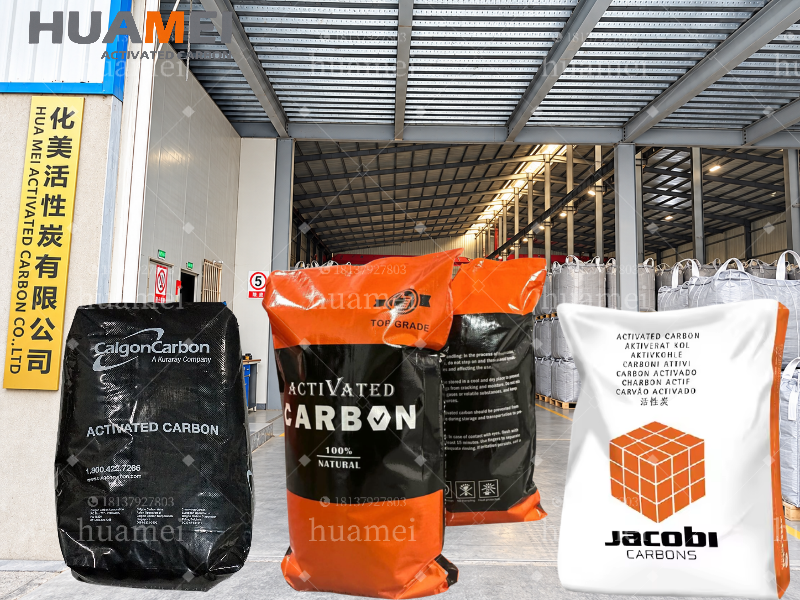
Why it ranks #3: Jacobi Carbons is the world's largest standalone activated carbon company by production volume. Their AquaSorb® 2000 (coal-based) targets municipal PFAS applications, while AquaSorb® CS provides a coconut shell option for point-of-use systems where low fines and taste/odor are priorities. Jacobi's global manufacturing footprint (Sweden, Sri Lanka, India, China) gives them competitive logistics for buyers outside North America.
Limitations: Less published PFAS-specific performance data compared to Calgon and Norit. Jacobi's PFAS positioning is newer — they entered this segment later than the top two. Coconut shell grades (AquaSorb® CS) have shorter bed life for PFAS than coal-based alternatives, especially for short-chain compounds.
4. Cabot Norit (Legacy) / Carbon Solutions
| Şartname | Value |
|---|---|
| Raw material | Peat-based and coal-based options |
| Form | GAC and PAC |
| Key grades | Darco® series (PAC),
various GAC grades |
| PFAS performance | PAC effective for emergency/short-term
PFAS response; GAC for permanent installations |
| Certifications | NSF/ANSI 61 (select grades) |
| Headquarters | Boston, MA, USA |
| Reactivation | Limited |
Why it ranks #4: The Darco® PAC line fills a specific niche — emergency PFAS response and temporary treatment while permanent GAC systems are being designed and built. PAC can be dosed directly into existing water treatment processes without new capital equipment. For utilities that discover PFAS contamination and need to act within weeks (not months), PAC dosing is often the fastest path to compliance.
Limitations: PAC treatment costs per cubic meter of water treated are 2–5× higher than GAC over the long term. PAC generates more waste (spent carbon in sludge) and doesn't offer the same reactivation economics. Best used as a bridge solution, not a permanent PFAS strategy.
5. Huamei Carbon (Coal-Based GAC from China)
| Şartname | Value |
|---|---|
| Raw material | Bituminous coal (Shanxi)
and anthracite (Ningxia) |
| Form | Granular (8×30, 12×40 mesh) |
| İyot sayısı | 900–1,100 mg/g |
| Sertlik | ≥95% (ASTM D3802) |
| kül içeriği | ≤10% |
| PFAS performance | In-house RSSCT testing shows
coal-based GAC outperforms coconut shell for PFAS; |
| Certifications | ISO 9001; NSF/ANSI 61 certification
available on request for specific grades |
| Headquarters | Fujian Province, China (factories
in Fujian and Ningxia) |
| Reactivation | Not offered (supply-
only model) |
Why it ranks #5: Huamei's coal-based GAC provides equivalent raw material quality (bituminous coal, reagglomerated) at 40–60% lower cost compared to Calgon and Norit. For buyers outside North America and Europe — where local reactivation services aren't available anyway — the cost advantage is significant. Huamei has published their own RSSCT performance data showing their coal-based GAC outperforms coconut shell for PFAS removal, consistent with findings from Calgon and Norit.
For projects in the Middle East, Africa, Southeast Asia, and South America — where PFAS regulations are being introduced but budgets are tighter — Huamei offers a practical path to compliance without the premium Western pricing.
Limitations: No in-house reactivation network. Less third-party published PFAS data compared to Calgon and Norit. Buyers who need NSF/ANSI 61 certified carbon for US municipal applications should confirm certification status for their specific grade before ordering.
Production capacity: 700+ tons/month. MOQ: 10 tons. Lead time: 15–25 days.
📱 WhatsApp: +86 181-3792-7803


Head-to-Head Comparison
| Criteria | Calgon F400 | Norit GAC 400 | Jacobi AquaSorb | Cabot Darco PAC | Huamei Coal GAC |
|---|---|---|---|---|---|
| Raw material | Bituminous coal | Bituminous
coal / lignite |
Coal / coconut shell | Peat / coal | Bituminous
coal |
| Best for | Municipal PFAS
— large scale |
High-TOC water
+ municipal |
Global buyers + POU | Emergency /
short-term |
Cost-sensitive
projects |
| Long-chain PFAS (C8+) | ★★★★★ | ★★★★★ | ★★★★☆ | ★★★★☆ | ★★★★☆ |
| Short-chain PFAS (C4-C6) | ★★★★☆ | ★★★★☆ | ★★★☆☆ | ★★★☆☆ | ★★★☆☆ |
| Published PFAS data | ★★★★★ | ★★★★☆ | ★★★☆☆ | ★★★☆☆ | ★★☆☆☆ |
| Reactivation network | ★★★★★ | ★★★★☆ | ★★★☆☆ | ★★☆☆☆ | Not available |
| Price (FOB) | $$$$$ | $$$$ | $$$$ | $$$ | $$ |
| Global availability | ★★★★☆ | ★★★★☆ | ★★★★★ | ★★★☆☆ | ★★★★★ |
| NSF 61 certified | Yes | Yes | Select grades | Select grades | On request |
How to Choose: Decision Framework
Your situation determines which carbon makes sense:
| Scenario | Recommended Carbon | Why |
|---|---|---|
| US municipal utility,
full compliance needed |
Calgon FILTRASORB® 400
or Norit GAC 400 |
Most published data,
NSF 61 certified, reactivation available, accepted by regulators |
| European utility,
EU DWD compliance |
Norit GAC 400 or
Jacobi AquaSorb® 2000 |
Local manufacturing,
EU regulatory familiarity, reactivation in Netherlands/UK |
| Emergency/temporary
PFAS treatment |
Cabot Darco® PAC | No capital equipment needed,
immediate deployment, bridge to permanent GAC |
| Industrial wastewater,
non-potable |
Huamei coal-based
GAC or Jacobi AquaSorb |
Lower certification requirements;
cost optimization more important than brand |
| Developing market,
new PFAS regulation |
Huamei coal-based GAC | Best cost-performance ratio;
no local reactivation anyway; equivalent raw material quality |
| Point-of-use /
residential filter |
Jacobi AquaSorb®
CS (coconut shell) |
Low fines, taste/odor improvement,
consumer-grade certifications |
| High-TOC source
water (>6 mg/L) |
Norit HYDRODARCO® 4000 | Lignite pore structure resists
NOM fouling better than standard bituminous GAC |
Key Specs to Request from Any Supplier
Regardless of which brand you choose, get these data points before committing to a purchase:
- PFAS-specific RSSCT or pilot data — Ask for rapid small-scale column test results on water similar to yours. Generic iodine numbers don't predict PFAS performance.
- Bed life estimate for your water matrix — Provide your water analysis (TOC, PFAS speciation, pH, conductivity) and ask for a bed volume estimate to breakthrough.
- NSF/ANSI 61 or equivalent certification — Required for potable water applications in the US. EN 12915 for European drinking water.
- Arsenic leaching test results — Some coal-based GAC can leach arsenic during initial service. Request TCLP or similar leachate data.
- Reactivation compatibility — If planning to reactivate, confirm the carbon grade is suitable for thermal reactivation and that PFAS will be destroyed (not just desorbed) at the reactivation temperature.
- Fines content and uniformity coefficient — High fines cause pressure drop problems in packed bed systems. Specify <1% fines passing a #50 sieve.
Sıkça Sorulan Sorular
What type of activated carbon removes PFAS best?
Reagglomerated bituminous coal-based granular activated carbon (GAC) is the most effective type for PFAS removal. It outperforms coconut shell, wood-based, and lignite carbons in most water conditions. The broad pore distribution of coal-based GAC provides better adsorption capacity for the large PFAS molecules. All five products in this ranking use coal-based carbon as their primary PFAS grade.
How long does activated carbon last when treating PFAS?
GAC bed life for PFAS treatment typically ranges from 6 to 24 months, depending on PFAS concentration, water matrix (especially TOC), EBCT, and target effluent levels. Clean groundwater with low TOC allows longer bed life (18–24 months). Surface water with high organic loading may require carbon replacement every 6–12 months. Running lead-lag contactors extends effective use and reduces per-gallon treatment cost.
Can activated carbon remove short-chain PFAS?
Yes, but less effectively than long-chain PFAS. Short-chain compounds (C4–C6 like PFBA, PFHxS, PFHxA) have weaker hydrophobic interactions with carbon surfaces and break through earlier. Longer EBCT (15–20 minutes vs. 10 minutes) and more frequent carbon replacement improve short-chain removal. For very stringent short-chain limits, some utilities combine GAC with ion exchange resin in a hybrid approach.
Is it cheaper to buy activated carbon from China for PFAS treatment?
Chinese coal-based GAC typically costs 40–60% less than equivalent Western brands (FOB price). For non-potable applications, industrial wastewater, and markets without mandatory NSF 61 requirements, the cost savings are real and significant. For US municipal potable water, verify NSF 61 certification and request PFAS-specific test data before purchasing — the savings don't help if the carbon doe
htmlsn't meet regulatory requirements for your specific application.
Does GAC or ion exchange work better for PFAS?
Both work. GAC is more cost-effective for long-chain PFAS and in water with moderate TOC. Single-use ion exchange resin (like Purolite PFA694E) is more effective for short-chain PFAS but costs more per gallon treated and generates hazardous waste (spent resin with concentrated PFAS). Many utilities are moving to hybrid systems — GAC for bulk removal, IX for polishing — to optimize both performance and cost. GAC has the advantage of thermal reactivation, which destroys PFAS; spent IX resin currently goes to incineration or hazardous waste landfill.

