
Sudan produced 70 tonnes of gold in 2025, exceeding the government's target by 13% and generating approximately $1.8 billion in export revenue, according to Sudan's Ministry of Minerals. That makes Sudan one of the top five gold producers in Africa — and virtually all of that gold extraction depends on activated carbon at some stage of processing.
Yet Sudan has no domestic activated carbon manufacturing. Every kilogram of carbon used in the country's gold circuits is imported. This guide covers what Sudan-based gold operations need to know about sourcing activated carbon: the right specifications for different processing methods, how to evaluate suppliers, and the logistics of getting carbon from factory to mine site.
Sudan's gold sector is split between two very different worlds: large-scale industrial mines running modern CIL/CIP circuits, and a massive artisanal mining network that accounts for the majority of output.
| Factor | Industrial Mining | Artisanal & Small-Scale (ASGM) |
|---|---|---|
| Share of production | 10–15% | 85–90% (USGS, 2024) |
| Processing method | CIL, CIP, heap leach | Gravity separation, mercury
amalgamation, small CIP units |
| Carbon usage | Continuous — 10–20 kg
per tonne daily ore capacity |
Batch — typically 0.5–5
tonnes per operation |
| Carbon reactivation | On-site kilns
(some operations) |
Rarely available — carbon
is often single-use |
| Typical order size | 20–100+ tonnes/year | 1–10 tonnes per order |
| Key concern | Lifecycle cost,
reactivation durability |
Upfront price, gold
loading speed |
Artisanal and small-scale gold mining (ASGM) is the extraction of gold by individuals or small groups using basic tools and simple processing methods, often without formal mining licenses or environmental controls. In Sudan, ASGM operations are concentrated in River Nile State, Red Sea Hills, South Kordofan, Blue Nile State, and parts of Darfur — representing over 85% of national gold output according to USGS estimates (2024).
This split matters for activated carbon sourcing because the two segments have fundamentally different requirements. Industrial operations optimize for total cost of ownership across dozens of reactivation cycles. Artisanal operators optimize for upfront affordability and fast gold loading, because they often lack reactivation kilns and use carbon only once before stripping.
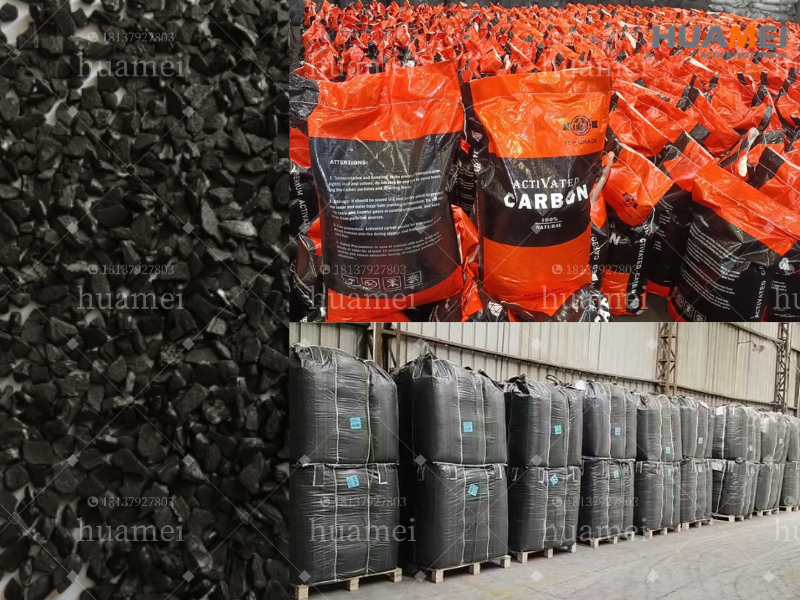
The right activated carbon specification depends entirely on how you're extracting gold. Here's what each processing method commonly used in Sudan requires:
The carbon is added directly to the leach tanks alongside the cyanide solution. It must handle continuous agitation, screening, and thermal reactivation. This is the most demanding application for activated carbon.
| Parámetro | CIL Requirement | Test Method |
|---|---|---|
| Materia prima | Coconut shell | — |
| Número de yodo | ≥1,050 mg/g | ASTM D4607 |
| Ball-Pan Hardness | ≥97% | ASTM D3802 |
| Contenido de ceniza | ≤3% | ASTM D2866 |
| Humedad | ≤5% | ASTM D2867 |
| Mesh Size | 6×12 (1.70–3.35 mm) | ASTM D2862 |
| Densidad aparente | 0.45–0.55 g/cm³ | ASTM D2854 |
→ Why coconut shell? Coconut shell activated carbon has a naturally harder structure (ball-pan hardness ≥97%) and higher micropore volume compared to coal-based alternatives. In CIL circuits where carbon undergoes 50+ reactivation cycles at 650–750°C, this hardness translates directly to lower carbon attrition — meaning less carbon loss and less gold lost in fines.
Similar to CIL but the carbon contacts the pulp after leaching is complete. Spec requirements are nearly identical to CIL, with slightly less emphasis on abrasion resistance since the carbon sees less aggressive conditions.
→ Same spec table as CIL applies. Some CIP operations accept hardness down to 95%, but for Sudan's conditions — where reactivation facilities may be limited — starting with higher hardness (≥97%) is the safer choice.
Used for lower-grade ores. Cyanide solution percolates through ore heaps, and the pregnant solution passes through columns packed with activated carbon.
→ Carbon columns typically use 6×12 or 8×16 mesh. Hardness requirements are lower (≥95%) since there's no agitation, but iodine number should still be ≥1,000 mg/g for adequate gold loading capacity.
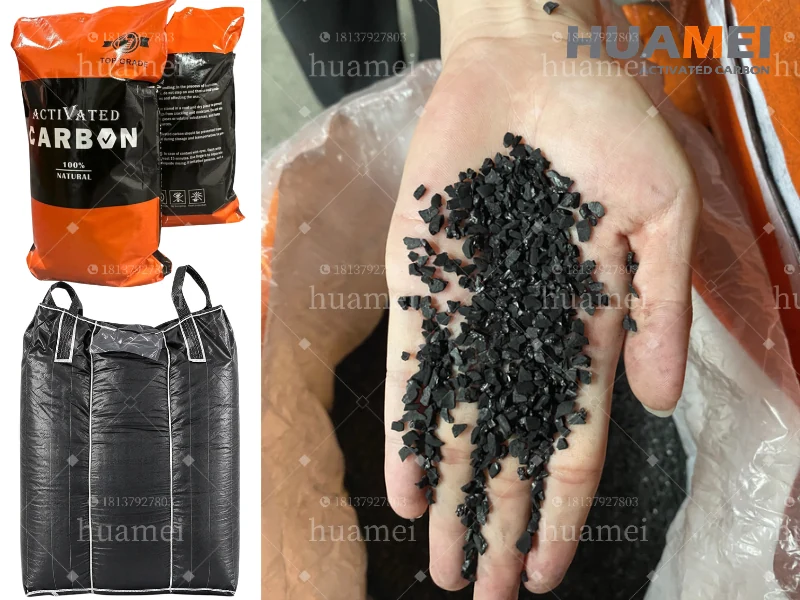
Many ASGM operators in Sudan are now reprocessing tailings from mercury amalgamation using small-scale CIP or vat leach systems. This is where carbon selection gets interesting:
Most industrial gold mines globally operate on-site reactivation kilns — rotary kilns running at 650–750°C that burn off adsorbed organics and restore the carbon's pore structure. A single batch of good carbon can survive 50–100+ reactivation cycles before it needs replacement.
In Sudan, the picture is different. Outside of a handful of large industrial operations, most gold processing sites lack reactivation equipment. Based on our experience supplying gold mines across Africa, this is one of the most common situations in emerging gold regions — and it fundamentally changes how you should evaluate activated carbon:
| Factor | With Reactivation | Without Reactivation (Most Sudan Sites) |
|---|---|---|
| Carbon lifecycle | 50–100+ cycles | 1–3 uses (strip and discard
or sell spent carbon) |
| Key cost driver | Cost per reactivation cycle | Cost per kg of gold recovered |
| Hardness priority | Critical — carbon must
survive kiln |
Important but secondary
to adsorption performance |
| Optimal strategy | Premium carbon,
maximize cycle life |
Balance price vs. gold
loading capacity |
| Annual carbon cost
(5,000 tpd plant) |
$30,000–75,000
(makeup only) |
$150,000–400,000 (full
replacement) |
The bottom line: without reactivation, your carbon is a consumable, not a durable asset. This makes the carbon's gold loading capacity per dollar spent the most important metric — not how many kiln cycles it can survive.
That said, even without a kiln, hardness still matters. Soft carbon generates fines during handling and screening. Fines carry adsorbed gold into tailings. Based on our 15+ years of manufacturing experience, we recommend a minimum ball-pan hardness of 95% even for single-use applications — the 2–3% price premium over softer carbon pays for itself in reduced gold loss to fines.
Getting activated carbon from a Chinese factory to a Sudanese mine site involves a specific logistics chain that buyers should plan around:
| Stage | Timeline | Notes |
|---|---|---|
| Production + quality testing | 15–25 days | From order confirmation;
includes COA and third-party testing if requested |
| Inland transport to port | 2–5 days | Fujian/Ningxia factory →
Shanghai/Xiamen port |
| Sea freight (FCL) | 30–45 days | Shanghai/Ningbo → Port Sudan;
varies by carrier and routing |
| Port clearance + customs | 5–14 days | Sudan customs processing;
varies significantly |
| Inland transport to mine | 1–7 days | Port Sudan → River Nile/Red Sea
/Kordofan mining regions |
Total lead time: approximately 55–95 days from order to mine site.
→ This means Sudan-based operations should plan carbon procurement at least 3 months ahead. Running out of carbon mid-campaign is not just inconvenient — it stops gold production entirely.
For Sudan's ASGM sector where mine sites are often reached by unpaved roads, 25 kg bags are often the practical choice despite the higher per-unit handling cost.
Sudan's gold mining sector imports activated carbon primarily from China, India, Sri Lanka, and Southeast Asia. Here's how to evaluate suppliers systematically:
Every reputable manufacturer provides a COA with each shipment. The COA should list iodine number, hardness, ash, moisture, mesh distribution, and apparent density — all with the specific ASTM test method referenced. If a supplier can't provide a COA with ASTM method numbers, that's a red flag.
For critical applications, request third-party verification through SGS, Intertek, or Bureau Veritas. The cost ($200–500 per sample) is trivial compared to the risk of running substandard carbon in a gold circuit.
COA data tells you what the carbon looks like in a lab. Performance in your specific leach circuit — with your ore chemistry, pH, cyanide concentration, and temperature — can only be confirmed through sample testing. Reputable suppliers provide free samples (1–5 kg) for this purpose.
A supplier who can deliver one container doesn't necessarily have the capacity for consistent quarterly supply. For operations requiring regular replenishment, verify:
Activated carbon pricing for gold recovery grade typically ranges from $1,800 to $3,500 per tonne FOB, depending on:
Several factors make carbon procurement for Sudan different from other African gold markets:
International sanctions and banking restrictions have historically complicated payments from Sudan. While gold mining imports are generally permitted, buyers should confirm payment routing through their bank before placing orders. Common workarounds include payment through intermediary countries (UAE is frequently used as a trade hub for Sudan-bound goods) and letter of credit through regional banks.
Virtually all containerized imports enter through Port Sudan on the Red Sea coast. The port has experienced congestion and operational disruptions, particularly since 2023. Build a buffer of at least 2 weeks into your logistics timeline for port clearance.
Port Sudan is Sudan's primary maritime gateway, located on the Red Sea coast approximately 675 km northeast of Khartoum. It handles over 90% of the country's imports and is the sole practical entry point for bulk cargo like activated carbon destined for inland mining regions.
| Mining Region | Distance from Port Sudan | Road Condition | Transport Time |
|---|---|---|---|
| River Nile State (Abu Hamad, Berber) | ~500–700 km | Paved highway | 1–2 days |
| Red Sea Hills (Ariab, Hassai) | ~200–400 km | Partially paved | 1 day |
| South Kordofan | ~1,200–1,500 km | Mixed — paved + unpaved | 3–5 days |
| Blue Nile State | ~1,400–1,700 km | Poor in sections | 4–7 days |
| Darfur (Jebel Amir) | ~2,000+ km | Challenging | 5–10 days |
For remote mining regions like South Kordofan and Darfur, inland freight costs can equal or exceed the sea freight from China. Factor this into your total landed cost calculation.
Whether you're running an industrial CIL plant or a small artisanal CIP unit, here's how to estimate how much activated carbon you need:
Initial carbon inventory:
Carbon inventory (tonnes) = Daily ore throughput (tonnes) × Carbon concentration (kg/t ore) ÷ 1,000
Typical carbon concentration in CIL: 15–25 g/L of slurry, which translates to roughly 10–20 kg of carbon per tonne of daily ore capacity.
Annual makeup carbon:
Makeup (tonnes/year) = Initial inventory × Attrition rate (15–25%/year)
With reactivation: 15–25% annual replacement. Without reactivation: 100% — you're replacing the entire inventory every circuit cycle.
For batch CIP or vat leach systems processing 5–50 tonnes of tailings per batch:
Direct from manufacturers, the minimum order is typically one container (10–20 tonnes). For smaller quantities, Khartoum-based industrial chemical traders often stock activated carbon in 25 kg bags. However, verify the grade and origin — traders may sell lower-specification carbon marketed as "gold grade" without proper COA documentation. If you need smaller quantities with verified specs, contact us to connect with our distribution partners in the region.
Coconut shell activated carbon is the standard for gold recovery because of its superior micropore structure and mechanical hardness. Coal-based carbon has a broader pore distribution (more mesopores) which makes it better for larger molecules but less efficient for gold-cyanide complex adsorption. For CIL and CIP gold circuits, coconut shell carbon with iodine ≥1,050 mg/g and hardness ≥97% is the industry standard worldwide.
International banking restrictions can complicate direct payments from Sudan. The most common approach is routing payments through intermediary banks in the UAE (Dubai is a major trade hub for Sudan-bound goods), or using letters of credit through regional banks with correspondent banking relationships. Discuss payment options with your supplier early in the process — experienced suppliers who have shipped to Sudan before will have established payment channels.
For most gold mining applications in Sudan, standard (non-acid-washed) coconut shell carbon is sufficient. Acid washing reduces ash content to below 2% and removes soluble metals, which matters for d
htmlrinking water treatment (NSF 61 compliance) but is not required for gold adsorption. Standard gold-grade carbon with ash ≤3% performs equally well in CIL/CIP circuits at a lower price point.
Sudan's gold sector is growing despite challenging conditions, and activated carbon demand is growing with it. Whether you're running a 5,000 tpd CIL plant in River Nile State or a 20-tonne batch CIP unit reprocessing tailings in Red Sea Hills, the fundamentals are the same: match the carbon spec to your process, verify quality through testing, and build logistics timelines that account for Sudan's import realities.
The biggest mistake we see from Sudan-based buyers is waiting until they're almost out of carbon before ordering a replacement shipment. With a 55–95 day lead time from China to mine site, procurement planning is not optional — it's the difference between continuous production and an expensive shutdown.
