In gold recovery, activated carbon is not a commodity you buy on price alone.
For mines running CIL (carbon-in-leach) and CIP (carbon-in-pulp) circuits, the carbon's particle size, adsorption capacity, mechanical strength, and attrition behavior all affect daily production and operating costs. A single batch with inconsistent specs can clog screens, reduce gold loading, or shorten reactivation cycles — problems that cost far more than whatever you saved on the purchase price.
That's why long-term carbon buyers care about two things above all else: specification consistency between shipments, and a supplier who can reliably meet their procurement schedule.
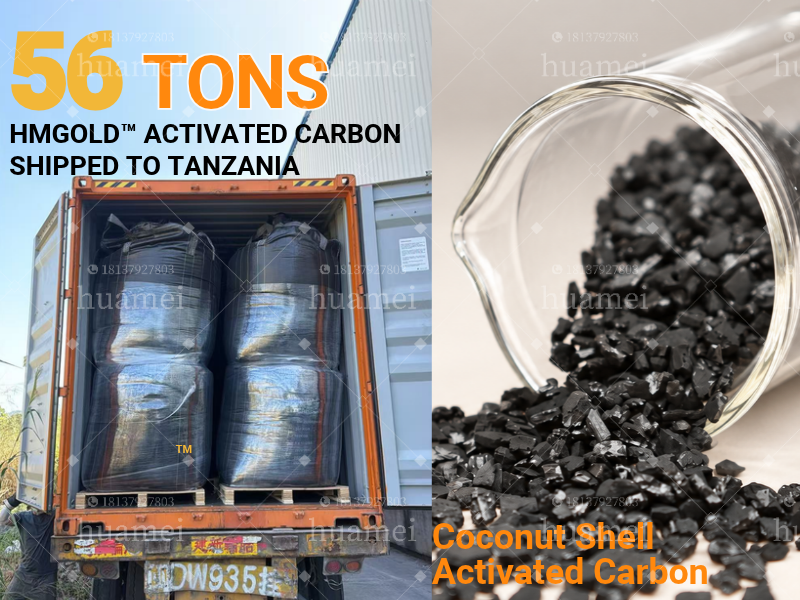
This Tanzania gold mine just placed their second order with Huamei Carbon — 56 tons of HMGOLD™ coconut shell activated carbon for their CIL circuit. Here's how this partnership developed from first contact to repeat purchase.
The relationship started when the mine was looking for a more consistent carbon supply. Their previous supplier's product had issues — uneven particle size and high ash content that made the carbon difficult to reactivate in the kiln.
That first order was 112 tons shipped in four 40-foot containers — a significant commitment for a new supplier relationship. The mine ran the carbon through their CIL circuit, confirmed the particle size uniformity, tested the reactivation performance, and tracked gold loading across multiple cycles.
The results held up. And when it was time to restock, they came back.
The first order (112 tons) was an initial inventory fill — replacing the old carbon stock entirely. This 56-ton repeat order reflects the mine's ongoing consumption rate. For a CIL plant, annual fresh carbon consumption typically runs 50–200 tons depending on ore throughput, carbon attrition, and reactivation efficiency. A 56-ton order covers roughly 6–12 months of makeup carbon for a mid-size operation.
The shift from a large trial order to a regular resupply order is a normal pattern — and a good sign. It means the carbon is performing as expected in the circuit, and the mine has incorporated Huamei into their ongoing procurement plan rather than treating us as a one-time alternative.

| Item | Details |
|---|---|
| Produit | HMGOLD™ Coconut Shell Activated Carbon |
| Application | Gold recovery — CIL circuit |
| Destination | Tanzania |
| Total volume | 56 tons (2 × 40ft containers) |
| Taille des mailles | 6×12 |
| Indice d'iode | ≥1100 mg/g |
| Ball-pan hardness | ≥98% |
| Teneur en cendres | <3% |
| Humidité | ≤5% |
Same specs as the first order — no changes. In gold carbon procurement, that's exactly what you want. When a mine finds a carbon grade that works in their circuit, they lock in the specification and expect every future shipment to match. Changing specs means re-tuning elution parameters, adjusting screen apertures, and potentially re-qualifying the carbon through plant trials.
When we say "specification consistency," we're not talking about matching a datasheet. We mean batch-to-batch uniformity across the parameters that directly affect gold recovery operations:
| Paramètres | Why Consistency Matters | What Happens When It Varies |
|---|---|---|
| Particle size
distribution (6×12 mesh) |
Screens are calibrated for
a specific size range |
Undersized particles pass through screens
→ carbon loss. Oversized particles reduce surface area → lower gold loading |
| Indice d'iode
(≥1,100 mg/g) |
Directly correlates with
gold adsorption capacity |
Low iodine → lower gold loading
per kg of carbon → more carbon needed per ounce of gold recovered |
| Ball-pan hardness
(≥98%) |
Determines carbon
survival rate in the circuit |
Soft carbon breaks down faster
→ higher attrition losses → more frequent carbon replacement |
| Ash content (<3%) | Affects reactivation
quality and carbon longevity |
High ash carbon → poor kiln reactivation
→ reduced cycle life → more fresh carbon purchases |
| Moisture (≤5%) | Affects weight accuracy
and handling |
Excess moisture →
you're paying for water, not carbon. Also causes clumping during storage in tropical climates |
For this 56-ton order, we pulled test samples from the production batch and compared results against the first 112-ton shipment's Certificate of Analysis. The numbers matched within normal production variance — not because we got lucky, but because the raw coconut shell source, activation process, and screening protocols haven't changed.
For repeat orders, the process is faster because specifications and logistics are already established:
From order confirmation to cargo departure, the turnaround for a repeat order is typically 15–20 days — shorter than a first order because there's no sample stage, no spec negotiation, and no new logistics setup.
Mining operations sometimes consider switching carbon suppliers to chase a lower price quote. Here's what that decision actually costs:
| Factor | Staying with Proven Supplier | Switching to New Supplier |
|---|---|---|
| Sample testing | Not needed | 4–8 weeks for sample
+ lab testing |
| Plant trial | Not needed | 1–3 months of circuit
monitoring with new carbon |
| Risk of quality variance | Low (track record established) | Unknown until proven
in your circuit |
| Procurement lead time | 15–20 days (repeat order) | 8–16 weeks (sample
→ trial → first bulk order) |
| Operational disruption | None | Possible — if new carbon
behaves differently in elution or reactivation |
| Price difference | Known and stable | May be 5–10% lower initially,
but hidden costs from above factors can exceed savings |
This is why experienced procurement managers at gold mines tend to maintain their carbon supplier — unless there's a genuine quality or supply failure. The cost of switching is real, even if it doesn't show up on the purchase order.
Tanzania is Africa's fourth-largest gold producer, with major mining operations in the Lake Victoria Goldfields, Lupa Goldfield, and Mpanda Mineral Field. The country's gold mining sector has grown steadily, driven by both large-scale international operations and expanding medium-scale mines.
For activated carbon suppliers, Tanzania represents a consistent demand market:
Huamei Carbon currently supplies multiple clients in Tanzania. This 56-ton repeat order is one of several ongoing partnerships we maintain in the country.
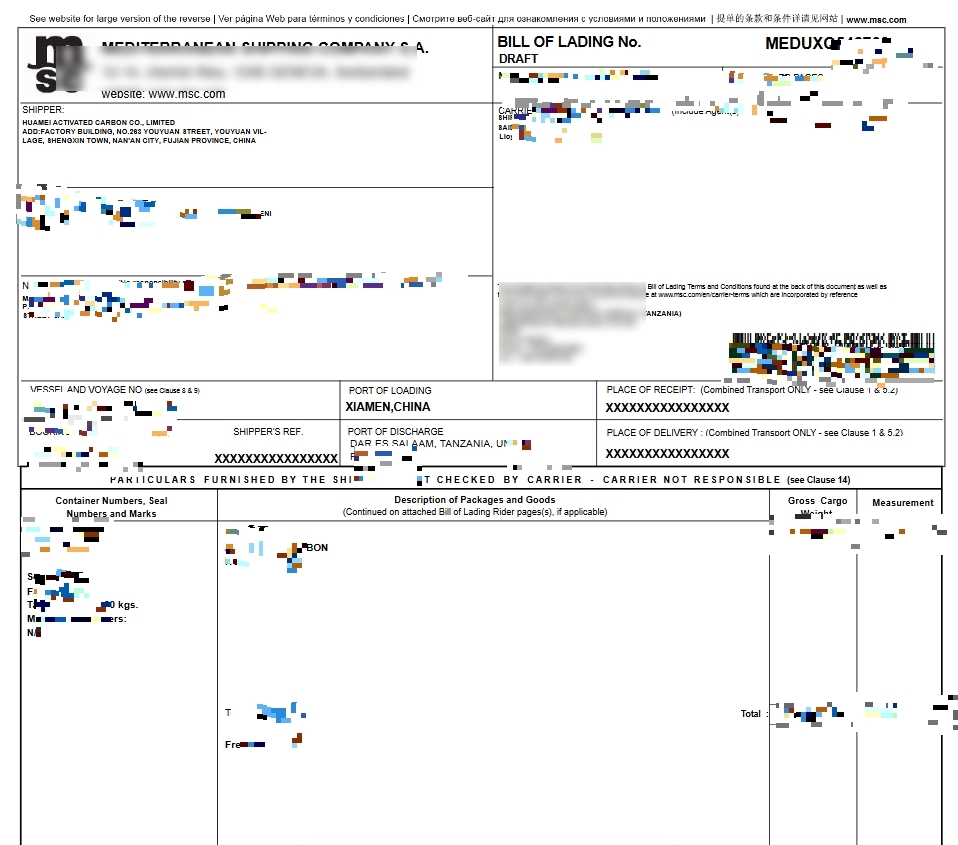
For us, the real measure of success is not completing a shipment — it's whether the customer comes back for the next one.
From order confirmation to cargo departure, we focus on three things: that the product specifications match what was agreed, that communication is clear and timely, and that the supply arrangement runs smoothly enough that the buyer doesn't need to think about it.
This 56-ton repeat order from Tanzania confirms that those three things are working. And it's a partnership we intend to maintain.
We produce coquille de noix de coco, à base de charbonet wood-based activated carbon at our facilities in Fujian and Ningxia provinces, China. Monthly production capacity exceeds 700 tons.
For gold recovery, our HMGOLD™ series covers four grades — HMGOLD™6000, 7000, 7500, and PLUS — with iodine values from 1,050 to 1,200 mg/g, designed for CIP, CIL, and CIC circuits.
Whether you're sourcing gold recovery carbon for the first time or looking for a more consistent supply, the process starts the same way: tell us your specs and volume, and we'll send a quote with full technical data within 24 hours.
📱 WhatsApp: +86 181-3792-7803
📧 Email: sale@huameicarbon.com
🌐 Website: www.huameicarbon.com
Specification consistency. Gold recovery circuits are calibrated for a specific carbon grade — particle size, iodine number, hardness, and ash content. Switching suppliers introduces risk: the new carbon may behave differently during elution, reactivation, or screening. The cost of testing, trialing, and potentially disrupting production usually outweighs any savings from a lower per-ton price.
Most CIL plants place fresh carbon orders every 3–12 months, depending on plant size and carbon attrition rate. A mid-size CIL operation processing 2,000–5,000 tons of ore per day typically consumes 50–200 tons of fresh carbon per year. Regular reorders — like this 56-ton shipment — indicate the mine's normal consumption cycle.
10 tons (one 20-foot container). For better freight economics, most buyers order in 26–28 ton increments (one 40-foot container). This 56-ton order shipped in two 40-foot containers — a common configuration for repeat orders.
Three controls: standardized raw material sourcing (same coconut shell grade from the same supply chain), consistent activation process parameters (temperature, steam ratio, residence time), and multi-stage quality testing on every production batch. We compare each batch's COA against previous shipments to the same client, flagging any drift before the carbon ships.
Yes. We send 1–5 kg samples from the production line — not hand-picked samples. The sample comes from the same process that produces the bulk order, so test results are representative of what you'll receive. Sample testing typically takes 2–4 weeks including shipping and lab analysis.
