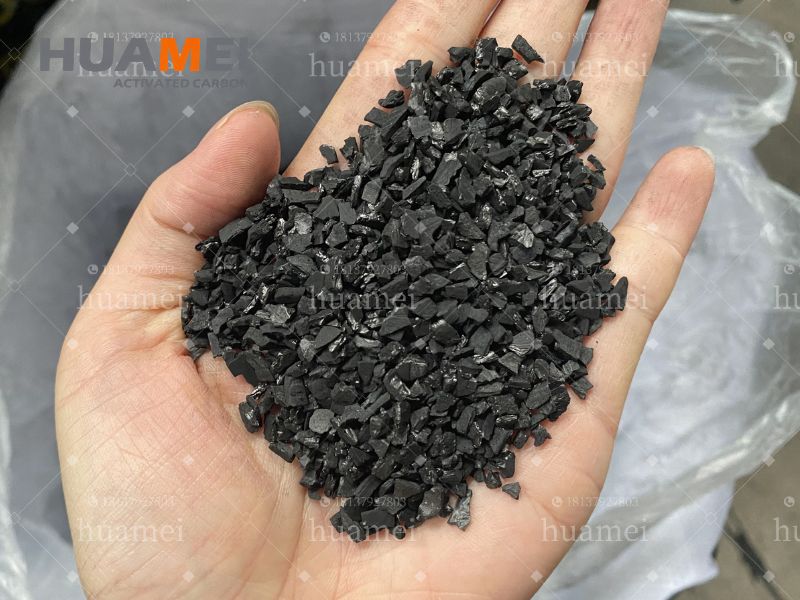
Activated Carbon for Gold Mining in Ghana: Specs, Supply & Import Guide
Ghana is Africa's largest gold producer. The country mined a record 5.94 million ounces (approximately 184.8 tonnes) in 2025, with gold exports exceeding $9 billion and accounting for over 40% of total national export revenue (Ghana Minerals Commission, 2026). That record didn't come from one or two mega-mines — it came from a combination of large-scale industrial operations like Tarkwa, Obuasi, and Ahafo, plus a massive artisanal and small-scale mining (ASM) sector that contributed 3.1 million ounces, or 52.4% of total output.
Every ounce of that gold — whether produced in a Newmont CIL plant or a licensed community mining site in the Ashanti Region — requires activated carbon at some point in the recovery process. Ghana imported approximately 11,500 tonnes of activated carbon worth $20.1 million in 2024 alone (Eximdatax/OEC, 2025), making it one of Africa's largest activated carbon markets by volume.
This guide is for procurement managers at Ghana's industrial mines, ASM operators transitioning from mercury to cyanide-based processing, and carbon distributors serving the Ghanaian market. It covers what specifications your operation actually needs, how import logistics work through Tema and Takoradi, Ghana's ECOWAS tariff structure and Minerals Commission requirements, and how to evaluate suppliers and calculate your carbon needs.
Ghana's Gold Mining Landscape: Africa's Largest Producer
Ghana's gold sector operates on two parallel tracks: large-scale industrial mining by international operators producing approximately 2.8 million ounces annually, and a formalized-but-fragmented artisanal and small-scale mining (ASM) sector producing 3.1 million ounces — together making Ghana the world's sixth-largest gold producer and Africa's undisputed number one.
Major Industrial Mines
| Mine | Operator | Region | Processing Method |
|---|---|---|---|
| Tarkwa | Gold Fields | Western | CIL (open-pit) |
| Obuasi | AngloGold Ashanti | Ashanti | CIL (underground + open-pit) |
| Ahafo (North + South) | Newmont | Ahafo / Bono | CIL |
| Damang | Gold Fields | Western | CIL (open-pit) |
| Chirano | Asante Gold (prev. Kinross) | Western North | CIL/CIP |
| Bibiani | Asante Gold | Western North | CIL |
→ What makes Ghana different from other African gold markets: Ghana has the most mature mining infrastructure in West Africa. Tarkwa and Obuasi have operated continuously for over a century. The country has established supply chains, experienced technical workforces, and a Minerals Commission that actively regulates — but also actively supports — the industry. For activated carbon suppliers, this means a predictable, repeat-purchase market with standardized procurement processes.
→ The ASM factor: Ghana's 3.1 million ounces from artisanal mining in 2025 is not the informal galamsey narrative that dominates headlines. The Minerals Commission has been formalizing the sector through community mining schemes and designated ASM zones since the Minerals and Mining Act 2006 (Act 703). An estimated 1–1.5 million people work in Ghana's ASM sector. The shift from mercury amalgamation to cyanide leaching with activated carbon — driven by Ghana's ratification of the Minamata Convention on Mercury and the government's crackdown on illegal mercury use — is creating a massive new demand segment for activated carbon that barely existed five years ago.
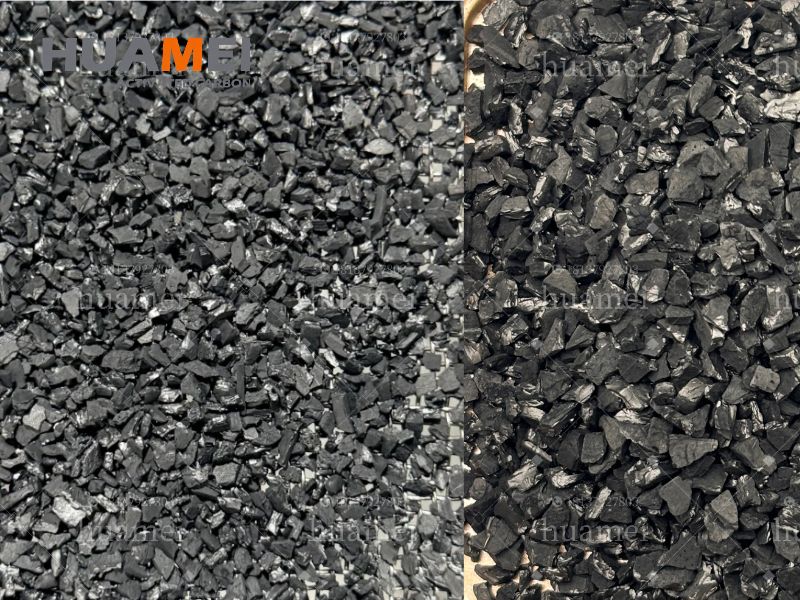
Carbon Specifications for Ghana's Gold Recovery Circuits
Ghana's major mines run CIL circuits with on-site reactivation kilns, which places the highest possible demands on activated carbon quality. The carbon endures continuous agitation in leach tanks, repeated inter-stage screening, and 50–100+ thermal reactivation cycles at 650–750°C over its service life.
CIL/CIP Specification Requirements
| Parâmetro | CIL/CIP Requirement | Test Method | Why It Matters in Ghana's Circuits |
|---|---|---|---|
| Raw material | Coconut shell | — | Highest hardness + micropore density; industry
standard across all Ghana industrial mines |
| Número de iodo | ≥1,050 mg/g | ASTM D4607 | Measures micropore volume for Au(CN)₂⁻
adsorption; higher = faster gold loading |
| Ball-pan hardness | ≥98% | ASTM D3802 | Determines survival rate through reactivation
cycles; ≥98% preferred at Tarkwa/Obuasi |
| Teor de cinzas | ≤3% | ASTM D2866 | High ash blocks pores and introduces calcium/
silica contamination into the gold room |
| Umidade | ≤5% | ASTM D2867 | Moisture ≠ adsorption capacity. You're paying per
kilogram — don't pay for water. |
| Tamanho da malha | 6×12 (1.70–3.35 mm) | ASTM D2862 | Universal standard for CIL inter-stage screens in
Ghana; fines report to tailings carrying gold |
| Apparent density | 0.45–0.55 g/cm³ | ASTM D2854 | Affects carbon flow through inter-stage screens
and elution column loading |
| Gold loading capacity
(K-value) |
≥25 kg Au/t carbon | Mintek method | Lab-measured gold uptake rate; field performance
depends on your ore mineralogy |
Key Distinction — Ghana vs. Tanzania/Sudan: Ghana's industrial mines are among the most technically sophisticated in Africa. Tarkwa, Obuasi, and Ahafo run dedicated metallurgical laboratories that test incoming activated carbon batches against their specific ore profiles before accepting shipments. A COA alone is not enough — you need to be prepared for on-site verification testing. Based on our 15+ years of manufacturing experience and multiple shipments to Ghana's Ashanti and Western Region mines, the sweet spot for Ghana CIL operations is iodine ≥1,100 mg/g with hardness ≥98%. That extra 1% hardness pays for itself in reduced attrition over 60+ reactivation cycles.
Carbon-in-Column (CIC) and Heap Leach Operations
Some Ghanaian operations — particularly heap leach projects processing oxide ores — use carbon-in-column (CIC) systems where carbon sits in fixed columns rather than agitated tanks. Requirements differ slightly:
| Parâmetro | CIC / Heap Leach | Difference from CIL |
|---|---|---|
| Tamanho da malha | 6×12 or 8×16 | 8×16 acceptable — no inter-stage screening abrasion |
| Dureza | ≥95% | Lower — no tank agitation or mechanical screening |
| Número de iodo | ≥1,000 mg/g | Slightly lower OK since contact time is longer in columns |
| Pressure drop | Must maintain pregnant solution flow rate | Uniform particle size distribution critical to prevent channeling |
ASM Operations: The Mercury-to-Carbon Transition
This is where Ghana's activated carbon market is growing fastest. An estimated 30–40% of Ghana's ASM operators have begun transitioning from mercury amalgamation to cyanide leaching with activated carbon, driven by:
- Minamata Convention compliance: Ghana ratified the convention in 2017 and enacted Mercury Regulations 3,1 (L.I. 2477, 2022) to phase out mercury use
- Minerals Commission enforcement: Technical operations, processing plants, and tailings storage at ASM sites are governed by L.I. 2182 (2012) and enforced through Environmental Protection Agency inspections
- Economics: Cyanide leaching with carbon recovers 85–95% of gold from ore versus 40–60% with mercury amalgamation — the economics are compelling even before accounting for health and environmental costs
→ ASM carbon specifications: Small-scale CIP or vat leach systems typically use 6×12 or 8×30 mesh coconut shell carbon. Iodine ≥1,000 mg/g is sufficient. Hardness matters less when no reactivation kiln is available — most ASM operators use carbon once or twice, then sell loaded carbon to a processor. Order quantities: 1–10 tonnes per batch, typically sourced through Accra/Kumasi distributors rather than direct import.
→ Market size estimate: If even 40% of Ghana's 3.1 million ASM ounces transitions from mercury to carbon-based processing, that represents an additional 2,000–4,000 tonnes of annual activated carbon demand — on top of the ~7,000 tonnes already consumed by industrial mines. This is the single largest growth driver for activated carbon in West Africa.
Sourcing Activated Carbon for Gold Mining in Ghana?
Huamei supplies coconut shell activated carbon for CIL, CIP, CIC, heap leach, and ASM operations across Ghana. HMGOLD™ grades with iodine 1,050–1,300 mg/g and hardness ≥97–99%. We've shipped to Ashanti and Western Region mines. Free samples for on-site circuit testing. MOQ 10 tonnes (one 20ft container). Factory-direct pricing with 700+ tonnes/month production capacity.
Shipping to Ghana: Dual-Port System and Mine-Site Logistics
Ghana offers two major container ports — Tema and Takoradi — giving activated carbon buyers a logistics advantage that most West African countries lack. Takoradi Port, 280 km west of Accra, is the preferred gateway for shipments destined for the Western Region gold belt (Tarkwa, Damang, Edikan, Bibiani), while Tema Port near Accra handles the majority of containerized imports including those bound for Ashanti Region mines (Obuasi, Chirano) and northern operations (Ahafo).

Shipping Timeline: China to Ghana Mine Site
| Stage | Timeline | Notes |
|---|---|---|
| Production + quality testing | 15–25 days | From order confirmation; includes batch-specific
COA and optional SGS/Intertek witness testing |
| Inland transport to Chinese port | 2–5 days | Fujian/Ningxia factory → Xiamen or Shanghai |
| Ocean freight (FCL) | 35–40 days | Xiamen/Shanghai → Tema or Takoradi; typical
routing via Colombo, Singapore, or direct West Africa service |
| Port clearance + customs | 5–14 days | Ghana Revenue Authority (GRA) + Customs Division;
mining companies with fiscal stability agreements may clear faster |
| Inland transport to mine site | 0.5–2 days | Takoradi → Tarkwa (60 km); Tema → Obuasi (~300 km);
Tema → Ahafo (~450 km) |
Total lead time: approximately 55–85 days from order confirmation to mine site.
Port Selection: Tema vs. Takoradi
| Factor | Tema Port | Takoradi Port |
|---|---|---|
| Location | Greater Accra (east coast) | Western Region (west coast) |
| Container volume | Ghana's largest — handles ~80% of container traffic | Smaller but expanding; prioritized for mining/industrial cargo |
| Best for | Obuasi, Chirano, Ahafo, northern mines, Accra distributors | Tarkwa, Damang, Edikan, Bibiani, Prestea |
| Distance to Tarkwa | ~340 km (5–6 hours road) | ~60 km (1 hour road) |
| Distance to Obuasi | ~300 km (4–5 hours road) | ~200 km (3–4 hours road) |
| Congestion | Higher — more diverse cargo mix | Lower — mining-focused traffic |
| Inland freight cost | Higher for Western Region mines | Lowest for Western Region mines |
→ Practical recommendation: For shipments to Tarkwa, Damang, Edikan, or Bibiani, route through Takoradi. The 60 km truck ride from Takoradi to Tarkwa costs a fraction of the 340 km haul from Tema — and the port's mining-cargo focus means faster clearance and less congestion. For Obuasi, Chirano, and Ahafo, Tema is closer or comparable, and the wider shipping line coverage means more competitive freight rates.
Packaging Options
| Option | Weight | Per 40ft HC | Best For |
|---|---|---|---|
| Jumbo bags (FIBC) | 500–1,000 kg | 24–28 bags | Industrial mines (Tarkwa, Obuasi, Ahafo)
with forklift/crane access |
| 25 kg PP woven bags | 25 kg each | ~1,080–1,120 bags | ASM operators, Accra/Kumasi carbon
distributors, sites without heavy equipment |
| 500 kg bags on pallets | 500 kg | ~52–56 bags | Mid-tier mines, community mining schemes
with basic handling equipment |
→ Ghana-specific note: The 25 kg bag format is disproportionately important in Ghana compared to Tanzania or Sudan. Ghana's massive ASM sector creates a strong domestic retail and distribution market for activated carbon. Distributors in Accra, Kumasi, and Tarkwa buy in 40ft containers (25 kg bags), then resell in smaller quantities to hundreds of small-scale operators. If you're a distributor serving Ghana's ASM market, 25 kg bags maximize your per-unit margins and simplify last-mile delivery to remote mining sites.
Import Duties, Taxes & Regulatory Requirements
Ghana is a member of the Economic Community of West African States (ECOWAS), which applies a Common External Tariff (CET) to imports from non-ECOWAS countries. Activated carbon falls under HS Code 3802.10.
Cost Structure for Imported Activated Carbon
| Cost Component | Rate | Notes |
| ECOWAS CET import duty | 5–10% | Activated carbon (HS 3802.10); exact rate depends
on tariff line and CPC classification. Verify via Ghana Revenue Authority ICUMS portal. |
| VAT (NHIL + GETFund + VAT) | 21.9% combined | 12.5% VAT + 2.5% NHIL + 2.5% GETFund + 1% COVID levy
+ 2.5% IDIF + 0.9% AU import levy. Mining companies with stability agreements may qualify for exemptions. |
| ECOWAS levy | 0.5% | Applied to CIF value |
| Import inspection (DVLA/SOE) | ~1% | Destination inspection by appointed agent (currently
Ghana Standards Authority) |
| IDF (Import Declaration Fee) | 0.5–1% | Paid at point of customs declaration |
Rule of Thumb: Budget 30–35% on top of CIF (Tema or Takoradi) price for total duties, taxes, and fees. This is higher than Tanzania's ~20–25% due to Ghana's broader tax base. However, mining companies operating under the Minerals and Mining Act with fiscal stability agreements may negotiate reduced rates — particularly on capital and production inputs. Consult your customs broker or the Ghana Chamber of Mines for current rates applicable to your mining license type.
Minerals Commission Local Content Requirements
The Minerals and Mining (Local Content and Local Participation) Regulations, 2020 (L.I. 2431) require mining companies to:
- Give preference to Ghanaian-registered companies for procurement of goods and services where available
- Submit annual local content plans and procurement reports to the Minerals Commission
- Maintain a local content committee to oversee compliance
Since activated carbon is not manufactured in Ghana, direct import from overseas manufacturers is permitted. However, routing procurement through a Ghanaian-registered trading company or agent is common practice — it satisfies local content reporting requirements and provides a local entity for customs clearance, warehousing, and logistics coordination.
Mercury Regulations and the ASM Transition
Ghana's regulatory push away from mercury is directly increasing activated carbon demand:
- Mercury Regulations (L.I. 2477, 2022): Restricts mercury import, sale, and use in gold processing. Enforced through Environmental Protection Agency and Minerals Commission inspections.
- Community Mining Scheme: Government-supported small-scale mining program that provides equipment, training, and processing facilities — most using cyanide leaching with activated carbon rather than mercury.
- Practical timeline: Full mercury phase-out in ASM is a multi-year process. Current transition rate is estimated at 30–40% of ASM operators. As enforcement increases and community mining infrastructure expands, carbon demand from this segment will continue to grow through at least 2030.

How to Calculate Carbon Requirements for Ghana Operations
Industrial CIL/CIP Mines
Two calculations drive procurement planning:
1. Carbon inventory (total carbon in circuit):
Carbon inventory (tonnes) = Daily ore throughput (tonnes) × Carbon concentration (kg/t ore) ÷ 1,000
Standard CIL carbon concentration: 15–25 g/L slurry, which translates to roughly 10–20 kg carbon per tonne of daily ore capacity.
2. Annual makeup carbon (replacement rate):
Annual makeup (tonnes) = Carbon inventory × Annual attrition rate (15–25%)
| Mine Capacity (tpd) | Carbon Inventory (tonnes) | Annual Makeup at 20% Attrition | Containers/Year (40ft HC) |
|---|---|---|---|
| 2,000 | 20–40 | 4–8 | 1 × 40ft |
| 5,000 | 50–100 | 10–20 | 1–3 × 40ft |
| 8,000 | 80–160 | 16–32 | 2–4 × 40ft |
| 15,000 | 150–300 | 30–60 | 4–8 × 40ft |
| 28,000 | 280–560 | 56–112 | 8–16 × 40ft |
→ Ghana's total industrial carbon consumption: Adding up the major mines' throughputs (~67,000 tpd combined), Ghana's industrial gold mines maintain an estimated 670–1,340 tonnes of carbon in circuits, requiring approximately 130–270 tonnes of makeup carbon annually — plus periodic full inventory replacements. Total industrial consumption is estimated at 6,000–8,000 tonnes per year when including initial fills, emergency replacements, and inventory expansions.
→ Why attrition varies in Ghana: Ghana's ores — particularly in the Ashanti gold belt — contain higher levels of organic carbon (preg-robbing carbonaceous material) than typical free-milling ores. This can increase activated carbon fouling and accelerate effective capacity loss, sometimes requiring more aggressive reactivation schedules. Mines processing carbonaceous ores like Obuasi may see effective attrition rates of 20–30% versus 15–20% at Tarkwa's oxide ores.
ASM and Small-Scale Operations
| Operation Type | Batch Size (ore) | Carbon Needed per Batch | Annual Consumption (est.) |
|---|---|---|---|
| Vat leach (basic) | 5–20 tonnes | 100–800 kg | 1–5 tonnes |
| Small CIP | 50–200 tonnes | 500 kg–4 tonnes | 3–15 tonnes |
| Community mining scheme | 200–500 tonnes | 2–10 tonnes | 10–40 tonnes |
Without reactivation kilns — which most ASM operations lack — carbon is used once or twice and then sold to gold buyers who strip the loaded carbon for its gold content. This single-use model means ASM operators consume more tonnes of carbon per ounce of gold recovered than industrial mines.
Evaluating Activated Carbon Suppliers for the Ghana Market
Ghana imported activated carbon from Côte d'Ivoire ($6.1M), India ($3.7M), Philippines ($1.4M), Sri Lanka, and China in 2024 (WITS/Eximdatax, 2025). Here's how to evaluate suppliers for the Ghanaian market specifically:
1. Batch-Specific COA with ASTM References
Every shipment needs a Certificate of Analysis showing iodine number, ball-pan hardness, ash content, moisture, mesh distribution, and apparent density — tested per ASTM methods. Ghana's major mines will reject shipments that arrive with only a generic product datasheet. For contracts above 50 tonnes/year, request third-party verification through SGS Ghana, Intertek, or Bureau Veritas — all have offices in Accra and Tarkwa.
2. On-Site Circuit Testing
Ghana's industrial mines routinely test incoming carbon against their ore profile before approving suppliers. Request 2–5 kg free samples and ask the mine's metallurgical lab to run a 72-hour comparative adsorption test against their current carbon brand. This is standard practice in Ghana — no reputable mine will approve a new supplier without this step.
3. Production Capacity and Supply Chain Control
The Ghanaian market rewards consistency. Key verification points:
- Monthly capacity: ≥200 tonnes/month to serve a single major mine plus handle spot orders
- Matéria-prima: Manufacturer who controls coconut shell charcoal supply, or a reseller? Manufacturers offer price stability; resellers are vulnerable to charcoal price spikes.
- ISO certification: ISO 9001 minimum; ISO 14001 (environmental) is expected by Gold Fields, AngloGold Ashanti, and Newmont as part of their vendor qualification process.
- Africa track record: Has the supplier shipped to Ghana before? Experience with GRA customs, Tema/Takoradi port procedures, and Minerals Commission compliance documentation reduces delay risk.
4. Pricing: What to Expect
| Cost Component | Typical Range | Key Driver |
|---|---|---|
| FOB price (gold-grade coconut shell) | $2,900–4,500/tonne | Iodine number, hardness, acid washing |
| Ocean freight (FCL to Tema/Takoradi) | $2,000–3,500/container | Container size, carrier, routing, fuel surcharge |
| Duties + taxes (landed) | 30–35% of CIF | ECOWAS CET, VAT, levies, stability agreement status |
| Inland freight | $30–150/tonne | Port choice, mine location, road vs. rail |
→ Total landed cost: For gold-grade coconut shell activated carbon (iodine ≥1,100 mg/g, hardness ≥97%), expect $3,200–5,500/tonne delivered to a Western Region mine site via Takoradi. Ashanti Region mines receiving via Tema pay slightly more for inland freight. Annual contracts with quarterly shipments typically yield 5–15% savings versus spot purchasing.
→ Côte d'Ivoire vs. India vs. China in Ghana: Côte d'Ivoire is Ghana's largest activated carbon supplier by import value — largely coconut shell carbon transshipped through Abidjan. India ranks second. Chinese manufacturers typically compete on a combination of higher hardness grades (≥98%) and faster lead times from Xiamen port. The choice often comes down to specific grade availability and mine-site test results rather than price alone.
Why Ghana Is Africa's Most Important Activated Carbon Market for Gold
Several structural factors make Ghana the highest-value activated carbon market in Africa:
-
- Volume: ~11,500 tonnes imported in 2024 worth $20.1 million — one of the largest AC import markets in sub-Saharan Africa. Industrial demand alone exceeds 6,000 tonnes/year.
- Growth: The mercury-to-carbon transition in ASM could add 2,000–4,000 tonnes of annual demand by 2030 — a 30–50% increase on current volumes.
- Stability: Ghana's mining sector has operated continuously for over a century. Gold Fields, AngloGold Ashanti, and Newmont have multi-decade commitments. This is not a boom-bust market — it's a structural, long-cycle demand pattern.
- Infrastructure: Dual-port access, paved highways to all major mining regions, established customs processes, and a functioning banking system that supports international letters of credit. Logistics reliability is the highest in West Africa.
- Regulatory clarity: The Minerals Commission provides clear frameworks for import, local content compliance, and environmental standards. Ambiguity is low compared to many African jurisdictions.
For activated carbon manufacturers and distributors, Ghana is not a "try once" market — it's a long-term partnership market where technical quality, supply reliability, and on-the-ground support determine who earns repeat orders.
FAQ
How much activated carbon does Ghana import each year?
Ghana imported approximately 11,500 tonnes of activated carbon worth $20.1 million in 2024, primarily from Côte d'Ivoire, India, Philippines, Sri Lanka, and China (Eximdatax/OEC, 2025). This makes Ghana one of the largest activated carbon import markets in sub-Saharan Africa, driven by both industrial gold mining and the growing ASM sector.
What specifications do Ghana's gold mines require for activated carbon?
CIL operations at major mines (Tarkwa, Obuasi, Ahafo) require coconut shell activated carbon with 6×12 mesh, iodine number ≥1,050 mg/g (preferably ≥1,100), ball-pan hardness ≥98% (preferably ≥98%), ash ≤3%, and moisture ≤5%. All parameters must be tested per ASTM methods and documented in a batch-specific Certificate of Analysis.
Should I ship activated carbon to Tema or Takoradi port?
It depends on the mine location. For Western Region mines (Tarkwa, Damang, Edikan, Bibiani), route through Takoradi — it's only 60 km from Tarkwa versus 340 km from Tema. For Ashanti Region mines (Obuasi, Chirano) and Ahafo/Bono operations, Tema is closer or comparable, with more shipping line options and competitive freight rates.
What import duties apply to activated carbon in Ghana?
Activated carbon (HS 3802.10) is subject to ECOWAS Common External Tariff of 5–10%, plus approximately 21.9% in combined VAT, NHIL, GETFund, and other statutory levies on CIF value. Total landed duties and taxes typically add 30–35% to the CIF price. Mining companies with fiscal stability agreements under the Minerals and Mining Act may negotiate reduced rates.
How is Ghana's mercury ban affecting activated carbon demand?
Ghana's Mercury Regulations (L.I. 2477, 2022) and Minamata Convention compliance are driving ASM operators from mercury amalgamation to cyanide leaching with activated carbon. An estimated 30–40% of ASM operators have begun transitioning, creating potential additional demand of 2,000–4,000 tonnes per year by 2030 — representing the fastest-growing segment of Ghana's activated carbon market.
Get Gold Recovery Carbon for Your Ghana Operation — Factory Direct
Tell us your processing method (CIL/CIP/CIC/heap leach/ASM vat leach), daily ore throughput, and current carbon specs. We'll recommend the right HMGOLD™ grade, provide pricing to Tema or Takoradi, and send free samples for your metallurgical lab testing. MOQ 10 tonnes. Production capacity 700+ tonnes/month. Multiple shipments to Ghana's Ashanti and Western Region mines.
WhatsApp: +86 181-3792-7803
E-mail: sale@huameicarbon.com
Website: www.huameicarbon.com
Related Articles
- 56 Tons HMGOLD™ Carbon Shipped to Ghana: CIP Mesh Size Upgrade →
- HMGOLD™ Coconut Shell Activated Carbon for Gold Recovery →
- Activated Carbon for Gold Recovery: A Practical Buyer's Guide →
- Activated Carbon for Gold Mining in Sudan: Supply Guide →
- Activated Carbon Quality Testing Methods →
- 24.2 Tons Gold Recovery Carbon Shipped to Mauritania →
- 112 Tons Coconut Shell Carbon Shipped to Tanzania Gold Mine →