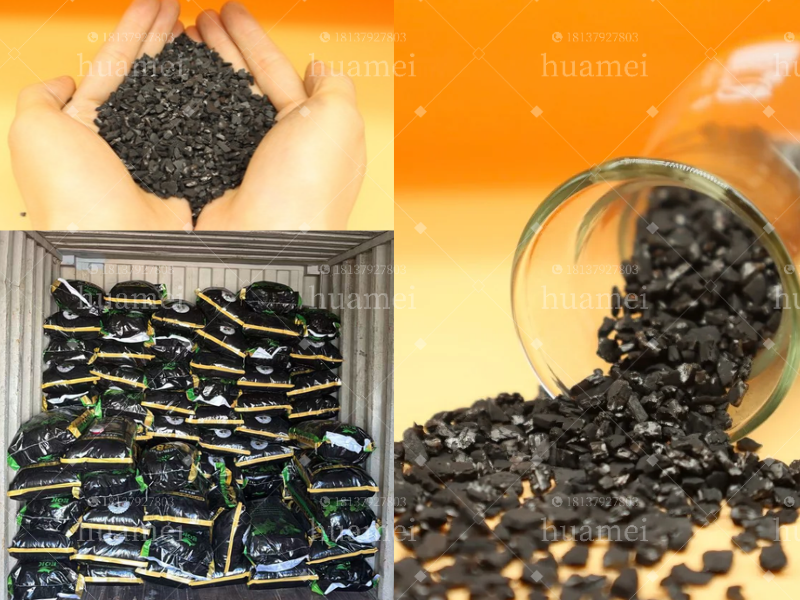
A buyer in the Philippines needed coconut shell activated carbon. Like most first-time importers, he started with a Google search — and immediately ran into the same problem every overseas buyer faces: dozens of suppliers, similar-looking products, and no easy way to tell who actually manufactures the carbon and who is just reselling it.
He visited multiple supplier websites. Most of them listed generic specifications without explaining how those numbers were tested. Product photos looked like stock images. Technical details were vague or copied from textbooks. None of it helped him make a confident purchasing decision for carbón activado de cáscara de coco.
Then he found Huamei's website.
What made the difference wasn't price. It was information quality.
The buyer told us that Huamei's website stood out because the product information felt real. Specifications came with test method references. Factory photos showed actual production lines, not generic industrial images. Case studies included shipping details, tonnage, and destination countries — the kind of specifics that only a real manufacturer would share.
After the initial contact, our sales manager took it further:
This level of transparency is rare in the activated carbon trade. Most suppliers send a one-page spec sheet and a price. They don't walk you through their factory on video or explain why a specific iodine value matters for your particular use case.
For a first-time buyer thousands of kilometers away, that transparency was the deciding factor.
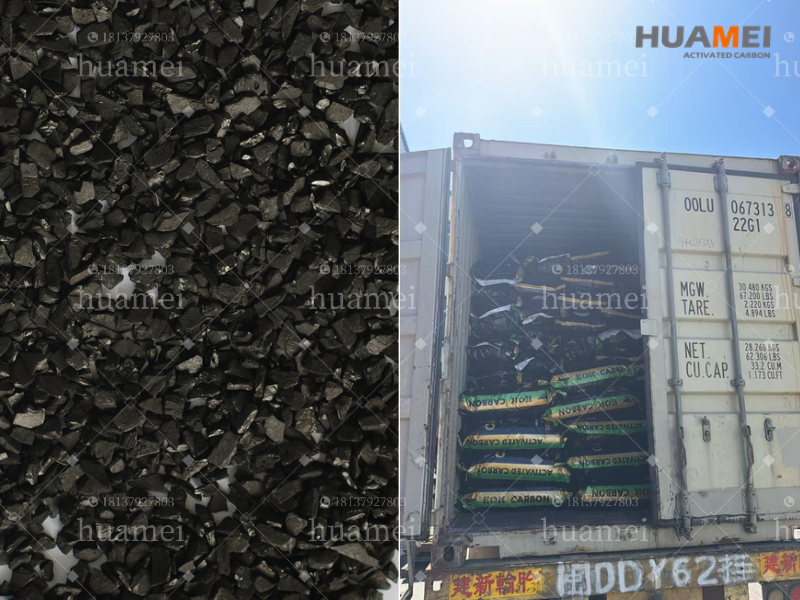
After thorough evaluation, the buyer placed an order for 13 tons of coconut shell granular activated carbon — one full 20-foot container shipped to the Philippines. The order was packed in 25 kg bags with custom branded packaging designed by the buyer — a service Huamei provides for customers who need retail-ready or branded product for their local market.
| Order Detail | Especificación |
|---|---|
| Producto | Carbón activo granulado de cáscara de coco |
| Cantidad | 13 tons (1 × 20GP container) |
| Embalaje | 25 kg bags, custom branded packaging
per buyer's design |
| Destino | Philippines |
| Customer type | New customer, first order |
| How they found us | Huamei website (organic search) |
The entire process — from first inquiry to shipment — was built on clear communication and verified information. No pressure tactics, no inflated claims. Just straightforward answers to a buyer who wanted to make a well-informed decision.
This buyer's approach offers a practical checklist for anyone sourcing activated carbon internationally. Here's what to look for — and what to watch out for.
A genuine manufacturer's website will show:
If the website only shows product photos and a contact form, that's usually a trader, not a manufacturer.
A pre-recorded factory tour can be purchased or borrowed. A live video call walking through the production floor is much harder to fake. Ask to see:
A manufacturer who controls their own production will be happy to show you. A trader will find excuses.
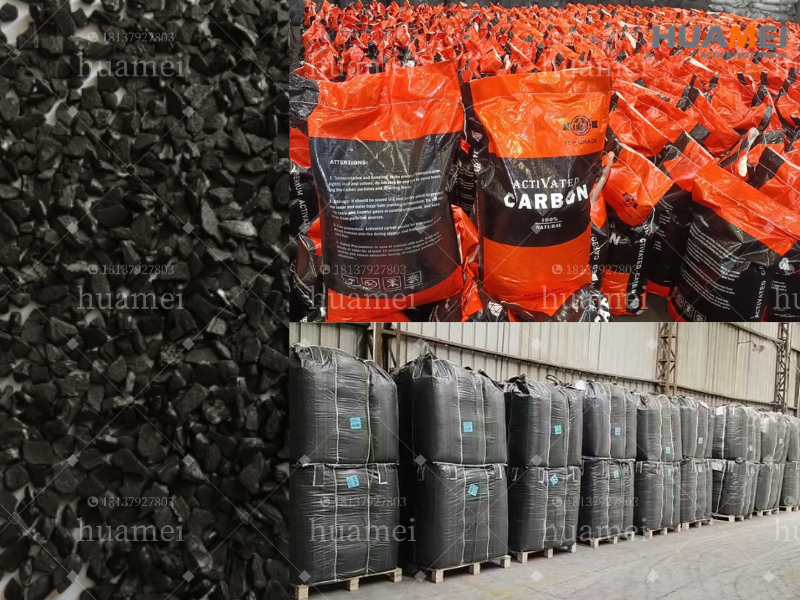
Any supplier can hand you a spec sheet. A real manufacturer can explain:
If the supplier can only repeat the numbers on the spec sheet but can't discuss the engineering behind them, they likely don't make the product.
Request an SGS, Bureau Veritas, or Intertek test report from a recent production batch. Check that the report number is traceable and the testing lab is accredited. A manufacturer with consistent quality will have these reports readily available. For reference, here's what a thorough buyer's evaluation process looks like.
A standard 20-foot container holds 12–14 tons of activated carbon. This is a practical trial volume — large enough to evaluate the coconut shell activated carbon in your operation, small enough to limit risk. A reliable supplier will accept a single-container first order without demanding multi-container commitments upfront.
Huamei operates activated carbon production facilities in Fujian and Ningxia Province, China, with a combined monthly output exceeding 700 tons. We manufacture coconut shell, coal-based, and wood-based activated carbon for tratamiento de aguas, recuperacion de oro, gas purification, food and beverage processing, and industrial applications.
What we offer to overseas buyers:
If you're comparing activated carbon suppliers and want transparent, verified information to support your decision, reach out to us:
Check their website for factory production photos, shipping case studies with specific tonnage and destinations, and technical articles showing process expertise. Ask for a live video tour of the production floor. Request third-party test reports (SGS, Bureau Veritas) with traceable report numbers. Real manufacturers can show you their kilns, furnaces, and QC lab on camera. Traders typically can't.
Most Chinese manufacturers set the MOQ at one 20-foot container, which holds 12–14 tons of granular activated carbon depending on packaging. This is a practical starting point for a trial order. Suppliers who require multi-container minimum orders on the first purchase are usually trying to lock you in before you've evaluated the product.
Ocean freight from major Chinese ports (Xiamen, Shanghai, Ningbo) to Manila or Cebu typically takes 5–10 days depending on the shipping line and route. Add 7–14 days for production (if not from stock) and 3–5 days for customs clearance at both ends. Total lead time from order confirmation to delivery is usually 3–5 weeks.
Pull a composite sample from multiple bags in the shipment. Test at minimum: iodine number, moisture content, and particle size distribution. Compare against the specifications on the supplier's quote and any pre-shipment test report. If you have access to application-specific testing (e.g., gold activity K value for gold recovery carbon), run that as well. Document everything — it establishes a quality baseline for future orders.
