
CIP
CIP — Carbon-in-Pulp
Activated carbon adsorbs dissolved gold from leached pulp in a series of adsorption tanks. Carbon-retention screens and carbon-transfer arrangements are important parts of the circuit.
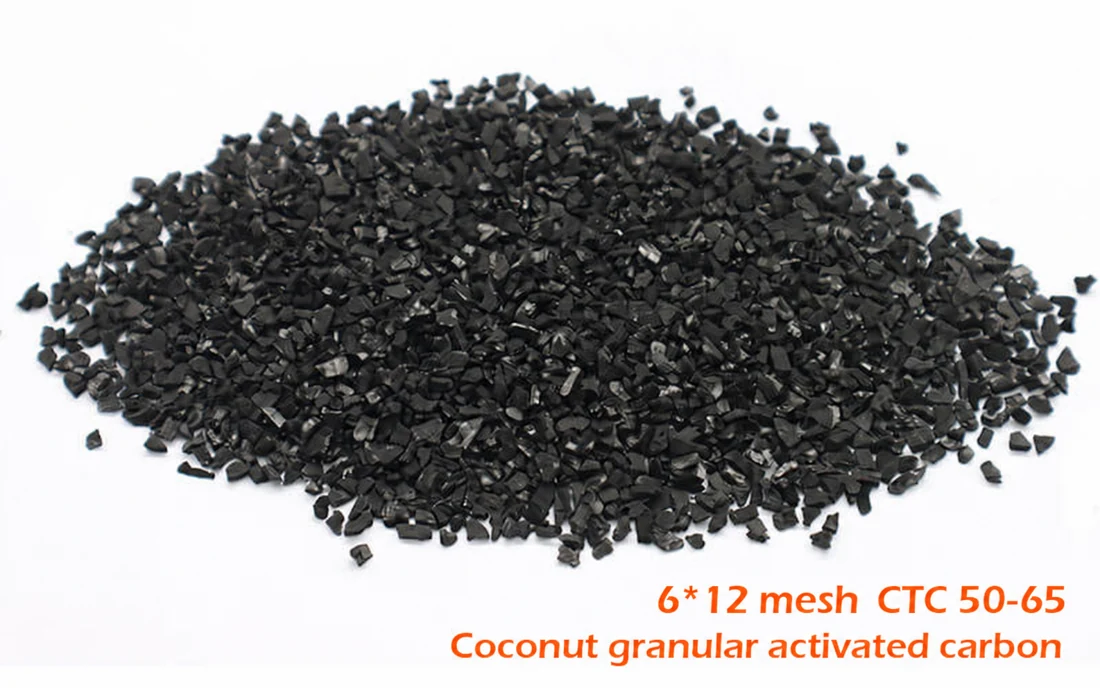
Гранулированный активированный уголь из скорлупы кокосового ореха is used to adsorb dissolved gold-cyanide complexes from process solutions in CIP, CIL and CIC gold recovery circuits. Huamei supplies steam-activated carbon in 6×12 and 8×16 mesh, with custom sizing available. Selection should consider gold adsorption performance, mechanical durability and compatibility with the plant’s screens or columns.
| Mesh sizes | 6*12, 6*16, 8*16 |
|---|---|
| КТК | 50–65 |
| Площадь поверхности | 1050–1300 m²/g |
| твердость | ≥99% (6000/7000) ≥98.5% (7500) ≥98% (PLUS) |
| R value | 54–60 |
| K value | 26–30 |
| Attrition loss, wet phase | 2% (max) |
Our Gold Activated Carbon is supplied for gold recovery circuits.
For gold recovery, compare gold adsorption rate and loading capacity alongside mechanical durability, fines and particle-size distribution. Results should be reviewed using comparable test methods and conditions. Iodine number or hardness alone does not establish gold recovery, carbon consumption or gold loss in an operating plant.
We use our 20+ years of production and trading experience to help advise customers and deliver the right products and services for the right application. We have customers in African and South American markets, such as Ghana, Libya, Burkina Faso, Sudan, Venezuela and a dozen other countries.
По вопросам цен или любым другим вопросам, пожалуйста, не стесняйтесь обращаться к нам в WhatsApp (8618137927803), или заполните форму запроса.
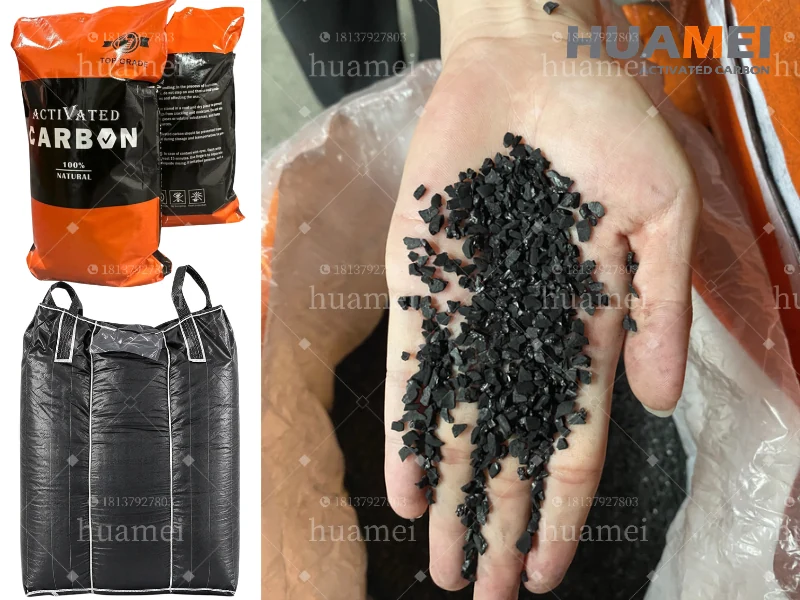
The report image below records the tests shown for the sample identified in that document. Review the sample description, test methods and measured results when assessing the carbon. A sample report does not, by itself, establish gold adsorption performance or guarantee every grade and batch. Contact Huamei for the technical documents relevant to your requested grade.

CIP
Activated carbon adsorbs dissolved gold from leached pulp in a series of adsorption tanks. Carbon-retention screens and carbon-transfer arrangements are important parts of the circuit.
CIL
Leaching and carbon adsorption take place within the same tank train. Carbon should be evaluated for adsorption performance and resistance to the mechanical conditions in the circuit.
CIC
Gold-bearing solution passes through columns containing activated carbon, commonly in heap-leach solution treatment. Particle size, solution flow and column design influence the selection.
Start with the circuit and the plant’s acceptance requirements. Compare gold adsorption rate and loading capacity using the same test procedure, then review mechanical durability, fines and particle-size distribution. Match the carbon to the interstage screens or column design. Confirm the current grade specification and available batch results before placing an order.
| Selection factor | What the plant should confirm |
|---|---|
| Gold adsorption | Adsorption rate and loading capacity from comparable tests |
| Mechanical durability | Test method, attrition and fines |
| Particle size | Screen retention, sieve distribution or column requirements |
| Supply documents | Current grade TDS and available batch COA |
| HMGOLD grade | Йодное число |
|---|---|
| HMGOLD6000 | 1050 mg/g |
| HMGOLD7000 | 1100 мг/г |
| HMGOLD7500 | 1150 mg/g |
| HMGOLDPLUS | 1200 mg/g |
| Parameter | Factory-confirmed supply information |
|---|---|
| Raw material and form | Steam-activated coconut-shell granular carbon |
| Mechanical strength | Ball-pan hardness: ≥99% (6000/7000); ≥98.5% (7500); ≥98% (PLUS) |
| Attrition rate | <2% — all four HMGOLD grades |
| Standard particle sizes | 6×12, 6×16 and 8×16 mesh |
| Custom particle size | Available on request |
| Bag sizes | 25 kg bags or 500 kg jumbo bags |
These are factory-confirmed supply figures, not the measured results of the sample report above. Confirm the current grade TDS, test methods and acceptance limits with your quotation. Iodine number alone does not establish gold adsorption performance.
Huamei shipped 28 tonnes of coconut-shell granular activated carbon to Sudan for gold recovery. The customer specified 6×12 mesh carbon with an iodine number of 1100 mg/g, packed in 25 kg bags. The project also included customized packaging requirements.
Read the 28-tonne Sudan shipment case study →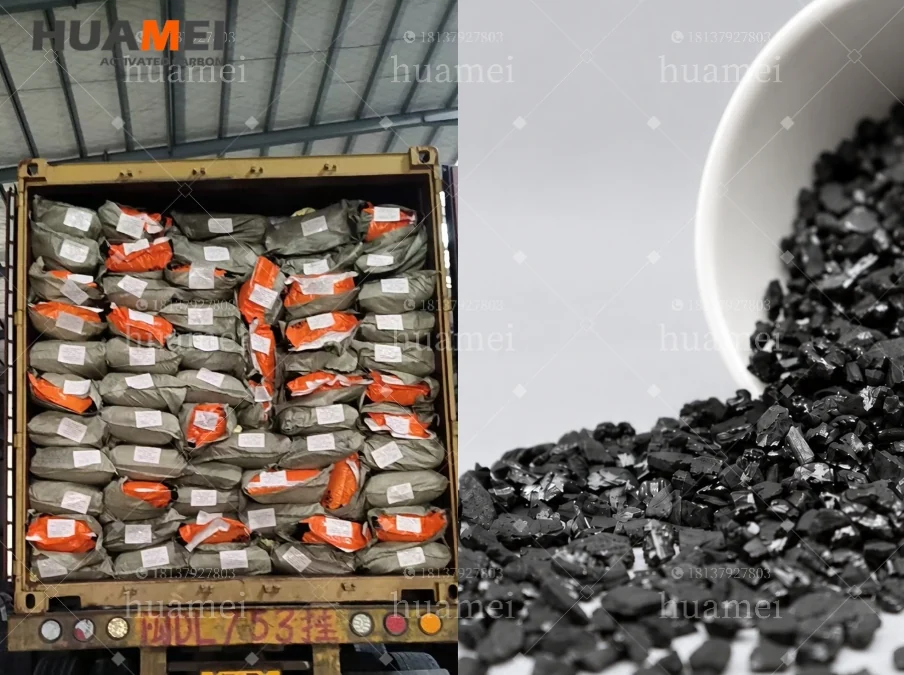

Choose particle size to suit your plant’s retention screens or column design, together with adsorption and hydraulic requirements. Huamei supplies 6×12 and 8×16 mesh, with custom sizing available. Circuit name alone is not sufficient to select the size.
Compare gold adsorption rate and loading capacity, mechanical durability, fines and particle-size distribution against the plant’s acceptance requirements. Use comparable test methods and match the carbon to the retention screens. Iodine number is a supporting indicator; it does not by itself establish gold adsorption performance or plant carbon consumption.
Include the circuit type, current carbon specification or grade, particle size, quantity, destination port and packaging requirements. If you have mandatory acceptance tests, include their methods and limits so the proposed supply can be reviewed against them.
Free samples are available for evaluation. Request the current grade TDS and confirm which batch COA results and supporting sample reports are available for your technical review.