24.2 Tons Gold Recovery Carbon Shipped to Mauritania
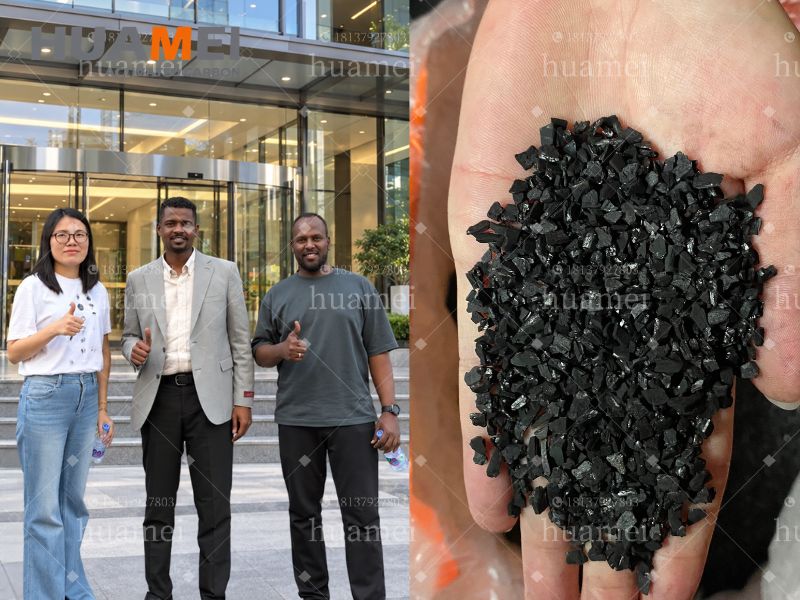
A gold mining operation in Mauritania had been purchasing premium-brand activated carbon for years. The performance was reliable, but the cost kept climbing. When they reached out to Huamei for a sample, they weren't looking for a gamble — they wanted hard data showing a Chinese supplier could match what they were already using.
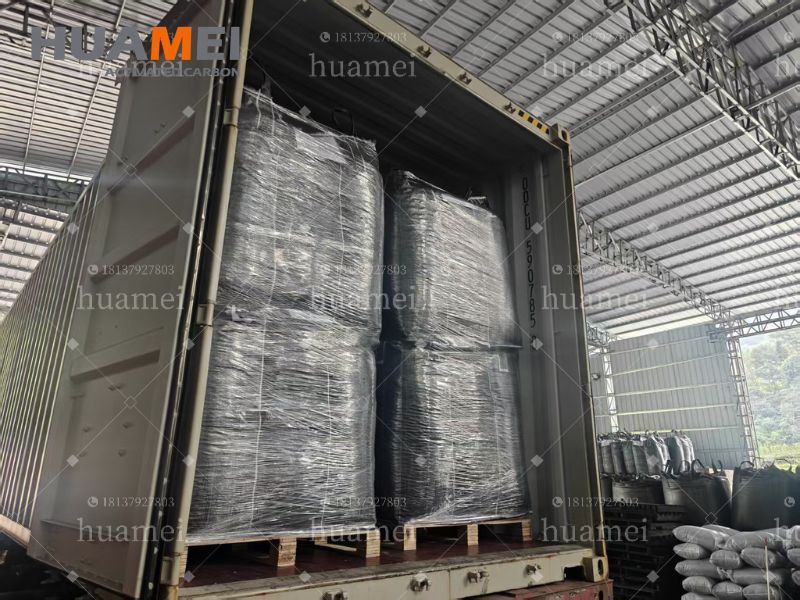
The sample passed. The order followed: 24.2 tons of coconut shell activated carbon, loaded into a 40-foot container in jumbo bags. Here's how the deal came together, and what made this customer confident enough to switch suppliers on a material that directly affects gold recovery rates.
The Customer's Situation
Mauritania is one of West Africa's established gold producers. According to USGS data (2024), the country's gold output reached approximately 21,950 kg (roughly 706,000 troy ounces), driven primarily by Kinross Gold's Tasiast mine — one of Africa's largest open-pit gold operations running a CIL (Carbon-in-Leach) processing circuit at approximately 24,000 tonnes of ore per day.
This customer operates in Mauritania's gold sector and had been using Jacobi's PICAGOLD G210AS — a well-known coconut shell activated carbon designed for gold adsorption in CIL and CIP circuits. It's a solid product with strong industry reputation. No complaints about performance.
The issue was cost. International brand-name gold carbon typically runs $2,800–3,500/ton FOB depending on grade and volume. For operations processing thousands of tonnes of ore daily, activated carbon is a recurring consumable — the carbon inventory needs regular topping up as granules degrade through thermal reactivation cycles. Even a 10–15% cost reduction on carbon procurement translates to meaningful savings over a year.
Why Switching Carbon Suppliers Is Not Simple
Activated carbon for gold recovery is not a commodity you swap casually. The carbon sits directly in the leach circuit, adsorbing dissolved gold from cyanide solution. If the replacement carbon has lower adsorption kinetics, weaker mechanical strength, or inconsistent quality, the consequences show up fast:
- Lower gold loading → gold passes through the circuit unrecovered → direct revenue loss
- Higher carbon attrition → more fines generated during screening → carbon loss + gold loss (fine carbon carries adsorbed gold into tailings)
- Inconsistent performance → batch-to-batch variation forces constant circuit adjustments
This is why many mines stick with the same carbon brand for years, even when cheaper options exist. The risk of switching outweighs the savings — unless you can prove equivalence through testing first.
| Risk Factor | What Goes Wrong | Financial Impact |
|---|---|---|
| Low iodine number | Fewer micropores →
slower gold adsorption |
Gold leaks to tailings,
recovery rate drops |
| Low hardness | Carbon breaks during
screening/transfer |
Carbon loss +
gold loss in fines |
| High ash content | Mineral impurities block
pores, reduce capacity |
Shorter carbon life,
more frequent replacement |
| Inconsistent sizing | Uneven flow through
column, channeling |
Uneven gold loading,
reduced efficiency |
| High moisture | Paying for water weight,
not carbon |
Higher effective cost
per ton of active carbon |
The customer understood these risks. That's why they didn't jump straight to a purchase order — they asked for samples first.
How This Order Came Together
The procurement process followed a pattern we see regularly with mines switching from established brands to Huamei:
Step 1: Discovery Through Case Studies
The customer found Huamei through published case studies and product documentation on our website. They were specifically looking at gold recovery carbon suppliers from China and comparing specifications against what they were already using (PICAGOLD G210AS).
Based on our experience, buyers in the gold mining sector typically evaluate 3–5 suppliers before requesting samples. Published case studies with real shipment data — tonnage, destination, application details — carry more weight than generic product brochures because they prove the supplier has actually delivered to similar operations.
Step 2: Specification Comparison
The customer benchmarked Huamei's coconut shell gold recovery carbon against the PICAGOLD G210AS specifications they were familiar with. The key parameters for CIL/CIP gold carbon are:
| Parameter | CIL Gold Carbon Requirement | Why It Matters in CIL |
|---|---|---|
| Iodine Number
(ASTM D4607) |
≥1,000 mg/g | Indicates micropore volume
— where gold-cyanide complexes adsorb |
| Ball-Pan Hardness
(ASTM D3802) |
≥97% | Carbon must survive 50+
reactivation cycles without excessive attrition |
| Ash Content
(ASTM D2866) |
≤3% | Low ash = cleaner gold bullion
at smelting, fewe r impurities blocking pores |
| Moisture
(ASTM D2867) |
≤5% | Excess moisture = paying
for water, not carbon |
| Mesh Size | 6×12 (1.70–3.35 mm) | Standard CIL screening size —
balances adsorption rate vs mechanical handling |
| Apparent Density | 0.45–0.55 g/cm³ | Affects carbon inventory
calculation and column loading |
The on-paper specs aligned. But specs on a datasheet and performance in a leach tank are two different things — which is why Step 3 matters most.
Step 3: Free Sample Testing
When the customer learned that Huamei provides free samples (typically 1–5 kg) for laboratory and pilot testing, they requested samples immediately.
Gold carbon sample testing at mine site typically involves:
- Activity testing: Measuring gold loading capacity (mg Au/g carbon) from a standard gold-cyanide solution
- Kinetics testing: How fast the carbon reaches equilibrium — faster kinetics means less gold escapes the circuit
- Abrasion testing: Simulating reactivation kiln conditions to measure hardness loss over multiple cycles
- Elution recovery: Testing how completely adsorbed gold can be stripped from the carbon
The customer's test results confirmed that Huamei's coconut shell carbon met their operational requirements. The gold loading and kinetics were within acceptable range compared to what they had been achieving with the incumbent brand.
Step 4: Order Confirmation — 24.2 Tons
With test results in hand, the customer placed an order for 24.2 tons — enough to fill a 40-foot container. This is a typical first-order volume for gold mines testing a new supplier: large enough to run a meaningful plant trial over several weeks, but not so large that the financial exposure is uncomfortable if something unexpected happens.
Huamei supplies coconut shell activated carbon for CIL, CIP, and CIC gold processing. Free samples available for mine-site testing. MOQ 10 tons. 700+ tons/month production capacity across two factories.
Shipment Details
| Item | Details |
|---|---|
| Product | Coconut shell activated carbon
for gold recovery (CIL grade) |
| Quantity | 24.2 tons |
| Container | 1 × 40-foot |
| Packaging | Jumbo bags (1-ton bulk bags) |
| Mesh Size | 6×12 |
| Destination | Mauritania |
| Application | Gold recovery — CIL circuit |
Why jumbo bags for gold carbon: Gold mines handling 20+ tons of carbon typically prefer 1-ton jumbo bags over 25 kg bags for practical reasons — faster unloading (a 24-ton container has 24 jumbo bags vs. 968 small bags), less manual labor at the mine site, easier inventory management, and lower risk of bag damage during handling. The carbon is transferred directly from jumbo bags into the carbon makeup hopper or wet-screened before addition to the circuit.
Mauritania's Gold Mining Sector: Quick Context
Mauritania is a significant but often overlooked gold producer in West Africa. The country's gold mining industry is anchored by the Tasiast mine, operated by Kinross Gold Corporation, which produced 263,325 ounces of gold during the first half of 2026 — an increase from 256,870 ounces in the same period of 2025, according to Kinross's public reporting.
Beyond Tasiast, Mauritania has emerging gold projects including the Ghabou mine in the Guidimakha region, which announced near-term launch of operations in mid-2026. The government's National Mining Pact aims to increase annual mineral exports from US$3 billion in 2025 to US$7.8 billion by 2045, with gold as a core pillar of that growth strategy.
For activated carbon suppliers, this expansion signals growing demand. Every new CIL or CIP gold processing plant requires an initial carbon inventory (typically 10–20 kg of carbon per tonne of daily ore processing capacity) plus ongoing makeup carbon to replace losses from attrition and reactivation. A plant processing 24,000 tonnes of ore per day might carry 240–480 tonnes of carbon in its circuit, with annual makeup requirements of 15–25% of that inventory.
What Made This Customer Switch
Based on our 15+ years of manufacturing experience supplying gold mines across Africa, Asia, and South America, the factors that drive supplier switching decisions are remarkably consistent:
- Price gap reaches a threshold. Most mines tolerate a 5–10% premium for a trusted brand. When the gap exceeds 15–20%, procurement teams are mandated to evaluate alternatives.
- Risk is mitigated through testing. Free samples + transparent COA data + published case studies reduce the perceived risk of trying a new supplier to near zero. The only cost is the testing time.
- First order is sized as a trial. One container (20–25 tons) lets the mine run a real plant trial without committing to a full year's supply. If performance holds, the second order is typically 2–4× larger.
- Total cost of ownership, not just price per ton. A carbon that costs 15% less but lasts 20% fewer reactivation cycles is not actually cheaper. The customer evaluated lifecycle cost, not just FOB price.
Frequently Asked Questions
Can Chinese activated carbon replace Jacobi or Calgon for gold recovery?
Yes, provided the Chinese carbon meets the same specification benchmarks — iodine ≥1,000 mg/g, ball-pan hardness ≥97%, ash ≤3%, and proper 6×12 mesh sizing. The key is sample testing at your specific mine site, because gold adsorption performance depends on your ore chemistry, cyanide concentration, pH, and circuit design. Based on our supply history, Chinese coconut shell carbon from established manufacturers performs comparably to premium international brands in CIL and CIP circuits when the specifications are matched.
How much activated carbon does a CIL gold mine consume per year?
A CIL plant typically maintains a carbon inventory of 10–20 kg per tonne of daily ore processing capacity. Annual makeup carbon (to replace attrition and reactivation losses) runs 15–25% of the total inventory. For a mid-size operation processing 5,000 tonnes of ore per day, that translates to roughly 50–100 tonnes of initial inventory and 10–25 tonnes of makeup carbon per year, depending on carbon quality and reactivation efficiency.
What is the minimum order quantity for gold recovery activated carbon?
Huamei's minimum order is 10 tons (one 20-foot container). For gold mining customers, we recommend starting with a 20–25 ton trial order (one 40-foot container) to provide enough carbon for a meaningful plant evaluation over 4–8 weeks. Free samples (1–5 kg) are available for laboratory testing before committing to a bulk order. Lead time from order confirmation to port loading is typically 15–25 days.
The Takeaway
This Mauritania shipment is a textbook example of how gold mines de-risk supplier transitions: discover through published data → compare specs → test samples → place a trial container → evaluate plant performance. The customer didn't switch because Huamei claimed to be better than the brand they were using. They switched because the test data showed equivalent performance at a meaningfully lower cost.
For gold mining operations currently evaluating activated carbon alternatives, the process doesn't need to be complicated. Request samples, run your standard battery of tests, and let the data make the decision.
We'll send free samples matched to your current carbon specs — whether you're running CIL, CIP, or CIC. Include your current carbon brand and grade when you reach out, and we'll provide a spec-matched sample with full COA.
Related Articles
- 52 Tons HMGOLD™7000 Shipped to Peru for Gold CIP Recovery →
- Activated Carbon for Gold Recovery: A Practical Buyer's Guide →
- Gold Recovery Activated Carbon Price: How to Compare Supplier Quotes →
- Top 5 Gold Refining Activated Carbon Brands →
- HMGOLD™ Coconut Shell Activated Carbon →
- Activated Carbon Quality Testing Methods →