Acid washed activated carbon is standard activated carbon that has been treated with hydrochloric acid (HCl) — sometimes phosphoric or citric acid — to strip out soluble ash, heavy metals, and mineral impurities from the carbon's pore structure. The result is a cleaner carbon with lower ash content, reduced pH, and significantly lower leachable metals.
The acid wash doesn't change the carbon's pore structure or adsorption capacity. What it does is remove the stuff that shouldn't be there — iron, calcium, magnesium, sodium, silica — so the carbon doesn't contaminate the product it's supposed to be purifying.
Acid washed activated carbon is treated with acid and then thoroughly rinsed to reduce acid-soluble mineral impurities and potential contaminant leaching. It is commonly selected for applications where carbon purity, extractable metals, or pH control matters. The appropriate grade depends on the process conditions and the required product specifications.
| Parámetro | Standard Grade | Acid Washed Grade | Why It Matters |
|---|---|---|---|
| Contenido en cenizas | 3–8% | ≤2–3% | Less inert material =
more active carbon per kg |
| pH | 9–11 (alkaline) | 6–8 (near neutral) | Won't shift treated
water or product pH |
| Leachable iron | 0.05–0.3% | <0.01% | Prevents discoloration
in food/beverage processing |
| Water-soluble ash | 1–3% | <0.5% | No mineral contamination
in treated product |
| Número de yodo | Same as base grade | Same as base grade | Acid wash doesn't affect
adsorption capacity |
| Dureza | Same as base grade | Same as base grade | No structural change from
acid treatment |
| Price premium | Baseline | +15–30% | Extra processing step +
acid + wastewater treatment |
The key takeaway: acid washing is a purification step, not an activation step. It cleans the carbon but doesn't make it adsorb more. If someone claims their acid washed carbon has dramatically higher iodine than the standard version, question that — the acid wash shouldn't meaningfully change the iodine number.
The production process adds three steps after standard activation:
The entire acid wash cycle adds 8–16 hours of processing time per batch, depending on the base carbon's ash level and the target purity specification. Coconut shell carbon, which starts with lower ash (3–5%) than coal-based carbon (8–15%), requires less aggressive treatment and reaches specification faster.

| Acid | Aplicación | Pros | Cons |
|---|---|---|---|
| Hydrochloric acid (HCl) | Most common,
general purpose |
Effective on iron,
calcium, most metals; easy to rinse |
Corrosive, requires
acid-resistant equipment |
| Phosphoric acid (H₃PO₄) | Food-grade
applications |
Gentler, food-safe
residue |
Less effective
on iron removal |
| Citric acid | Specialty
food/pharma |
Organic, minimal
residue concerns |
Weak acid, limited
metal removal |
HCl is the industry standard for most applications. If your end-use specification calls for a specific acid type, mention it when requesting quotes — it affects both process setup and pricing.
| Aplicación | Why Acid Washed Is Required | Key Spec to Watch |
|---|---|---|
| Drinking water filtration | NSF/ANSI 61 compliance
requires low leachable metals and controlled pH |
pH 5-7, leachable metals
per NSF extraction test |
| Food & beverage decolorization | Iron and mineral contamination
causes off-colors and off-flavors |
Iron <0.01%, ash ≤3%,
food-grade certification |
| Pharmaceutical purification | USP/EP/BP pharmacopeia
standards mandate purity limits |
Heavy metals, sulfate, chloride,
acid-soluble substances per pharmacopeia |
| Electronics-grade water (UPW) | Ultrapure water systems
cannot tolerate any leachable minerals |
Conductivity of wash water,
total leachables |
| Aquarium / fish farming | Fish are sensitive to pH spikes
and dissolved metals from unwashed carbon |
pH ≤8, low phosphate
leaching |
| Aplicación | Why Standard Grade Works |
|---|---|
| Industrial wastewater treatment | Treating contaminated water
— minor mineral leaching is irrelevant |
| recuperación de oro (CIL/CIP/CIC) | Carbon operates in alkaline cyanide
solution; pH and ash are not critical factors |
| VOC / gas phase adsorption | Gas-phase applications are
not affected by water-soluble ash |
| Recuperación de disolventes | Adsorption-desorption cycle; mineral
content doesn't impact solvent purity significantly |
| Odor control | H₂S, ammonia, and odor compounds
don't require acid washed carbon |
The rule of thumb: if the activated carbon touches a product that people consume, inject, or drink — acid washed. If the carbon is treating waste or capturing pollutants — standard grade saves you 15–30% without sacrificing performance where it counts.
When you request quotes for acid washed activated carbon, these are the specs that matter. Vague specs get vague quotes — and vague carbon.
| Parámetro | Typical AW Spec (Coconut Shell GAC) | Typical AW Spec (Coal-Based GAC) | Test Method |
|---|---|---|---|
| Número de yodo | ≥1000–1200 mg/g | ≥800–1100 mg/g | ASTM D4607 |
| Contenido en cenizas | ≤2–3% | ≤5–8% | ASTM D2866 |
| pH | 5-7 | 5-7 | ASTM D3838 |
| Humedad | ≤5% | ≤5% | ASTM D2867 |
| Dureza | ≥95% (water treatment) /
≥98% (gold recovery) |
≥90% | ASTM D3802 |
| Iron content | <0.01% (food grade) /
<0.05% (water treatment) |
<0.05% | ICP-OES after
acid extraction |
| Water-soluble ash | <0.5% | <1% | — |
Three things buyers commonly miss in acid washed carbon specs:
| Factor | Coconut Shell (Acid Washed) | Coal-Based (Acid Washed) |
|---|---|---|
| Starting ash | 3–5% → washes
down to ≤2–3% |
8–15% → washes
down to ≤5–8% |
| Pore structure | Predominantly
microporous (<2 nm) |
Mixed micro/mesoporous |
| Best for | Drinking water,
food/beverage, pharma, recuperacion de oro |
Municipal water, industrial water,
general purification |
| Dureza | Higher (≥95–99%) | Lower (≥85–95%) |
| Price (FOB China) | Higher ($1,850–3,800/ton
depending on grade) |
Lower ($800–1,800/ton
depending on grade) |
| Acid wash efficiency | Faster — less ash to remove | Slower — more acid, more
rinse cycles needed |
For drinking water and food-grade applications, coconut shell is the default choice. Its low starting ash means the acid wash is more efficient, and the final product achieves lower residual metals. Coal-based acid washed carbon makes sense for municipal water treatment where cost matters more than ultra-low ash, and the volumes are large enough that the price difference per ton adds up fast.
In food processing — sugar refining, edible oil decolorization, amino acid purification, beverage treatment — the carbon directly contacts the product. Any minerals, metals, or contaminants leaching from the carbon end up in the food.
Food-grade acid washed carbon requirements typically include:
| Parámetro | Typical Food-Grade Limit |
|---|---|
| Total ash | ≤3% |
| Iron (Fe) | <0.01% |
| Lead (Pb) | <2 mg/kg |
| Arsenic (As) | <1 mg/kg |
| Mercury (Hg) | <0.1 mg/kg |
| pH of water extract | 5-7 |
| Acid-soluble substances | ≤3% |
Wood-based PAC (powder activated carbon) is more common for decolorization in food processing — its mesoporous structure removes color molecules faster. But for fixed-bed polishing after the primary decolorization step, acid washed coconut shell GAC is the standard. For a deeper dive on PAC for food and beverage applications, see our powder activated carbon buying guide.
To get an accurate quote and avoid back-and-forth, include these details in your inquiry:
Huamei Carbon manufactures acid washed activated carbon in both coconut shell and coal-based grades at our facilities in Fujian and Ningxia, China. Monthly production capacity exceeds 700 tons across all product lines. Every shipment includes a Certificate of Analysis (COA) with batch-specific test results, and we support pre-shipment third-party inspection by SGS, Bureau Veritas, or Intertek.
📱 WhatsApp: +86 181-3792-7803
📧 Email: sale@huameicarbon.com
🌐 Website: www.huameicarbon.com
Acid washed activated carbon has been treated with hydrochloric acid (HCl) to remove mineral ash, heavy metals, and soluble impurities from the carbon's pore structure. This reduces the ash content, lowers pH to near-neutral (6–8), and minimizes leachable metals. The acid wash is a purification step — it cleans the carbon but does not change its adsorption capacity or pore structure.
For drinking water treatment, yes — acid washed carbon with low pH and low leachable metals is required to meet standards like NSF/ANSI 61. For industrial wastewater treatment, standard (unwashed) carbon is usually sufficient because minor mineral leaching doesn't affect treatment goals. The deciding factor is whether the treated water will be consumed by people.
Acid washed grades typically carry a 15–30% premium over the equivalent standard grade. For coconut shell GAC, acid washed water treatment grades range from $1,850 to $3,100/ton FOB China in 2026. The premium covers hydrochloric acid, extended processing time, water consumption for rinsing, and wastewater treatment from the acid wash step.
Yes. Coal-based GAC can be acid washed, but it starts with higher ash content (8–15%) than coconut shell (3–5%), so the process takes longer and uses more acid. The final ash of acid washed coal-based carbon is typically 5–8%, compared to 2–3% for acid washed coconut shell. Coal-based AW carbon is common in municipal drinking water systems where the volume is large and cost per ton matters.
Acid washing uses hydrochloric acid to dissolve and remove mineral impurities (ash, metals). Steam washing uses high-temperatur
htmle steam to remove volatile organic residues and fine dust. They address different problems: acid washing targets inorganic contaminants, while steam washing targets organic residues. Some applications — particularly food and pharma — may require both treatments.
PFAS regulations are tightening globally. The US EPA set maximum contaminant levels at 4 ppt for PFOA and PFOS in 2024. The EU's updated Drinking Water Directive enforces a 100 ng/L total PFAS limit starting 2026. If you're buying activated carbon for PFAS treatment, which brand and grade actually works?
We ranked five activated carbon products based on published PFAS removal performance, material type, availability, and total cost of ownership. This is not a lab test — it's a practical buyer's comparison based on publicly available data, pilot studies, and field experience.
Before the ranking, three things determine how well any activated carbon removes PFAS:
| Especificación | Value |
|---|---|
| Raw material | Reagglomerated bituminous coal |
| Form | Granular (12×40 mesh) |
| Número de yodo | ≥1,000 mg/g |
| Apparent density | 0.54 g/cm³ |
| Effective size | 0.55–0.75 mm |
| PFAS performance | Published RSSCT and full-scale data;
99.99% PFOA/PFOS removal at 10 min EBCT in multiple utility studies |
| Certifications | NSF/ANSI 61, AWWA B604 |
| Headquarters | Pittsburgh, PA, USA (Kuraray subsidiary) |
| Reactivation | Yes — 17 facilities globally; thermal
reactivation destroys adsorbed PFAS |
Why it ranks #1: Calgon Carbon has published more PFAS performance data than any other manufacturer. FILTRASORB® 400 is the most widely specified GAC for PFAS in North American municipal water systems. Their integrated reactivation network means spent carbon doesn't go to landfill — PFAS compounds are thermally destroyed during reactivation, and the carbon returns to service at near-virgin capacity.
Limitations: Premium pricing — typically 30–50% higher than comparable coal-based GAC from other suppliers. Lead times can stretch to 8–12 weeks for large orders due to high demand from US utilities. Primarily serves North American and European markets; limited distribution in Africa, Southeast Asia, and South America.
| Especificación | Norit GAC 400 | HYDRODARCO® 4000 |
|---|---|---|
| Raw material | Reagglomerated bituminous coal | Lignite coal |
| Form | Granular (12×40 mesh) | Granular (12×40 mesh) |
| Número de yodo | ≥1,000 mg/g | ≥500 mg/g |
| PFAS performance | Comparable to Filtrasorb 400 in
pilot studies; strong long-chain removal |
Unique pore structure;
effective for high-TOC source water |
| Certifications | NSF/ANSI 61, AWWA B604 | NSF/ANSI 61 |
| Headquarters | Amersfoort, Netherlands / Marshall, TX, USA | Same |
| Reactivation | Yes — facilities in US, Netherlands, and UK | Yes |
Why it ranks #2: Norit offers two distinct approaches. The GAC 400 is a direct competitor to Filtrasorb 400 — reagglomerated bituminous coal with comparable PFAS removal performance. The HYDRODARCO® 4000 is lignite-based with a different pore structure that performs better in high-TOC water where other carbons foul quickly. This gives engineers flexibility to match carbon type to specific source water chemistry.
Published case studies include the Cottage Grove, Minnesota pilot project confirming Norit GAC effectiveness for groundwater PFAS remediation. Norit also claims 50–70% cost savings through their reactivation services compared to purchasing virgin GAC each cycle.
Limitations: The HYDRODARCO lignite series has lower overall adsorption capacity (iodine ~500 mg/g) and shorter bed life than bituminous alternatives. Best suited for high-TOC applications where the tradeoff makes sense. Pricing and availability similar to Calgon — premium tier.
| Especificación | Value |
|---|---|
| Raw material | Bituminous coal (reagglomerated)
and coconut shell options |
| Form | Granular (8×30, 12×40 mesh) |
| Número de yodo | 900–1,100 mg/g (varies by grade) |
| Key PFAS grades | AquaSorb® 2000 (coal-based),
AquaSorb® CS (coconut shell) |
| Certifications | NSF/ANSI 61 (select grades) |
| Headquarters | Kalmar, Sweden
(Osaka Gas subsidiary) |
| Reactivation | Yes — facilities in
Europe and Asia |
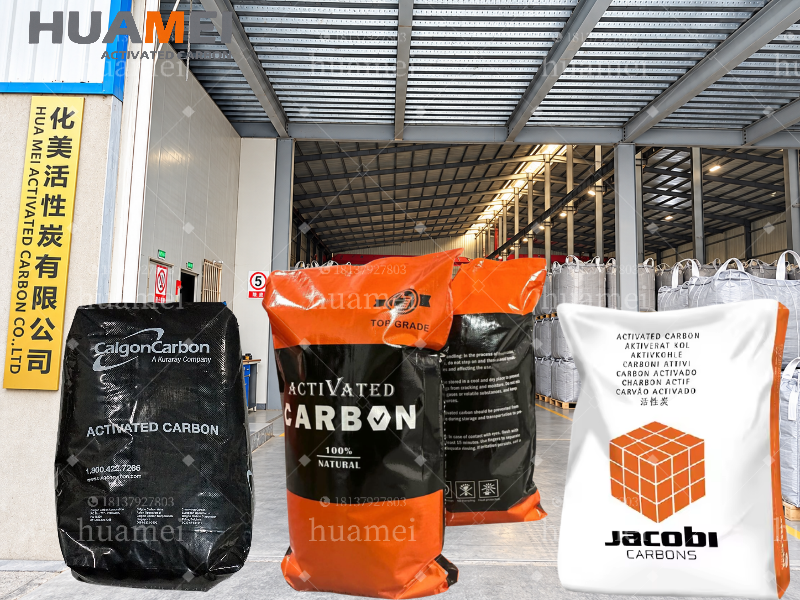
Why it ranks #3: Jacobi Carbons is the world's largest standalone activated carbon company by production volume. Their AquaSorb® 2000 (coal-based) targets municipal PFAS applications, while AquaSorb® CS provides a coconut shell option for point-of-use systems where low fines and taste/odor are priorities. Jacobi's global manufacturing footprint (Sweden, Sri Lanka, India, China) gives them competitive logistics for buyers outside North America.
Limitations: Less published PFAS-specific performance data compared to Calgon and Norit. Jacobi's PFAS positioning is newer — they entered this segment later than the top two. Coconut shell grades (AquaSorb® CS) have shorter bed life for PFAS than coal-based alternatives, especially for short-chain compounds.
| Especificación | Value |
|---|---|
| Raw material | Peat-based and coal-based options |
| Form | GAC and PAC |
| Key grades | Darco® series (PAC),
various GAC grades |
| PFAS performance | PAC effective for emergency/short-term
PFAS response; GAC for permanent installations |
| Certifications | NSF/ANSI 61 (select grades) |
| Headquarters | Boston, MA, USA |
| Reactivation | Limited |
Why it ranks #4: The Darco® PAC line fills a specific niche — emergency PFAS response and temporary treatment while permanent GAC systems are being designed and built. PAC can be dosed directly into existing water treatment processes without new capital equipment. For utilities that discover PFAS contamination and need to act within weeks (not months), PAC dosing is often the fastest path to compliance.
Limitations: PAC treatment costs per cubic meter of water treated are 2–5× higher than GAC over the long term. PAC generates more waste (spent carbon in sludge) and doesn't offer the same reactivation economics. Best used as a bridge solution, not a permanent PFAS strategy.
| Especificación | Value |
|---|---|
| Raw material | Bituminous coal (Shanxi)
and anthracite (Ningxia) |
| Form | Granular (8×30, 12×40 mesh) |
| Número de yodo | 900–1,100 mg/g |
| Dureza | ≥95% (ASTM D3802) |
| Contenido en cenizas | ≤10% |
| PFAS performance | In-house RSSCT testing shows
coal-based GAC outperforms coconut shell for PFAS; |
| Certifications | ISO 9001; NSF/ANSI 61 certification
available on request for specific grades |
| Headquarters | Fujian Province, China (factories
in Fujian and Ningxia) |
| Reactivation | Not offered (supply-
only model) |
Why it ranks #5: Huamei's coal-based GAC provides equivalent raw material quality (bituminous coal, reagglomerated) at 40–60% lower cost compared to Calgon and Norit. For buyers outside North America and Europe — where local reactivation services aren't available anyway — the cost advantage is significant. Huamei has published their own RSSCT performance data showing their coal-based GAC outperforms coconut shell for PFAS removal, consistent with findings from Calgon and Norit.
For projects in the Middle East, Africa, Southeast Asia, and South America — where PFAS regulations are being introduced but budgets are tighter — Huamei offers a practical path to compliance without the premium Western pricing.
Limitations: No in-house reactivation network. Less third-party published PFAS data compared to Calgon and Norit. Buyers who need NSF/ANSI 61 certified carbon for US municipal applications should confirm certification status for their specific grade before ordering.
Production capacity: 700+ tons/month. MOQ: 10 tons. Lead time: 15–25 days.
📱 WhatsApp: +86 181-3792-7803


| Criteria | Calgon F400 | Norit GAC 400 | Jacobi AquaSorb | Cabot Darco PAC | Huamei Coal GAC |
|---|---|---|---|---|---|
| Raw material | Bituminous coal | Bituminous
coal / lignite |
Coal / coconut shell | Peat / coal | Bituminous
coal |
| Best for | Municipal PFAS
— large scale |
High-TOC water
+ municipal |
Global buyers + POU | Emergency /
short-term |
Cost-sensitive
projects |
| Long-chain PFAS (C8+) | ★★★★★ | ★★★★★ | ★★★★☆ | ★★★★☆ | ★★★★☆ |
| Short-chain PFAS (C4-C6) | ★★★★☆ | ★★★★☆ | ★★★☆☆ | ★★★☆☆ | ★★★☆☆ |
| Published PFAS data | ★★★★★ | ★★★★☆ | ★★★☆☆ | ★★★☆☆ | ★★☆☆☆ |
| Reactivation network | ★★★★★ | ★★★★☆ | ★★★☆☆ | ★★☆☆☆ | Not available |
| Price (FOB) | $$$$$ | $$$$ | $$$$ | $$$ | $$ |
| Global availability | ★★★★☆ | ★★★★☆ | ★★★★★ | ★★★☆☆ | ★★★★★ |
| NSF 61 certified | Yes | Yes | Select grades | Select grades | On request |
Your situation determines which carbon makes sense:
| Scenario | Recommended Carbon | Why |
|---|---|---|
| US municipal utility,
full compliance needed |
Calgon FILTRASORB® 400
or Norit GAC 400 |
Most published data,
NSF 61 certified, reactivation available, accepted by regulators |
| European utility,
EU DWD compliance |
Norit GAC 400 or
Jacobi AquaSorb® 2000 |
Local manufacturing,
EU regulatory familiarity, reactivation in Netherlands/UK |
| Emergency/temporary
PFAS treatment |
Cabot Darco® PAC | No capital equipment needed,
immediate deployment, bridge to permanent GAC |
| Industrial wastewater,
non-potable |
Huamei coal-based
GAC or Jacobi AquaSorb |
Lower certification requirements;
cost optimization more important than brand |
| Developing market,
new PFAS regulation |
Huamei coal-based GAC | Best cost-performance ratio;
no local reactivation anyway; equivalent raw material quality |
| Point-of-use /
residential filter |
Jacobi AquaSorb®
CS (coconut shell) |
Low fines, taste/odor improvement,
consumer-grade certifications |
| High-TOC source
water (>6 mg/L) |
Norit HYDRODARCO® 4000 | Lignite pore structure resists
NOM fouling better than standard bituminous GAC |
Regardless of which brand you choose, get these data points before committing to a purchase:
Reagglomerated bituminous coal-based granular activated carbon (GAC) is the most effective type for PFAS removal. It outperforms coconut shell, wood-based, and lignite carbons in most water conditions. The broad pore distribution of coal-based GAC provides better adsorption capacity for the large PFAS molecules. All five products in this ranking use coal-based carbon as their primary PFAS grade.
GAC bed life for PFAS treatment typically ranges from 6 to 24 months, depending on PFAS concentration, water matrix (especially TOC), EBCT, and target effluent levels. Clean groundwater with low TOC allows longer bed life (18–24 months). Surface water with high organic loading may require carbon replacement every 6–12 months. Running lead-lag contactors extends effective use and reduces per-gallon treatment cost.
Yes, but less effectively than long-chain PFAS. Short-chain compounds (C4–C6 like PFBA, PFHxS, PFHxA) have weaker hydrophobic interactions with carbon surfaces and break through earlier. Longer EBCT (15–20 minutes vs. 10 minutes) and more frequent carbon replacement improve short-chain removal. For very stringent short-chain limits, some utilities combine GAC with ion exchange resin in a hybrid approach.
Chinese coal-based GAC typically costs 40–60% less than equivalent Western brands (FOB price). For non-potable applications, industrial wastewater, and markets without mandatory NSF 61 requirements, the cost savings are real and significant. For US municipal potable water, verify NSF 61 certification and request PFAS-specific test data before purchasing — the savings don't help if the carbon doe
htmlsn't meet regulatory requirements for your specific application.
Both work. GAC is more cost-effective for long-chain PFAS and in water with moderate TOC. Single-use ion exchange resin (like Purolite PFA694E) is more effective for short-chain PFAS but costs more per gallon treated and generates hazardous waste (spent resin with concentrated PFAS). Many utilities are moving to hybrid systems — GAC for bulk removal, IX for polishing — to optimize both performance and cost. GAC has the advantage of thermal reactivation, which destroys PFAS; spent IX resin currently goes to incineration or hazardous waste landfill.
You're running a fixed-bed or rotary VOC adsorber. The carbon bed is cycling through adsorption and regeneration every 4–12 hours, removing toluene, xylene, MEK, or whatever solvent your process generates. The system works — but is the regeneration cycle actually saving you money, or is it slowly degrading your carbon while you pay for steam, electricity, and maintenance?
This guide breaks down the real economics of activated carbon regeneration in VOC removal systems: when on-site regeneration pays for itself, when it doesn't, and how to pick the right carbon grade to maximize bed life between full replacements.
VOC adsorbers regenerate carbon very differently from water treatment or gold recovery systems. In water treatment, spent carbon is shipped off-site for thermal reactivation at 700–900°C. In VOC systems, regeneration happens on-site — usually with steam or hot gas — and the carbon stays in the vessel.
| Parámetro | VOC on-site regeneration | Water treatment off-site reactivation |
|---|---|---|
| Temperature | 100–250°C (steam/hot gas) | 700–900°C (kiln) |
| Cycle frequency | Every 4–12 hours | Every 6–24 months |
| Carbon stays in vessel? | Yes | No — shipped to reactivator |
| Capacity recovery per cycle | 50–85% | 85–95% |
| Carbon loss per cycle | <0.5% | 5–15% |
| Solvent recoverable? | Yes — condensed from steam | No — destroyed in kiln |
| Typical carbon life | 2–5 years before
full replacement |
3–8 cycles then replace |
The key difference: VOC regeneration is gentle but incomplete. Each cycle removes most of the adsorbed VOC, but a small fraction stays behind — trapped in micropores or polymerized by heat. Over hundreds of cycles, this residual buildup ("heel") gradually reduces working capacity.
Low-pressure steam (3–5 psig, 100–150°C) passes through the carbon bed, desorbing VOCs by heating and displacing them. The steam-VOC mixture is condensed, and the solvent is recovered via decantation or distillation.
| Parámetro | Especificación |
|---|---|
| Steam temperature | 100–150°C |
| Steam consumption | 3–5 kg steam per kg VOC desorbed |
| Regeneration time | 30–90 minutes per bed |
| Capacity recovery | 70–85% |
| Best for | Ketones, alcohols, esters,
chlorinated solvents (BP <200°C) |
| Not suitable for | High-boiling compounds (>200°C),
polymeric residues |
Steam regeneration is the industry standard for solvent recovery in printing, coating, adhesive, and chemical manufacturing. The recovered solvent often has direct economic value — in some operations, solvent recovery revenue exceeds the cost of running the carbon system.

Heated nitrogen or air (150–250°C) is circulated through the bed. Higher temperatures than steam, which helps with heavier VOCs, but no solvent recovery — desorbed VOCs are typically sent to a thermal oxidizer or catalytic oxidizer for destruction.
| Parámetro | Especificación |
|---|---|
| Gas temperature | 150–250°C |
| Regeneration time | 60–180 minutes |
| Capacity recovery | 60–80% |
| Best for | Mixed VOC streams,
higher boiling point compounds |
| Not suitable for | Operations where solvent
recovery has economic value |
Reduced pressure (50–200 mbar) lowers the boiling point of adsorbed VOCs, causing desorption at near-ambient temperatures. Often combined with mild heating for better efficiency.
| Parámetro | Especificación |
|---|---|
| Vacuum level | 50–200 mbar |
| Regeneration time | 45–120 minutes |
| Capacity recovery | 65–80% |
| Best for | Heat-sensitive compounds,
low-concentration streams |
| Not suitable for | High-concentration,
heavy VOC loads |
The answer depends on three numbers: your VOC concentration, your air volume, and whether the recovered solvent has resale value.
| Cost item | Annual cost |
|---|---|
| Carbon inventory (initial fill) | $40,000 (amortized over
3 years = $13,300/yr) |
| Steam utility | $18,000–25,000/yr |
| Maintenance (valves,
controls, condensate handling) |
$8,000–12,000/yr |
| Carbon makeup (annual
top-up, ~10% of bed) |
$4,000/yr |
| Total annual regeneration cost | $43,300–54,300/yr |
| Recovered solvent value | $30,000–80,000/yr
(depends on solvent type) |
| Net cost after solvent recovery | $0–24,300/yr (often net positive) |
Verdict: Regeneration is clearly worth it. In high-concentration solvent recovery, the system often pays for itself through recovered solvent value alone.
| Cost item | Annual cost |
|---|---|
| Carbon inventory (initial fill) | $40,000 (amortized = $13,300/yr) |
| Steam/hot gas utility | $12,000–18,000/yr |
| Maintenance | $8,000–12,000/yr |
| Carbon makeup | $4,000/yr |
| Total annual regeneration cost | $37,300–47,300/yr |
| Recovered solvent value | $2,000–8,000/yr
(low concentration = little recovery) |
| Net cost after recovery | $29,300–45,300/yr |
Now compare with non-regenerative replacement:
| Cost item | Annual cost |
|---|---|
| New carbon
(replace every 6–12 months) |
$25,000–50,000/yr |
| Spent carbon disposal | $5,000–10,000/yr |
| Labor for bed change-out | $3,000–6,000/yr |
| Total annual replacement cost | $33,000–66,000/yr |
Verdict: It depends on your volume. If you're using <10 tons of carbon per year at low VOC concentrations, non-regenerative throwaway beds may actually cost less than maintaining a regeneration system. Above 15–20 tons/year, regeneration wins.
The break-even between regeneration and replacement depends on:

Not all activated carbon survives repeated regeneration cycles equally. Choosing the right grade upfront directly affects how many years you get before a full bed replacement.
| Property | What to look for | Why it matters for regeneration |
|---|---|---|
| Raw material | Coal-based (pellet or granular) | Higher mechanical strength
than coconut or wood — survives thermal cycling |
| Form | Pellet (extruded) preferred | Uniform shape = lower pressure
drop, less attrition during steam cycling |
| CTC (carbon tetrachloride number) | ≥60% | Indicates VOC adsorption capacity
— higher CTC = more working capacity per cycle |
| Dureza | ≥95% | Resists breakdown from thermal
shock during steam-on/steam-off cycling |
| Contenido en cenizas | ≤12% | High ash catalyzes carbon
oxidation during hot regeneration |
| Humedad | ≤5% | Excess moisture reduces initial
adsorption capacity |
Why pellet carbon dominates VOC systems: Pellet (extruded) activated carbon has a uniform cylindrical shape that creates consistent airflow paths through the bed. This matters because VOC adsorbers cycle rapidly — if the bed develops channels or dead zones, breakthrough happens prematurely and you waste regeneration energy on partially loaded beds.
Huamei Carbon manufactures coal-based pellet activated carbon in 0.9 mm to 8 mm diameters with CTC values from 20% to 100%. For VOC regeneration systems, we typically recommend 3 mm or 4 mm pellets with CTC ≥60% — this provides the best balance of adsorption capacity, pressure drop, and mechanical durability over thousands of regeneration cycles.
When it's time to replace, don't just match the old spec — consider whether the original grade was optimal. Many VOC systems were commissioned with whatever carbon was available, not what was best for the application. A switch to higher-CTC pellet carbon during replacement can extend the next service interval by 20–30%.
The way you run your regeneration system matters as much as the carbon grade you select:
Huamei Carbon manufactures coal-based and coconut shell pellet activated carbon for VOC removal, solvent recovery, air purification, and industrial gas treatment. Our pellet carbon is extruded from premium coal feedstock using steam activation, delivering high CTC adsorption capacity and mechanical hardness for extended service life in regenerative systems.
Available sizes: 0.9 mm, 1.5 mm, 2 mm, 3 mm, 4 mm, 5 mm, 8 mm diameter. CTC range: 20–100%. Impregnation options: KI, KOH, NaOH, H₃PO₄ for specialized gas treatment applications.
Need pellet carbon for a VOC adsorber or solvent recovery system? Contact us for specifications and pricing:
📱 WhatsApp: +86 181-3792-7803
📧 Email: sale@huameicarbon.com
🌐 Website: www.huameicarbon.com
Coal-based pellet carbon in a steam-regenerated VOC system typically lasts 2,000–5,000+ cycles (2–5 years of continuous operation) before working capacity degrades enough to require full replacement. The exact number depends on steam temperature, VOC type, and whether high-boiling contaminants are present. Monitoring working capacity trend over time is the most reliable way to predict replacement timing.
They serve different purposes. Steam regeneration (100–150°C, on-site) is used for routine cycling in continuous VOC adsorbers — it's fast, gentle, and allows solvent recovery. Thermal reactivation (700–900°C, off-site) fully restores pore structure but destroys the adsorbed VOCs. For VOC adsorbers with recoverable solvents, steam regeneration is standard. Thermal reactivation is only used as a one-time deep clean when heel buildup becomes severe.
For most industrial VOC adsorbers, specify CTC ≥60%. Higher CTC means more adsorption capacity per kilogram of carbon, which translates to longer adsorption cycles between regenerations. For high-concentration solvent recovery (>5 g/m³), CTC ≥80% is preferred. For low-concentration compliance applications (<100 ppm), CTC 50–60% is usually sufficient.
Coconut shell GAC can be used for VOC adsorption, but coal-based pellet carbon is preferred for regenerative systems. Pellet carbon has a uniform shape that maintains consistent airflow over thousands of cycles, and coal-based carbon has a broader pore size distribution (more mesopores) that handles mixed VOC streams better. Coconut shell's micropore-dominant structure i
htmls better suited for single-component, low-molecular-weight VOCs.
The heel is the fraction of adsorbed material that remains on the carbon after regeneration — trapped in deep micropores or polymerized by repeated heating. In VOC systems, the heel typically represents 15–30% of the carbon's total capacity after the first few hundred cycles. It grows slowly over time, reducing working capacity by 1–3% per year. When the heel consumes more than 40% of original capacity, it's time for full carbon replacement or off-site thermal reactivation to burn off the accumulated residue.
Powder activated carbon (PAC) is activated carbon ground to a fine particle size — typically 80% passing 200 mesh (75 µm) or finer. Unlike granular activated carbon (GAC) that sits in a fixed bed, PAC is dosed directly into liquid streams, mixed, and then removed by settling or filtration.
PAC is the fastest and most flexible way to add activated carbon treatment to any process. No vessels, no plumbing changes — just dose and filter. This guide covers PAC types, specifications, applications, and how to source it for your operation.
| Factor | PAC (Powder) | GAC (Granular) |
|---|---|---|
| Contact method | Dosed into liquid,
mixed, filtered out |
Liquid flows througha fixed
carbon bed |
| Capital cost | Low — needs only a dosing system and
existing clarifier/filter |
High — needs adsorption vessels,
piping, backwash system |
| Operating cost | Higher carbon consumption per volume treated | Lower carbon consumption
(longer contact time, better utilization) |
| Best for | Intermittent dosing, seasonal events, emergencies,
taste/odor control, decolorization |
Continuous treatment, large
volumes, trace contaminant polishing |
| Carbon reuse | Typically single-
use (removed with sludge) |
Can be reactivated and reused
multiple times |
| Flexibility | High — adjust dose
rate instantly based on conditions |
Fixed — bed changeout needed to
adjust capacity |
| Particle size | 80%+ passing 200 mesh (75 µm) | 8×30, 12×40, or similar mesh
ranges |
Rule of thumb: Use PAC when you need flexible, on-demand treatment without capital investment in adsorption vessels. Use GAC when you have continuous treatment needs and want lower long-term carbon costs through bed reactivation.

| Tipo | Materia prima | Key Characteristics | Typical Applications |
|---|---|---|---|
| Wood-based PAC | Sawdust,
wood chips |
High mesopore volume,
excellent decolorization, lower density |
Sugar refining, food/beverage
decolorization, pharmaceutical purification |
| Coal-based PAC | Bituminous or
lignite coal |
Balanced micropore
/mesopore, good all-round adsorption, cost-effective |
Municipal water treatment,
industrial wastewater, general purpose |
| Coconut shell PAC | Coconut shell | High micropore volume,
high hardness (less relevant for powder), highest cost |
Pharmaceutical, food-grade
applications requiring high purity |
For most industrial applications, wood-based PAC is the default choice. Its high mesopore volume makes it the best decolorizer, and it's produced through phosphoric acid activation which gives it naturally high mesopore content. Coal-based PAC is preferred for water treatment where broad-spectrum adsorption matters more than decolorization.
| Parámetro | What It Measures | Typical Spec Range | Why It Matters |
|---|---|---|---|
| Número de yodo | Micropore adsorption
capacity (ASTM D4607) |
800–1200 mg/g | Higher = better for small
molecule removal (taste, odor, solvents) |
| Methylene blue
number |
Mesopore adsorption
capacity |
120–280 mg/g | Higher = better for
decolorization (large color molecules adsorb in mesopores) |
| Particle size
(passing 200 mesh) |
Fineness | 80–95% | Finer = faster adsorption
kinetics but harder to filter out |
| Humedad | Water content | ≤10% | You're paying for carbon,
not water |
| Contenido en cenizas | Inorganic mineral
residue |
3–15% | Lower ash = higher purity,
critical for food/ pharma applications |
| pH | Acid or alkaline
character |
3–5
(acid-activated) or 8–11 (steam-activated) |
Must match
process pH requirements |
| Iron content | Fe contamination | <0.1% for
food grade |
High iron causes
discoloration in some food processes |
The two most important specs for PAC selection:

| Aplicación | Recommended PAC Type | Key Spec | Typical Dose Rate |
|---|---|---|---|
| Municipal drinking
water (taste/odor) |
Coal-based or
wood-based |
Iodine ≥900 mg/g | 5–30 mg/L |
| Decoloración del azúcar | Wood-based
(phosphoric acid activated) |
MB ≥200 mg/g,
low ash |
0.1–0.5% by
weight of sugar |
| Edible oil refining | Wood-based,
acid-washed |
MB ≥180 mg/g,
low iron |
0.5–2% by
weight of oil |
| Farmacéutico
purification |
Coconut shell or
wood-based, food grade |
Low ash, low iron,
USP/EP grade |
Process-specific |
| Industrial wastewater
(COD/color) |
Wood-based
or coal-based |
MB ≥150 mg/g,
Iodine ≥800 |
50–500 mg/L |
| Chemical decolorization
(glycerin, citric acid) |
Wood-based | MB ≥220 mg/g | 0.2–1% by weight |
| Emergency spill
response |
Any available PAC | Fine particle size
for fast kinetics |
Depends on
contaminant |
For specific guidance on PAC in water treatment, see our article on PAC for water treatment. For food industry decolorization, see our guides on decoloración del azúcar and glycerin decolorization.
| Packaging Option | Typical Weight | Best For |
|---|---|---|
| Paper bags
(multi-layer kraft) |
20–25 kg | Small to medium users,
manual handling |
| Jumbo bags
(FIBC) |
500–1000 kg | Large users with
forklift/crane unloading |
| Bulk (pneumatic
tanker) |
20+ tons | Very large continuous
users (municipal water plants) |
Huamei Carbon manufactures wood-based and coal-based powder activated carbon for water treatment, decolorization, chemical purification, and industrial wastewater applications. Available in 25 kg bags, jumbo bags, or bulk. Minimum order: 10 tons (one 20ft container).
📱 WhatsApp: +86 181-3792-7803
📧 Email: sale@huameicarbon.com
🌐 Website: www.huameicarbon.com
Powder activated carbon (PAC) has a particle size where 80%+ passes 200 mesh (75 µm). It's dosed directly into liquids, mixed, and removed by filtration. Granular activated carbon (GAC) has larger particles (typically 0.5–4 mm) and is used in fixed-bed adsorption vessels that liquid flows through. PAC is faster-acting but single-use; GAC is slower but reactivatable.
Wood-based PAC is better for decolorization in most cases. Its phosphoric acid activation process creates a high proportion of mesopores (2–50 nm), which is where large color molecules adsorb. Coal-based PAC has more micropores, making it better for small molecules like taste and odor compounds. For sugar, oil, and chemical decolorization, wood-based PAC with methylene blue number ≥200 mg/g is the industry standard.
It varies by application and contaminant loading. For sugar decolorization: 0.1–0.5% by weight of sugar. For edible oil refining: 0.5–2% by weight of oil. For wastewater treatment: 50–500 mg/L depending on COD and color levels. The best approach is to run a bench-scale dosing trial — test increasing PAC doses on your actual product to find the minimum effective dose.
Yes, when food-grade specifications are met. Food-grade PAC must have low ash (<5%), low iron (<0.1%), no heavy metal contamination, and meet regulatory requirements (FDA, EU, or local food contact standards). Wood-based and coconut shell PAC are most commonly used in food applications. Always request food-grade certification and COA from your supplier.
Generally no. PAC is typically single-use — it's mixed into the process stream and removed with sludge or filter cake. The fine particle size makes it impractical to recover and reactivate. This is the main cost trade-off vs GAC: PAC has lower capital cost but higher ongoing carbon consumption. For processes with high carbon usage, consider switching to a GAC fixed-bed system for lower long-term cost.
Activated carbon is used in natural gas processing at multiple stages — from wellhead gas cleanup to pipeline-quality polishing. Each stage targets different contaminants and requires different carbon specifications.
This guide covers the main gas treatment applications, the carbon types and specs for each, and how to specify carbon for your gas processing project.
Industrial gas treatment with activated carbon targets these contaminant groups:
| Contaminant | Sources | Why It Must Be Removed | Carbon's Role |
|---|---|---|---|
| H₂S | Natural gas,
biogas, syngas |
Toxic, corrosive,
poisons catalysts |
Catalytic oxidation
(impregnated carbon) or adsorption |
| Mercaptans
(R-SH) |
Natural gas, LPG | Odor, corrosion | Physical adsorption +
catalytic oxidation |
| Mercury
(Hg⁰) |
Natural gas
(0.01–5,000 µg/Nm³) |
Poisons aluminum
heat exchangers in LNG plants, environmental hazard |
Chemisorption on
sulfur-impregnated carbon |
| BTEX | Natural gas,
associated gas |
Contaminates glycol,
causes emissions |
Physical adsorption
in micropores |
| Siloxanes | Biogas,
landfill gas |
Forms abrasive SiO₂
deposits in engines |
Physical adsorption |
| COV | Process vents,
tank emissions, fugitive sources |
Emissions compliance,
health hazard |
Adsorption with optional
thermal desorption |

Mercury in natural gas, even at trace levels (µg/Nm³), destroys the aluminum brazed heat exchangers used in LNG cryogenic processing. A single mercury excursion can cause liquid metal embrittlement that costs millions in repairs and months of downtime.
Sulfur-impregnated activated carbon is the standard mercury guard in LNG feed gas treatment. The sulfur reacts with elemental mercury to form mercuric sulfide (HgS), a stable and non-volatile compound trapped permanently in the carbon pores.
Especificaciones:
Mercury removal beds are non-regenerable — the carbon is replaced when capacity is exhausted. Bed life ranges from 3–10 years depending on inlet mercury levels.
For natural gas with H₂S levels below 1,000 ppm, impregnated activated carbon provides a simpler alternative to amine systems. This is common for small-to-medium gas fields, marginal wells, and gas gathering stations where installing an amine plant isn't economical.
For a comprehensive guide to H₂S removal with activated carbon — including biogas, natural gas, and refinery applications — see our detailed article on activated carbon for sulfur removal.
Key specs for gas sweetening:
Triethylene glycol (TEG) dehydration systems absorb BTEX along with water from natural gas. When the glycol is regenerated, BTEX is released — creating an emission source that may require control under environmental regulations.
An activated carbon bed on the glycol regeneration vent captures BTEX before it enters the atmosphere. The carbon can be thermally regenerated or replaced periodically.
Especificaciones:
Gas processing plants, compressor stations, and storage facilities produce VOC emissions from process vents, tank breathing losses, and fugitive sources. Activated carbon adsorption is the standard control technology when:
Fixed-bed carbon adsorbers with two beds in alternating adsorption/regeneration cycles are the standard configuration. The regenerated VOCs can be recovered as liquid or routed to a flare.
Especificaciones:
Biogas upgrading to biomethane (renewable natural gas) requires removal of H₂S, siloxanes, and VOCs before the gas enters membrane or PSA upgrading systems. Activated carbon handles all three contaminant groups, often in a multi-stage configuration:
For detailed biogas and landfill gas treatment specifications, see our sulfur removal guide.

| Aplicación | Target | Carbon Form | Impregnación | Key Spec | Bed Life |
|---|---|---|---|---|---|
| LNG mercury
guard |
Hg⁰ | Pellet
3–4 mm |
Sulfur
(10–15%) |
Hg capacity,
low pressure drop |
3–10 years |
| Natural gas
H₂S |
H₂S | Pellet
3–4 mm |
KOH or KI | H₂S cap ≥0.15 g/g | 6–18 months |
| Mercaptan
odor |
R-SH | Granular
4×10 |
NaOH or virgin | Iodine ≥900 | 12–24 months |
| BTEX from
glycol |
BTEX | Granular
4×10 |
None | CTC ≥50%,
SA ≥900 |
6–12 months
(regenerable) |
| VOC emission control | Mixed VOCs | Pellet
3–4 mm |
None | CTC ≥60%,
butane ≥25% |
3–5 years
(regenerable) |
| Biogas H₂S | H₂S + siloxanes | Pellet
3–4 mm |
KOH | CTC ≥60%, pH 9–11 | 6–12 months |
When sourcing carbon for gas treatment, provide your supplier with:
Huamei Carbon produces coal-based carbón activado en pellets for gas treatment applications, including H₂S removal, mercury guard beds, VOC control, and biogas upgrading. We offer virgin, KOH, KI, NaOH, and sulfur-impregnated grades in pellet diameters from 0.9 mm to 8 mm.
📱 WhatsApp: +86 181-3792-7803
📧 Email: sale@huameicarbon.com
🌐 Website: www.huameicarbon.com
Coal-based pellet activated carbon (3–4 mm diameter) is the standard for most gas purification applications. Pellet form provides low pressure drop and uniform gas distribution in fixed-bed vessels. For mercury removal, the carbon is impregnated with sulfur. For H₂S removal, KOH or KI impregnation is standard.
Yes. Sulfur-impregnated activated carbon (10–15% sulfur loading) is the standard mercury guard bed in LNG and gas processing plants. Mercury reacts with sulfur to form stable HgS trapped in the carbon pores. These beds typically last 3–10 years and achieve outlet levels below 0.01 µg/Nm³.
Iron sponge is cheaper per ton but has lower H₂S capacity per volume, creates pyrophoric waste, and can't handle mercaptans or other contaminants. Activated carbon — especially impregnated grades — has higher capacity, produces non-hazardous waste, and can be specified for multi-contaminant removal. For operations above 100 Nm³/hr, activated carbon typically has lower total cost of ownership.
It depends on the application and contaminant loading. Mercury guard beds: 3–10 years. H₂S removal (KOH-impregnated): 6–18 months. VOC adsorbers with regeneration: 3–5 years. Biogas H₂S: 6–12 months. Higher inlet concentrations and higher flow rates shorten bed life.
Pellet carbon is generally preferred for gas-phase applications because the uniform cylindrical shape provides more predictable pressure drop and better gas distribution than irregularly-shaped crushed granular carbon. Pellet carbon also generates less dust during loading and operation. Granular carbon is used where higher surface area per volume is needed, such as BTEX guard beds on glycol systems.
Activated carbon is used across the petroleum refining process — from protecting amine systems to treating refinery wastewater. The specific carbon type, form, and specification depend on where in the refinery it's deployed and what it needs to remove.
This guide covers the main applications of activated carbon in petroleum refining, the specifications that matter for each, and how to source the right grades.
A typical refinery uses activated carbon in at least four process areas:
| Process Area | What Carbon Removes | Carbon Type | Typical Volume |
|---|---|---|---|
| Amine system
guard bed |
Surfactants, hydrocarbons,
degradation products |
Coal-based granular,
8×30 mesh |
5–20 tons
per charge |
| Produced water
treatment |
Oil, dissolved organics,
BTEX, phenols |
Granular or pellet,
a base de carbón |
10–50 tons
per system |
| Naphtha and
gasoline sweetening |
Mercaptans,
disulfides |
Impregnated granular
or pellet |
2–10 tons
per bed |
| Refinery
aguas residuales |
COD, BOD, oil &
grease, phenols, PAHs |
Granular (fixed bed)
or powder (dosing) |
Varies widely |
Amine-based gas treating systems (MEA, DEA, MDEA) remove H₂S and CO₂ from refinery gas streams. Over time, the amine solution picks up contaminants — surfactants from upstream processes, hydrocarbon condensates, heat-stable salts, and amine degradation products. These contaminants cause foaming, corrosion, and reduced treating capacity.
An activated carbon guard bed installed on the lean amine circulation loop adsorbs these contaminants before they accumulate to problem levels. This is one of the highest-value applications of activated carbon in a refinery — a $15,000–30,000 carbon charge can prevent millions of dollars in amine system downtime and replacement costs.
Especificaciones:
Coal-based carbon is preferred over coconut shell for amine guard beds because its mesopore structure adsorbs the larger organic molecules (surfactants, heavy hydrocarbons) that cause foaming. Coconut shell's micropore-dominant structure is less effective for these larger molecules.
Produced water from oil and gas operations contains dissolved and dispersed hydrocarbons, BTEX (benzene, toluene, ethylbenzene, xylene), phenols, and other organic compounds. Regulatory discharge limits for oil and grease are typically 10–30 mg/L, and BTEX limits may be below 1 mg/L.
Activated carbon treats produced water either as a polishing step after oil-water separators and flotation, or in combination with other treatment technologies. For offshore platforms where space is limited, activated carbon's compact footprint is a significant advantage.
Especificaciones:
Mercaptans (R-SH) give petroleum products an unpleasant odor and contribute to equipment corrosion. The Merox process uses a fixed-bed of activated carbon impregnated with a caustic solution and a metal chelate catalyst to oxidize mercaptans to disulfides, which are then extracted.
Activated carbon's role here is dual: it serves as the catalyst support for the Merox reaction and adsorbs residual sulfur compounds. The carbon bed needs replacement when catalytic activity drops, typically every 2–5 years.
Especificaciones:

Refinery wastewater contains a complex mix of hydrocarbons, phenols, sulfides, ammonia, and suspended solids. After primary separation and biological treatment, activated carbon serves as a tertiary polishing step to meet discharge limits — particularly for COD, phenol, and PAH (polycyclic aromatic hydrocarbon) concentrations.
Two approaches are common:
GAC specifications:
PAC specifications:
Beyond the four main areas, activated carbon is also used in refineries for:
| Aplicación | Preferred Base | Form | Key Parameters | Why This Carbon |
|---|---|---|---|---|
| Amine
guard bed |
Coal-based | Granular
8×30 |
Iodine ≥900,
ash ≤8% |
Mesopores capture
large surfactant molecules |
| Produced
water |
Coal-based | Granular
8×30 or 12×40 |
Iodine ≥1000,
hardness ≥95% |
High capacity for
dissolved organics + BTEX |
| Merox
sweetening |
Coal-based | Granular
4×10 or 8×30 |
SA ≥900 m²/g,
ash ≤6% |
Mesopore structure
for catalyst support |
| Wastewater
GAC |
Coal-based | Granular
8×30 or 12×40 |
Iodine ≥950 | COD + phenol
adsorption |
| Wastewater
PAC |
Wood or coal | Powder
200–325 mesh |
MB ≥180 mg/g | Rapid contact in
biological systems |
| Hydrogen
PSA |
Coal-based | Pellet 3–5 mm | High crush
strength |
Mesopore + low
dust for PSA cycling |
Pattern: coal-based activated carbon dominates petroleum applications. The mesopore-rich structure handles the large organic molecules common in refinery streams, and the mechanical hardness stands up to the pressures and flow rates in industrial vessels.

When requesting a quote for refinery-grade activated carbon, provide:
Huamei Carbon supplies coal-based granular and carbón activado en pellets for petroleum refining applications. We've supplied amine guard bed carbon, produced water treatment carbon, and wastewater polishing carbon to refineries across the Middle East, Central Asia, and Southeast Asia — including 77 tons for MDEA purification in Kazakhstan.
📱 WhatsApp: +86 181-3792-7803
📧 Email: sale@huameicarbon.com
🌐 Website: www.huameicarbon.com
Coal-based granular activated carbon (8×30 or 12×40 mesh) is the standard for most refinery applications, including amine guard beds, produced water treatment, and wastewater polishing. Coal-based carbon's mesopore structure is better suited for adsorbing the large organic molecules common in refinery streams than coconut shell carbon.
A carbon guard bed on the lean amine circulation loop adsorbs surfactants, hydrocarbon condensates, and amine degradation products that cause foaming and corrosion. The carbon is typically changed out every 6–12 months. This is one of the most cost-effective uses of activated carbon in a refinery.
Yes. Granular activated carbon effectively removes dissolved hydrocarbons, BTEX, and phenols from produced water. It's typically used as a polishing step after oil-water separation and flotation. Coal-based GAC with iodine number ≥1000 mg/g and high attrition resistance is recommended.
It varies widely by refinery size and configuration. A medium-sized refinery (100,000–200,000 BPD) might use 20–80 tons of activated carbon per year across amine guard beds, wastewater treatment, and other applications. Large integrated refineries with multiple amine trains and extensive wastewater treatment can use 100+ tons annually.
Amine guard beds: every 6–12 months. Produced water beds: every 6–18 months depending on oil loading. Wastewater GAC: every 12–24 months, or when effluent quality targets are no longer met. Merox beds: every 2–5 years. Regular monitoring of effluent quality tells you when it's time.
