Activated carbon, a highly porous material with exceptional adsorption properties, has become indispensable in modern industrial processes. Derived from carbon-rich organic materials like coal, coconut shells, or wood, activated carbon undergoes thermal or chemical activation to develop a vast network of micropores, mesopores, and macropores. This unique structure grants it an unparalleled capacity to capture contaminants, purify substances, and catalyze reactions.

Characteristics: Fine particles (10–50 microns) with rapid adsorption kinetics.
Key Applications:
Water Treatment: PAC is widely used in municipal and industrial wastewater plants to remove organic pollutants, chlorine, and odors.
Food & Beverage: Decolorizes sugar syrups, fruit juices, and edible oils while eliminating unwanted tastes.
Pharmaceuticals: Purifies active ingredients and intermediates during drug manufacturing.
Its short contact time makes PAC ideal for single-use, batch-based processes where immediate impurity removal is critical.
Characteristics: Irregular or spherical granules (0.2–5 mm) with balanced adsorption capacity and durability.
Key Applications:
Air Purification: Captures volatile organic compounds (VOCs), mercury, and sulfur compounds in industrial exhaust systems.
Drinking Water Filtration: Used in fixed-bed filters to adsorb pesticides, heavy metals, and disinfection byproducts.
Chemical Processing: Recovers solvents and purifies gases in petrochemical refineries.
GAC’s reusability (via thermal reactivation) and structural stability make it cost-effective for continuous-flow systems.

Characteristics: Cylindrical pellets (3–10 mm diameter) with high mechanical strength and low-pressure drop.
Key Applications:
Gas Separation: Removes CO₂, H₂S, and nitrogen oxides from natural gas and flue gases.
Catalyst Support: Serves as a substrate in chemical synthesis and emission control systems.
Nuclear Industry: Adsorbs radioactive iodine isotopes in nuclear facility ventilation.
Its uniform shape and resistance to attrition suit high-pressure gas-phase applications.
Characteristics: Chemically treated with agents like potassium iodide or sulfur to enhance specificity.
Key Applications:
Airborne Toxin Removal: Targets ammonia, formaldehyde, and hydrogen cyanide in military and industrial safety systems.
Mercury Control: Deployed in coal-fired power plants to adsorb mercury vapors.
Gold Recovery: Extracts gold cyanide complexes in mining operations.
Customizable impregnation allows tailored solutions for niche industrial challenges.
Characteristics: Regenerated spent carbon via thermal or chemical processes.
Key Applications:
Sustainable Manufacturing: Reduces waste in water treatment, food processing, and chemical industries.
Cost-Effective Alternative: Offers 60–80% of virgin carbon’s capacity at lower costs for non-critical uses.
This eco-friendly option aligns with circular economy goals.
As a leading manufacturer, Huamei Activated Carbon combines cutting-edge technology with decades of expertise to deliver premium solutions tailored to diverse industries. Our product portfolio spans carbone attivo in polvere, granular activated carbon, carbone attivo in pellet, and impregnated variants, engineered to meet stringent international standards.
Key Advantages:
Superior Adsorption Efficiency: Optimized pore structures ensure maximum contaminant removal.
Customization: Adjustable particle sizes, iodine values, and chemical treatments for specific needs.
Sustainable Production: Eco-friendly activation processes and reactivation services minimize environmental impact.
Global Compliance: Certified by ISO, NSF, and REACH for safety and performance.
Technical Support: End-to-end assistance from material selection to system design.
Whether refining potable water, purifying industrial emissions, or recovering precious metals, Huamei Activated Carbon provides reliable, cost-effective, and sustainable solutions. Partner with us to elevate your industrial processes with the power of advanced adsorption technology.
Explore our range at [www.huameicarbon.com] or contact our experts for a tailored consultation.
This comprehensive overview highlights the versatility of activated carbon while positioning Huamei as an industry leader, ensuring both informational value and strategic branding alignment.
Water purification is a critical process for ensuring safe drinking water, industrial use, and environmental protection. Among the many filtration technologies available, activated carbon stands out as a versatile and effective solution.
Activated carbon, also known as activated charcoal, is a highly porous material derived from carbon-rich organic sources such as coal, coconut shells, or wood. Through a controlled activation process—often involving high-temperature steam or chemical treatments—the carbon develops a vast network of microscopic pores. This structure grants it an exceptionally large surface area (up to 1,500 square meters per gram), making it ideal for adsorption, the process by which contaminants adhere to its surface.
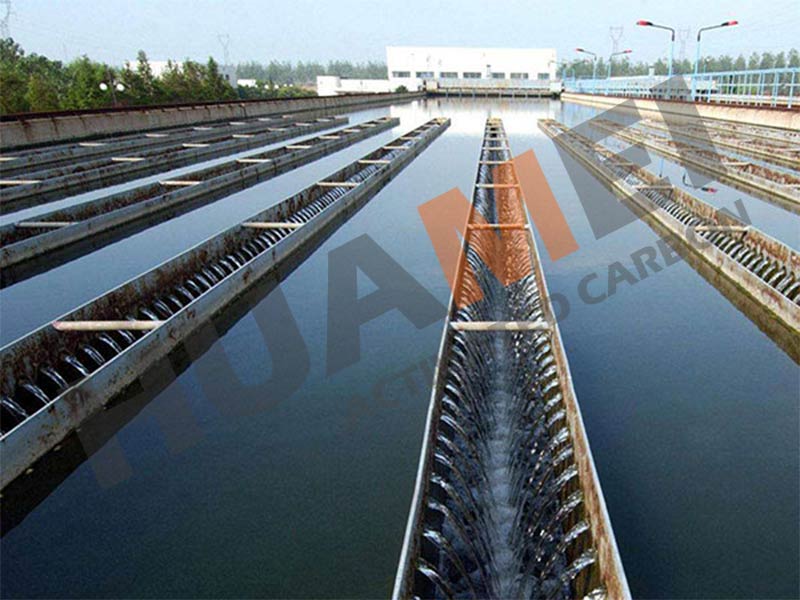
When water passes through activated carbon, contaminants are trapped via two primary mechanisms:
1. Physical Adsorption: The porous structure acts like a sponge, capturing particles such as sediment, organic compounds, and microorganisms.
2. Chemical Adsorption: Charged molecules, such as chlorine, pesticides, and volatile organic compounds (VOCs), bond to the carbon’s surface through electrostatic interactions.
Activated carbon is particularly effective at removing chlorine, bad odors, and organic pollutants. It also reduces heavy metals like lead and mercury by attracting their ions. However, its efficiency depends on factors such as contact time, pore size distribution, and the chemical nature of the contaminants.
- Granular Activated Carbon (GAC): Used in large-scale filters for municipal water treatment or home systems. Its loose granules allow water to flow freely while maximizing contaminant contact.
- Powdered Activated Carbon (PAC): Added directly to water in treatment plants for rapid adsorption of specific pollutants.
- Carbon Block Filters: Compressed carbon particles create a dense filter medium, often combined with other materials (e.g., silver) to inhibit bacterial growth.
Activated carbon filtration is widely used in:
Drinking Water Purification: Removes chlorine, improves taste, and eliminates harmful organic compounds.
Wastewater Treatment: Addresses industrial pollutants like dyes, pharmaceuticals, and hydrocarbons.
Aquarium and Pool Systems: Maintains water clarity and neutralizes toxins.
For complex contamination, activated carbon is often paired with technologies like reverse osmosis or UV sterilization to achieve comprehensive purification.

As a leading manufacturer and supplier of activated carbon, Huamei Carbon combines advanced production techniques with stringent quality control to deliver high-performance filtration solutions. Our products are tailored to meet diverse water treatment needs, from residential filters to industrial-scale systems.
Key advantages of Huamei Carbon include:
- High Adsorption Capacity: Optimized pore structure for maximum contaminant removal.
- Customizable Solutions: Variants available in granular, powdered, or extruded forms.
- Eco-Friendly Production: Sustainable sourcing of raw materials and energy-efficient processes.
- Global Compliance: Meets international standards for safety and efficacy.
Activated carbon's ability to adsorb a wide range of pollutants makes it indispensable in water treatment. Its versatility, efficiency, and cost-effectiveness ensure its continued relevance in addressing global water quality challenges. For industries and households seeking reliable filtration media, Huamei Carbon provides scientifically engineered activated carbon products designed to deliver purity, performance, and peace of mind.
Activated carbon filtration is a highly effective purification method widely used to remove contaminants, odors, and impurities from air and water. By leveraging the adsorptive properties of activated carbon, this technology plays a critical role in industries ranging from water treatment to air purification and beyond.
Activated carbon, also known as activated charcoal, is a porous material treated to increase its surface area and adsorption capacity. During filtration, contaminants in fluids or gases are trapped within the carbon’s microscopic pores through a process called adsorption. This occurs when molecules adhere to the carbon surface due to chemical attraction or physical forces. Activated carbon’s effectiveness depends on factors like pore structure, raw material, and activation methods.

Activated carbon is categorized based on its source material, physical form, and specialized treatments. Below are the most common types:
Granular Activated Carbon (GAC)
GAC consists of irregularly shaped particles ranging from 0.2 to 5 mm in size. It is ideal for water filtration systems, such as municipal treatment plants and home water filters, due to its high flow rate and capacity to adsorb organic compounds, chlorine, and volatile organic compounds (VOCs).
Powdered Activated Carbon (PAC)
PAC features finely ground particles (less than 0.18 mm) and is often used in wastewater treatment and emergency contaminant removal. Its small particle size provides a large surface area for rapid adsorption but requires containment systems to prevent leakage.
Carbone attivo impregnato
This type is infused with chemicals like iodine or potassium to target specific pollutants. For example, silver-impregnated carbon inhibits bacterial growth, making it suitable for medical and air purification applications.
Activated Carbon Fiber (ACF)
ACF is woven into fabrics or felts, offering flexibility and superior adsorption kinetics. It is commonly used in industrial gas masks, solvent recovery, and air filtration systems where lightweight, high-efficiency materials are required.
Coconut Shell-Based Activated Carbon
Derived from coconut shells, this eco-friendly variant has a dense microporous structure, excelling in removing chlorine and organic contaminants from drinking water.

Water Treatment: Removes chlorine, pesticides, and heavy metals.
Air Purification: Eliminates odors, VOCs, and harmful gases in industrial and residential settings.
Food & Beverage: Decolorizes and purifies ingredients like sugar and edible oils.
Pharmaceuticals: Purifies drug compounds and solvents.
Automotive: Used in cabin air filters to reduce pollutants.
Versatility: Adaptable to liquid and gas-phase applications.
Cost-Efficiency: Long-lasting and reusable in certain systems.
Eco-Friendly: Safely traps pollutants without chemical byproducts.
Activated carbon filtration remains a cornerstone of modern purification systems, thanks to its adaptability and proven performance. Whether for industrial, commercial, or residential use, selecting the right type of activated carbon is crucial for optimal results.
As a trusted supplier, Huamei Carbon Company provides a wide range of high-quality activated carbon products tailored to diverse filtration needs. From granular and powdered carbon to specialized impregnated variants, Huamei delivers reliable solutions backed by technical expertise and exceptional customer support.
Powdered activated carbon (PAC) is a versatile adsorbent material widely used across industries for purification, decolorization, and contaminant removal. With its high surface area and porous structure, PAC effectively traps impurities at a molecular level.
PAC is classified based on raw materials and activation methods, each offering distinct properties:
Wood-Based PAC
Derived from sawdust, coconut shells, or other lignin-rich biomass, wood-based PAC excels in removing organic compounds and odors. Its high microporosity makes it ideal for:
Food and beverage decolorization (e.g., sugar refining)
Pharmaceutical purification
Indoor air filtration systems

Coal-Based PAC
Produced from bituminous or anthracite coal, this type has a robust structure and higher density. Key uses include:
Municipal and industrial wastewater treatment
Heavy metal removal (e.g., mercury, lead)
Flue gas desulfurization in power plants
Coconut Shell PAC
Made from sustainably sourced coconut shells, this variant offers exceptional adsorption capacity for volatile organic compounds (VOCs) and chlorine. It’s preferred for:
Drinking water purification
Gold recovery in mining
Gas mask filters
Recycled/Reactivated PAC
Environmentally conscious industries increasingly adopt reactivated PAC, which undergoes thermal regeneration to restore adsorption efficiency.
1. Water Treatment
PAC removes contaminants like pesticides, PFAS, and disinfection byproducts. Municipalities and bottling plants rely on PAC to meet WHO water safety standards.
2. Air & Gas Purification
PAC filters harmful gases (e.g., hydrogen sulfide, ammonia) in industrial exhaust systems and HVAC units, ensuring compliance with air quality regulations.
3. Food & Pharmaceutical Processing
PAC decolorizes syrups, oils, and antibiotics while eliminating off-flavors. Its FDA/EC compliance makes it safe for consumables.
4. Industrial Processes
PAC optimizes chemical manufacturing by removing catalyst poisons and recovering precious metals in electroplating.
5. Environmental Remediation
Used in soil stabilization and landfill leachate management, PAC mitigates ecological risks from hazardous pollutants.

As a leading manufacturer with 30+ years of expertise, Huamei delivers PAC solutions that outperform industry benchmarks:
Tailored Formulations
Huamei customizes pore size distribution (0.5–3 nm) and particle fineness (10–50 µm) to match specific adsorption targets, enhancing cost efficiency.
Superior Adsorption Rates
Proprietary steam activation and acid-washing processes yield iodine values exceeding 1,100 mg/g and methylene blue adsorption of 18–28 mL/0.1g.
Sustainability Focus
Cradle-to-Cradle Design: 95%+ reactivation efficiency reduces waste.
Carbon-Neutral Production: Solar-powered facilities and biomass sourcing align with UN SDGs.
Certified Quality
Huawei's PAC meets NSF/ANSI 61, REACH, and ISO 14001 standards, ensuring safe use in sensitive applications like potable water.
Case Study: A European chemical plant achieved 99.7% phenol removal using Huamei’s coal-based PAC, cutting wastewater treatment costs by 40% versus granular alternatives.
From safeguarding public health to enabling sustainable manufacturing, powdered activated carbon remains indispensable in modern industry. By selecting a technologically advanced supplier like Huamei—with its precision-engineered PAC, environmental stewardship, and responsive service—businesses can optimize operational efficiency while meeting ESG goals.
Polysilicon is a high-purity silicon material consisting of multiple small crystalline particles, often with a purity of 99.9999% or more, and is a core raw material for the photovoltaic solar cell and semiconductor industries. It is produced through a chemical purification process that is low-cost and cost-effective, and is widely used in solar panel and integrated circuit manufacturing. The production of polysilicon requires a high degree of purity, and materials such as activated carbon are commonly used in the purification process. As a basic material for the new energy photovoltaic industry, polysilicon plays a crucial role in promoting the development of clean energy.

Activated carbon plays a crucial role in polysilicon production. Its strong adsorption capacity can effectively remove impurities from gases and liquids, ensuring the high purity of raw materials, thus enhancing the quality of polysilicon and the performance of photovoltaic modules. Meanwhile, the application of activated carbon in tail gas treatment and wastewater purification significantly reduces pollutant emissions and plays an important role in environmental protection.
In polysilicon production, there are several processes that require the use of activated carbon.
Carrier gases such as hydrogen and nitrogen are widely used in the polysilicon production process. However, these gases may contain impurities such as moisture, oxygen, hydrocarbons, etc. If left untreated, the quality of polysilicon will be seriously affected. Activated carbon, with its strong adsorption capacity, can effectively remove these impurity gases and ensure the purity of the raw gas.
Tail gases (such as hydrogen chloride, chlorine, etc.) generated in the production process also need to be adsorbed and treated with activated carbon to reduce the emission of harmful substances and protect the environment.
Commonly used activated carbon types:
Coal-based activated carbon: suitable for efficient adsorption of hydrocarbons, moisture and other impurities. Coconut shell activated carbon: with high adsorption capacity, it is suitable for treating high purity gases.

The use of organic solvents and cleaning fluids is indispensable in the production of polysilicon. However, these liquids may contain trace amounts of impurities that affect the effectiveness of the chemical reaction and the quality of the final product. Activated carbon ensures the high purity of solvents and cleaning liquids by adsorbing organic contaminants in the liquids, thereby enhancing polysilicon production efficiency and product quality.
Commonly used activated carbon types and indicators:
Wooden activated carbon: suitable for purification of organic solvents with high adsorption efficiency.
Granular activated carbon: used in liquid filtration systems to remove tiny particles and organic pollutants.

Its high specific surface area and stable chemical properties can effectively enhance the activity and selectivity of the catalyst, thus optimizing the reaction efficiency and reducing production costs.
Commonly used activated carbon types and indicators:
High Specific Surface Area Activated Carbon: Suitable for use as a catalyst carrier to provide more active sites. Specification: Specific surface area ≥ 1500 m²/g, ash content ≤ 2%, particle size 2-4 mm.
Wastewater generated during polysilicon production may contain organic pollutants and heavy metal ions. Activated carbon for wastwater treatment adsorbs these harmful substances to ensure that the wastewater is discharged according to the standards, reducing the pollution of the environment and helping the enterprise to realize the goal of green production.

Cylinder activated carbon: suitable for wastewater treatment system, with large adsorption capacity and long service life.
Powdered activated carbon: used for rapid adsorption of pollutants in wastewater, suitable for emergency treatment.
Activated carbon plays an irreplaceable role in polysilicon production. It is not only the “guardian” of high-purity polysilicon production, but also a “contributor” to the green development of the new energy photovoltaic industry. In the future, with the continuous progress of photovoltaic technology, the application value of activated carbon will be further highlighted, contributing more power to the popularization of clean energy.
If you are interested in activated carbon for polysilicon production, welcome to contact us for activated carbon TDS, price and other information. Please fill out the form below and we will get back to you within 2 hours.
Activated carbon has been a cornerstone of water purification for decades, leveraging its unique adsorption properties to remove contaminants and improve water quality.
Activated carbon, derived from materials like coconut shells, coal, or wood, undergoes a specialized activation process to create a porous structure with an expansive surface area (up to 1,600 m²/g). This structure enables it to adsorb impurities such as chlorine, volatile organic compounds (VOCs), pesticides, and heavy metals through physical adsorption (van der Waals forces) and chemical interactions (e.g., redox reactions). Its versatility makes it a critical component in both standalone and hybrid water treatment systems.

Activated carbon filters vary in form and application, each suited to specific purification goals:
A. Granular Activated Carbon (GAC)
Structure: Loose carbon granules (typically 0.6–2.5 mm in diameter) housed in a cartridge.
Function: Ideal for pre-filtration due to its low pressure drop and high flow rate. It effectively removes chlorine, odors, and large organic molecules while protecting downstream filters (e.g., RO membranes) from oxidation.
Applications: Commonly used in point-of-entry (POE) systems, refrigerator filters, and as a pretreatment for reverse osmosis (RO) systems.
B. Carbon Block Filters
Structure: Compressed activated carbon powder bonded into a solid block, often wrapped in polypropylene (PP) layers.
Function: Combines adsorption with mechanical filtration (pore size: 3–20 μm), removing finer particles, cysts, and microplastics. Its dense structure ensures prolonged contact time for higher contaminant removal efficiency.
Applications: Point-of-use (POU) systems for drinking water, under-sink filters, and countertop pitchers.
C. Composite Sintered Carbon Blocks
Structure: High-pressure sintered carbon blocks infused with ion-exchange resins or other media for enhanced functionality.
Function: Targets complex contaminants like heavy metals (lead, mercury) and hard water minerals. Some advanced variants can even filter bacteria and cysts without additional membranes.
Applications: High-end under-sink systems, whole-house filtration, and scenarios requiring direct potability.
D. Activated Carbon Fiber (ACF)
Structure: Woven carbon fiber mats or felts with ultra-fine pores (10–20 Å).
Function: Offers rapid adsorption kinetics due to its ultra-high surface area. Effective against low-concentration VOCs and pharmaceutical residues.
Applications: Specialized industrial systems, medical facilities, and high-purity water production.
E. Powdered Activated Carbon (PAC)
Structure: Finely ground carbon particles (smaller than GAC).
Function: Used in emergency water treatment or industrial processes for rapid adsorption of toxins like algae blooms or chemical spills. Requires post-filtration to remove residual carbon.

Activated carbon’s efficacy stems from two mechanisms:
Physical Adsorption: Contaminants are trapped in the carbon’s micro- and mesopores. For example, chlorine molecules bind to carbon surfaces, reducing disinfection byproducts (DBPs) like trihalomethanes.
Chemical Reactions: Functional groups on carbon surfaces react with pollutants. For instance, mercury ions are reduced to elemental mercury and retained within the filter.
Limitations:
Cannot remove dissolved salts, nitrates, or hardness (calcium/magnesium).
Requires regular replacement (every 3–12 months) to prevent bacterial growth and filter saturation.
Consider these factors for optimal performance:
Water Quality:
For chlorine-heavy municipal water, GAC or carbon block filters suffice.
For wells with VOCs or pesticides, composite carbon blocks or ACF are preferable.
Flow Rate vs. Filtration Efficiency:
GAC offers faster flow but lower precision; carbon blocks trade speed for thorough purificatio.
Certifications:
Look for NSF/ANSI Standard 42 (aesthetic effects) and 53 (health-related contaminants) 2. Brands like KX and Jacobi are renowned for certified, high-iodine-value carbons.
Maintenance Costs:
Composite blocks and ACF have higher upfront costs but longer lifespans (up to 12 months).
Emerging technologies aim to address traditional limitations:
Silver-Impregnated Carbon: Inhibits bacterial growth within filters, extending service life.
Graphene-Enhanced Carbon: Boosts adsorption capacity for heavy metals and PFAS.
Smart Filters: IoT-enabled systems with TDS sensors and filter-life indicators (e.g., IAM-I1000GW).
Activated carbon filtration remains indispensable in modern water treatment, balancing cost, efficiency, and versatility. Whether improving taste in urban households or ensuring safe drinking water in remote areas, selecting the right type—GAC, carbon block, or composite—depends on specific contamination profiles and usage demands. By understanding their unique strengths, consumers can harness activated carbon’s full potential to safeguard water quality.
Huamei Carbon Factory excels as a leading carbon solutions provider through advanced R&D, scalable production, and strict quality certifications (CE, ISO, NSF). It offers tailored OEM/ODM services, eco-friendly materials (e.g., coconut shell carbon), and robust after-sales support. Combining innovation with sustainability, Huamei carbon industries from healthcare to environmental engineering with efficiency and reliability.
